Tag Archives: Integrated Pest Management Policy

Championing Environmental Change: California Safe Schools Fosters Collaboration and Innovation

LOS ANGELES, Calif. /ScoopCloud/ -- California Safe Schools (CSS) celebrates their 26th annual pioneering "Your Life Is Now" Forum which brings together students, members of the public, local, state and federal government. "The importance of bringing together community leaders with regulatory and enforcement agencies and government officials has shown over time to have enormous value in solving environmental issues in communities," said Robina Suwol, California Safe Schools Executive Director.

"We are excited about California Safe Schools 26th Anniversary October celebration that continues this networking forum and its mentoring of youth who aspire to become the new generation of leaders."

26 years ago, California Safe Schools (CSS) was founded by Robina Suwol with a mission to protect children on school sites from ever being exposed to pesticides. To ensure this vision, CSS spearheaded the Los Angeles Unified School District Integrated Pest Management (IPM) Policy, the most stringent pesticide policy in the nation for K-12 public schools and the first to embrace the "Precautionary Principle" and "Right to Know." Today, Los Angeles Unified School District's IPM policy serves as a national and international model for school districts and communities.

The policy's success also led to California's Healthy Schools Act in 2000 and AB 405 (Montanez), sponsored by California Safe Schools. It is a critical bill that bans experimental pesticides, whose health effects are unknown, from California K-12 public schools. As a result, more than 6 million California school children and hundreds of thousands of teachers and school employees are protected from experimental chemicals.

"California Safe Schools is a brave voice fighting for health and safety for our children and against toxic chemicals, harmful pesticides, and polluted air in and around our schools. From the front lines in communities to the halls of Sacramento, Robina is a tireless voice for our children. Congratulations on twenty-six years of leadership in the fight to make the world a better place!" said Angela Johnson Meszaros, Senior Attorney, Community Partnerships Program - Earthjustice.

CSS is committed to its mission of protecting children from toxic environmental exposures because they are the most vulnerable to lifelong health impacts as their bodies and minds are still growing.

CSS continues to be a leader for children's environmental health through numerous projects at both the grassroots and policy level, prioritizing environmental justice areas overburdened by pollutants.

Current CSS programs include creating awareness to reduce and eliminate:diesel idling emissions; lead; household hazardous waste; perfluoroalkyl and polyfluoroalkyl substances (PFAS) ubiquitous in food packaging, clothing carpets, cookware and paints; and establish the use of beneficial pests such as ladybugs instead of pesticides in school garden programs.

For additional information or to contribute to CSS, please visit their website at https://calisafe.org/ or click to donate: https://give.communityin.org/cabelowliforniasafeschools?ref=ab_eDKZDe

MEDIA CONTACT:
Robina Suwol
Executive Director
California Safe Schools
818.785.5515
calisafe@earthlink.net

News from California Safe Schools

California Safe Schools (CSS) celebrates their 26th annual pioneering "Your Life Is Now" Forum which brings together students, members of the public, local, state and federal government. 26 years ago, California Safe Schools (CSS) was founded by Robina Suwol with a mission to protect children on school sites from ever being exposed to pesticides.

Related link: https://www.calisafe.org/

This version of news story was published on ScoopCloud™ (ScoopCloud.com) - part of and © the Neotrope® News Network - all rights reserved.

LA Unified Appears Poised to Weaken Public Oversight, Again – This Time on a Crucial Public Health Issue

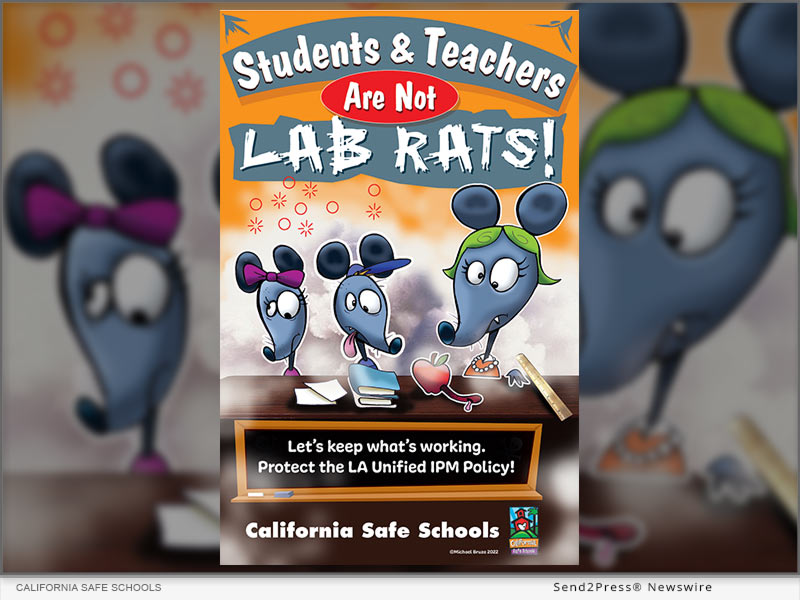
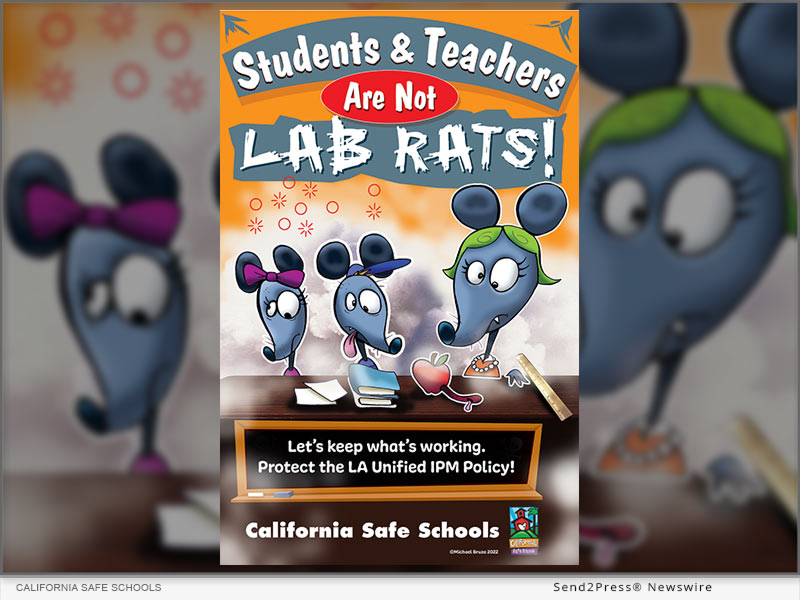
LOS ANGELES, Calif. /ScoopCloud/ -- On Tuesday, November 15, 2022 a majority of the Los Angeles Unified School Board voted to begin a process some fear would dismantle an oversight Committee that has been in place for decades ensuring the globally celebrated environmental policy was implemented according to the district's policy and California's Healthy Schools Act. In its place the Board is recommending establishing an Ad Hoc Committee, says celebrated children's environmental health non-profit California Safe Schools.

Concerned members of the public that included members of the Oversight Committee who signed up in advance to speak, were repeatedly disconnected, not called upon, or were unable to connect on the district's dedicated phone line.

In spite of the district acknowledging technical problems, they proceeded ahead. As a result a notice of Brown Act Violation was filed, with a request to have the Board add the item to the next Board Meeting to ensure the public had an opportunity to express their deep concerns about the misguided process.

The Los Angeles Unified Integrated Pest Management Policy (IPM) was unanimously adopted by the School Board in March of 1999 following a year-long drafting of a more protective policy. This effort was prompted after elementary school students were sprayed with pesticides by a school gardener in a hazardous materials suit as they walked into their classrooms.

"My six-year-old son had a reaction to the toxic cloud, which resulted in a severe asthma attack. Fortunately, he recovered and the Board immediately authorized district staff, members of the public, parents, medical experts, scientists, United Teachers Los Angeles (UTLA) and environmentalists to work together to craft a more protective policy. The result was the creation of the most stringent pesticide policy for schools in the nation. It was the first policy to embrace the Precautionary Principle and the Right to Know with regard to the application of pesticides in the Los Angeles Unified School District (LAUSD)", said Robina Suwol, Executive Director of California Safe Schools.

To ensure implementation, an IPM Oversight Committee was formed comprised of 15 independent members which included the following: one LAUSD non-management representative from Maintenance and Operations, one District representative from the Environmental Health and Safety Branch, one District representative from Food Services, the District IPM Coordinator, one IPM expert, two parents of District-enrolled students, two community members, one public health representative, two environmental representatives, one District teacher, one District principal, and one medical practitioner.

The success of the policy led to California legislation, The Healthy Schools Act, and later AB 405 (Montanez) which prohibits the use of experimental, conditional or phased out pesticides at all California K-12 schools. Today, the policy has become a national and international model for school districts and communities.

But recent actions by the LA Unified Maintenance and Operations Management, coupled with misrepresentation from them to the LA Unified Board, may undermine the ability of the IPM Committee to oversee the IPM Policy. This includes canceling publicly noticed meetings and limiting the independence, diversity and impartiality of the appointed Committee members. We are opposed to these efforts as they weaken the very oversight mechanisms that have enabled the meaningful implementation of the IPM Policy.

The recent audit of the IPM Program, completed June 29, 2022, includes troubling recommendations that would eliminate the ability of the public representatives on the Committee to self-appoint members most representative of their group and replace those members with individuals hand-picked by Maintenance and Operations or others. Such a change is in direct conflict with the IPM Policy.

Additionally, the audit's recommendation of term limits without the ability of public groups to select their representatives would eliminate members with vast experience in upholding the IPM Policy and knowledge of institutional history essential to understanding the successes and challenges of years past.

​Further troubling was the abrupt decision to cancel the publicly-noticed meetings beginning July 8, 2022, and "all further meetings until further notice", without sufficient notice or explanation. Meetings for the IPM Committee are required by the IPM Policy to be held monthly. In the past 24 years, only one meeting has been cancelled because of weather conditions. Due to the recent pandemic, the meetings have been held online on the second Friday of each month.

​There are other serious issues the IPM Committee is currently addressing, including:

1 - District use of an unauthorized and unapproved agricultural pesticide product on school campuses.

2 - The June audit revealing widespread violation by the District of its own IPM Policy and the Healthy Schools Act.

3 - Increased pest activity due to failure to address issues in a timely fashion.

4 - Reports related to the lack of needed supplies to properly address pest issues.

Executive Director of California Safe Schools Robina Suwol added, "The IPM Committee meetings must continue as publicly noticed in order to properly address the issues and ensure compliance with the IPM Policy, which over the years has set the gold standard in keeping our children, teachers and all school stakeholders safe from pesticide exposure."

Over the years, the LAUSD went from using 160 products to fewer than 25 - many of which have never been used. Additionally, Round Up and any other herbicides have also not been used on any Los Angeles Unified school grounds for more than 20 years. This has resulted in Los Angeles Unified avoiding the lawsuits that other districts experienced and has protected the health and safety of countless students, faculty, staff and parents.

​"The IPM Committee must be permitted to continue its work to oversee and implement the IPM Policy without further interference or efforts to weaken the inherent internal mechanisms that protect the independence, diversity and impartiality of the IPM Committee and its important oversight role, said Sandra Schubert, Esq., Advisory Board Member California Safe Schools.

Note: This information was prepared by Robina Suwol, Executive Director California Safe Schools and Sandra Schubert, Esq. Advisory Board Member California Safe Schools. They helped spearhead the drafting of Los Angeles Unified School District's IPM policy and have served as members of the IPM Committee.

About California Safe Schools:

California Safe Schools (CSS) is children's environmental health and environmental justice non-profit committed to ensuring that all students, teachers, staff, and community members who live near school sites are in a safe, toxic-free environment. CSS works closely with diverse communities and regulatory agencies on toxic issues (air, water, soil). CSS achieved national prominence by spearheading the Los Angeles Unified School District's Integrated Pest Management (IPM) Policy, the most stringent pesticide policy in the nation for K-12 public schools. This was the first school district to embrace the "Precautionary Principle" and "Right to Know" in a policy and led to the passage of California's Healthy Schools Act. Today, the LA Unified IPM policy serves as a national and international model for school districts and communities.

Learn more at: http://calisafe.org/
News from California Safe Schools

On Tuesday, November 15, 2022 a majority of the Los Angeles Unified School Board voted to begin a process some fear would dismantle an oversight Committee that has been in place for decades ensuring the globally celebrated environmental policy was implemented according to the district's policy and California's Healthy Schools Act. In its place the Board is recommending establishing an Ad Hoc Committee, says celebrated children's environmental health non-profit California Safe Schools.

Related link: http://www.calisafe.org/

This version of news story was published on ScoopCloud™ (ScoopCloud.com) - part of and © the Neotrope® News Network - all rights reserved.
On California Safe Schools Coalition 19th Anniversary, CSS Recognizes L.A. Unified School District’s Adoption of Groundbreaking Pesticide Policy

LOS ANGELES, Calif. /ScoopCloud/ -- California Safe Schools Coalition (CSS) commends the pioneering achievement of Los Angeles Unified School District (LAUSD), the second largest school district in the nation, spanning 740 square miles, 28 cities and more than 1,000 sites, for early adoption of an Integrated Pest Management (IPM) Policy in 1999. CSS was formed in 1998, after its founder's child was accidently sprayed by pesticides by a Los Angeles Unified gardener on his way into an LAUSD elementary school, a pivotal event for LAUSD's IPM Policy formation.

The IPM policy, created with CSS, had one main purpose: to eliminate all highly toxic chemical controls, and to use exclusion and consistent cleaning schedules as the primary pest management tool for all schools. With a deeper understanding based on scientific research, the Precautionary Principle was instituted as the LAUSD's benchmark and long-term objective. This Principle acknowledges that no pesticide product is free from risk and all may be a threat to human health. In the face of such risk, we must protect our children.

"LAUSD requires that only highly trained staff implement this IPM program," said Robina Suwol, Founder and Executive Director, CSS. "And, it's no secret, the program's success and reputation is a result of absolutely phenomenal district management and staff, including exceptional plant managers and pest, turf and landscape management experts.

"The IPM program is so highly regarded that CSS receives calls from parents, school districts and communities throughout the USA and internationally - Australia, Japan and England - asking how they can create similar policies."

The outstanding success of the IPM Policy led to the passage of the California Healthy Schools Act in 2000 and AB 405 (Montanez) in 2005. Together, these laws act to ensure the wellbeing of students, teachers, staff and parents each day by maintaining an environment free from toxic pesticides whose vast and cumulative impact is only beginning to be acknowledged.

"I applaud California Safe Schools and LAUSD on their Anniversary. The adoption of their innovative IPM policy and support of Assembly 405, which bans experimental pesticides on school grounds, has led the state and country in ensuring that our students and teachers' health are protected," said Michael Mendez, Pinchot Faculty Fellow Yale School of Forestry and Environmental Studies.

On July 7, 2017, glyphosate, (an ingredient in the ubiquitous weed control product Roundup) was listed under California's Proposition 65 as "known to the State of California to cause cancer." Before LAUSD's IPM Policy went into effect, Roundup was used extensively at LAUSD schools. The LAUSD IPM Policy reigns as one of the most successful efforts of the District to protect the health and safety of students and school personnel.

"This action by the State of California to fairly warn people about the risk of cancer associated with use of glyphosate is a step forward for the right to know and the ability to act. Policies such as those adopted for Los Angeles schools move products with the potential for toxicity out of children's environments and are good for everybody," said Dr. Amy D. Kyle, Research Professor (ret), University of California Berkeley School of Public Health.

For further information:
California Safe Schools
818-785-5515
http://www.calisafe.org/policy.html

News from California Safe Schools

California Safe Schools Coalition (CSS) commends the pioneering achievement of Los Angeles Unified School District (LAUSD), the second largest school district in the nation, spanning 740 square miles, 28 cities and more than 1,000 sites, for early adoption of an Integrated Pest Management (IPM) Policy in 1999. CSS was formed in 1998, after its founder's child was accidentally sprayed by pesticides by a Los Angeles Unified gardener on his way into an LAUSD elementary school, a pivotal event for LAUSD's IPM Policy formation.

Related link:

This version of news story was published on ScoopCloud™ (ScoopCloud.com) - part of and © the Neotrope® News Network - all rights reserved.