Author Archives: Giroud Tree and Lawn

Time-Sensitive Treatments for Spotted Lanternfly Need to Be Scheduled Now in Early Fall

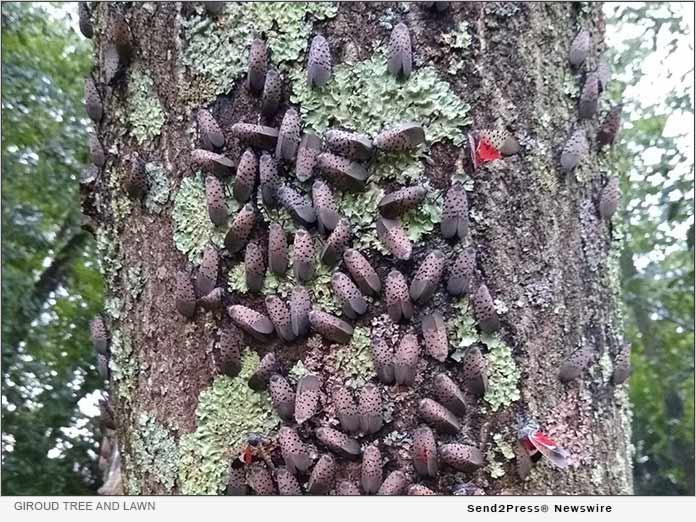
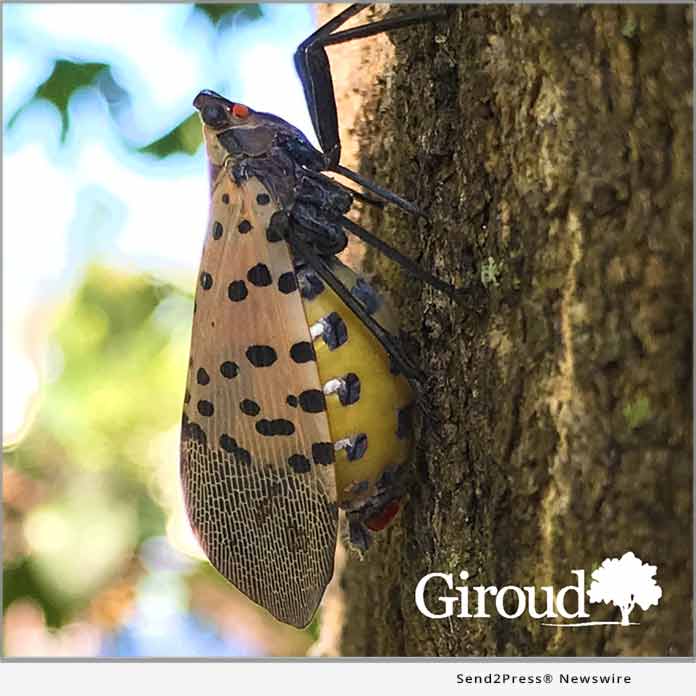
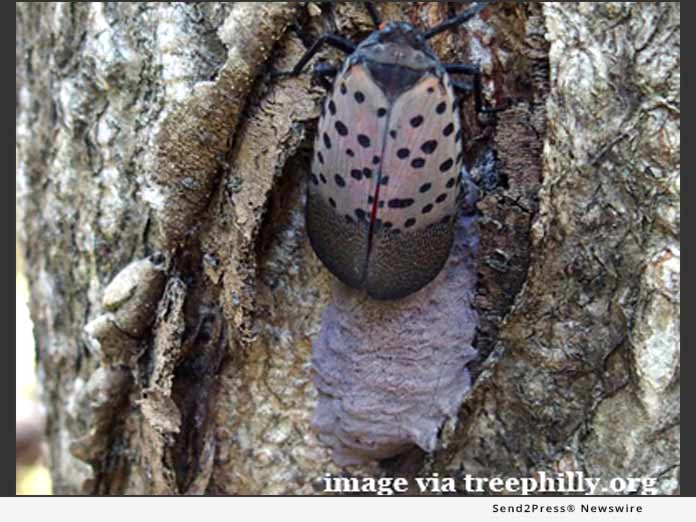
HUNTINGDON VALLEY, Pa. /ScoopCloud/ -- Adult Spotted Lanternfly are swarming area trees in a record-breaking year for the invasive insect. Not only do Spotted Lanternfly pose a risk to the health of trees and plants, they also cause some really gross problems for homeowners.

As the bugs feed on trees, they drip sour-smelling, sticky excrement called "honeydew." It coats everything underneath where the insects are feeding. The tacky honeydew is difficult to remove from hardscapes, decks, cars, and other valuable objects on the property.

What's even worse is that the tantalizing honeydew, along with the black, sooty mold that grows from it, attracts stinging wasps. Wasps will swarm a property, and that's especially a problem if there are children playing in the yard.

Treatments Need to be Carefully Timed

Spotted Lanternfly has only been in the US since 2014, but the insect has multiplied rapidly. To determine the best way to control this new invasive pest, researchers at Penn State and the PA Department of Agriculture recommend a control program that targets the pest during the Adult stage. This stage occurs between July and November.

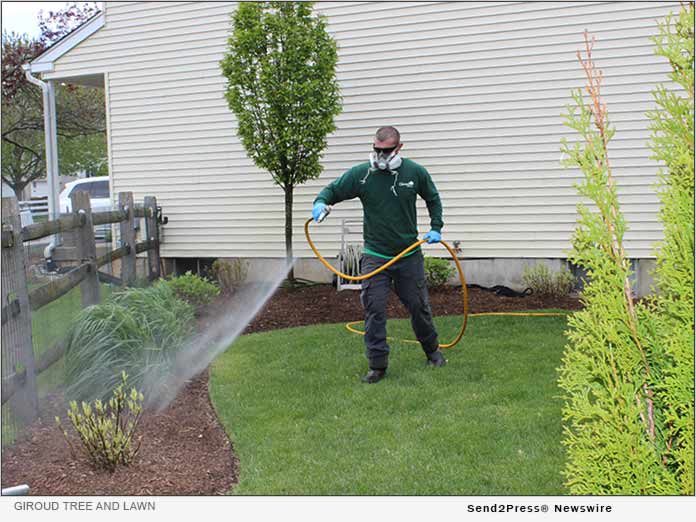
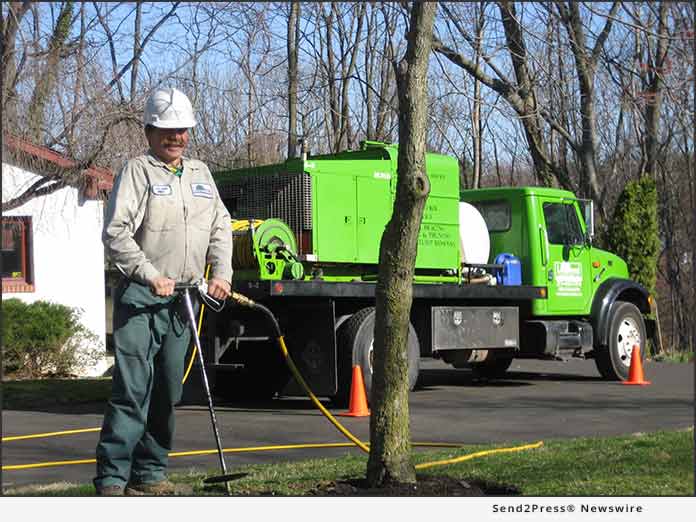
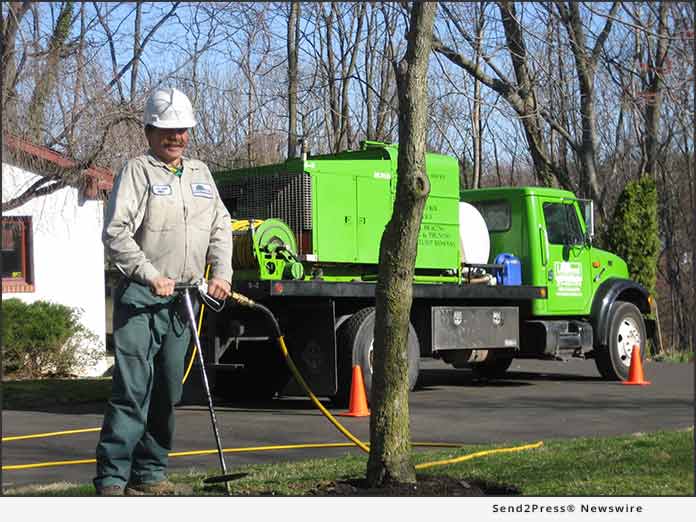
The Adult stage is when Spotted Lanternfly is most vulnerable to treatment. By September through November, the Adults can be found everywhere on the host trees. 1-2 sprays are needed on the trunk, limbs and foliage. This spray kills the insect on contact and the residual kills any Spotted Lanternfly that walk over or feed on the tree for up to 30 days.

Like many Tree companies battling Spotted Lanternfly, Giroud Tree and Lawn is seeing a very high interest in the control program this year.

"We're confident that these treatments will do the job," says Rodney Stahl, Jr, Giroud's Plant Healthcare Manager. "The problem is that our schedule is filling up. Homeowners, who want to have their trees treated, need to get on a program now before it's too late."

Call an ISA Certified Arborist to evaluate the property for treating valuable trees and plants when the Spotted Lanternfly Adults emerge.

For more information, visit https://www.giroudtree.com/spotted-lanternfly/

About Giroud Tree and Lawn

Giroud Tree and Lawn specializes in tree service, lawn care and mosquito and tick control programs that make customers love doing business with the company since 1974. Serving Bucks, Montgomery and Philadelphia Counties, the company offers professional tree and lawn evaluation, tree pruning, tree removal, insect and disease control, fertilizing, stump removal, traditional and 100% organic lawn programs and mosquito and tick control. Giroud Arborists are certified by the International Society of Arboriculture (ISA) and have the knowledge and experience required to properly diagnose, treat and maintain trees and lawn health.

The company is Accredited by the Tree Care Industry Association and Better Business Bureau. The "Giroud Treework for Charity" program donates free tree care services to parks, historical sites and other non-profit organizations located in the Company's service area.

For more information, visit the company website at http://www.giroudtree.com or call 215-682-7704.

News from Giroud Tree and Lawn

Adult Spotted Lanternfly are swarming area trees in a record-breaking year for the invasive insect. Not only do Spotted Lanternfly pose a risk to the health of trees and plants, they also cause some really gross problems for homeowners.

Related link: http://www.giroudtree.com

This version of news story was published on ScoopCloud™ (ScoopCloud.com) - part of and © the Neotrope® News Network - all rights reserved.

Tick Hot Spots in the Yard

HUNTINGDON VALLEY, Pa. /ScoopCloud/ -- While some bugs are just annoying, ticks carry a variety of diseases that can pose serious risks to people and pets, says Giroud Tree and Lawn. Fortunately, there are many actions homeowners can take to protect the property from these dangerous insects and the illnesses they can carry. It all starts with knowing where ticks love to hang out in the yard.

Where ticks love to hide:

The best way to control ticks is to target their habitats and make the yard a place where they don't want to hang out. They love dark, shady spots. Oftentimes, we think of ticks jumping down from above. But they also hang out in high grasses, underbrush, and weedy areas.

How Homeowners Can Control Ticks on the Property:

Clean Up the Yard: Ticks are shade lovers and can't survive in the sun! Cleaning up overgrown vegetation will give ticks fewer places to hang out. Additionally, pruning tree branches and shrubs around the lawn edge will let in more sunlight.

Mow the lawn regularly: Keeping the grass tidy will prevent ticks from traveling across tall grass. Mowing on schedule will also prevent clumps of grass, which ticks love to hide in.

Choose plants that deter ticks: Ticks are deterred by mint, lavender, rosemary, marigolds and citronella grass. An added bonus is that mosquitoes and fleas also hate these strong-smelling plants, so start planting!

Keep Deer Off the Property: Deer are the primary carrier of ticks through the yard. Use Deer Repellent treatments to deter deer from feeding on valuable plants and carrying ticks into the yard. Go a step further and check the landscape to identify and remove plants that are attracting deer to the yard.

Tick Control Treatments: Many companies offer both 100% organic and traditional chemical based treatments to control ticks. Choose a reputable company with the proper certifications to assess the property for tick "Hot Spots." They will suggest a treatment plan to attack ticks where they gather.

Keep ticks from biting people and pest with these tips:

Wear light and neutral colored clothing: Insects are attracted to things that mimic nature like the colors in flowers, foliage or animals. Plus, tiny ticks are easier to spot on a white shirt than a dark article of clothing.

Cover up: Wear lightweight clothing, long sleeves, long pants, and socks. Tuck pants into socks when walking through high grasses or underbrush. Always wear a hat and pull back loose hair that hitch-hiking insects can latch on to.

Use Repellents: Of course, DEET is the go-to chemical repellent. But there are natural alternatives. Often sold in health food stores, non-toxic, botanical repellents should be reapplied about every thirty minutes to remain effective. Repellents containing soybean oil protect for about ninety minutes-comparable to DEET.

Always perform a full body tick check after being outside. It's important to note that ticks are everyone outside, even in the backyard. When it comes to these insects and the diseases they transmit, quick removal is vital! Be sure to do a full check on the kids and pets, too.

For more information, visit https://www.giroudtree.com/blog/where-ticks-hide-in-your-yard/

About Giroud Tree and Lawn

Giroud Tree and Lawn specializes in tree service, lawn care and mosquito and tick control programs that make customers love doing business with the company since 1974. Serving Bucks, Montgomery and Philadelphia Counties, the company offers professional tree and lawn evaluation, tree pruning, tree removal, insect and disease control, fertilizing, stump removal, traditional and 100% organic lawn programs and mosquito and tick control. Giroud Arborists are certified by the International Society of Arboriculture (ISA) and have the knowledge and experience required to properly diagnose, treat and maintain trees and lawn health. The company is Accredited by the Tree Care Industry Association and Better Business Bureau. The "Giroud Treework for Charity" program donates free tree care services to parks, historical sites and other non-profit organizations located in the Company's service area.

For more information, visit the company website at http://www.giroudtree.com or call 215-682-7704.

News from Giroud Tree and Lawn

While some bugs are just annoying, ticks carry a variety of diseases that can pose serious risks to people and pets, says Giroud Tree and Lawn. Fortunately, there are many actions homeowners can take to protect the property from these dangerous insects and the illnesses they can carry. It all starts with knowing where ticks love to hang out in the yard.

Related link: http://www.giroudtree.com

This version of news story was published on ScoopCloud™ (ScoopCloud.com) - part of and © the Neotrope® News Network - all rights reserved.

Time-Sensitive Treatments for Spotted Lanternfly Need to Be Scheduled Now Before the Adults Emerge

HUNTINGDON VALLEY, Pa. /ScoopCloud/ -- Adult Spotted Lanternfly will be emerging a few short weeks, and it's expected to be a record-breaking year for the invasive insect, says Giroud Tree and Lawn. Not only do Spotted Lanternfly pose a risk to the health of trees and plants, they also cause some really gross problems for homeowners.

As the bugs feed on trees, they drip sour-smelling, sticky excrement called "honeydew." It coats everything underneath where the insects are feeding. The tacky honeydew is difficult to remove from hardscapes, decks, cars, and other valuable objects on the property.

What's even worse is that the tantalizing honeydew, along with the black, sooty mold that grows from it, attracts stinging wasps. Wasps will swarm a property, and that's especially a problem if there are children playing in the yard.

Treatments Need to be Carefully Timed

Spotted Lanternfly has only been in the US since 2014, but the insect has multiplied rapidly. To determine the best way to control this new invasive pest, researchers at Penn State and the PA Department of Agriculture recommend a control program that targets the pest during the Adult stage. This stage occurs between July and November.

The Adult stage is when Spotted Lanternfly is most vulnerable to treatment. Adults tend to stay in one place and attack favorite host trees, as opposed to the younger nymphs that quickly hop from plant to plant. As a result, there is much more success in killing the adults when trees are treated at carefully timed intervals.

The first treatment of the 2-part control plan recommended by Penn State should be done between July and September. This is a basal trunk spray that kills the pest on contact. It's also absorbed up through the tree's vascular system and kills the bugs as they feed on the tree. The treatment lasts for up to 60 days.

By September through November, the Adults can be found everywhere on the host trees. 1-2 additional sprays are needed on the trunk, limbs and foliage. This spray kills the insect on contact and the residual kills any Spotted Lanternfly that walk over or feed on the tree for up to 30 days.

Like many Tree companies battling Spotted Lanternfly, Giroud Tree and Lawn is seeing a very high interest in the control program this year.

"We're confident that these treatments will do the job," says Rodney Stahl, Jr, Giroud's Plant Healthcare Manager. "The problem is that our schedule is filling up. July is already booked and August is beginning to fill up. Soon, we'll have more requests for treatments than we can handle. Homeowners, who want to have their trees treated, need to get on a program now before it's too late."

Steps Homeowners Should Take Now
1. Check for nymphs now on trees, plants, flowers, and any surface in the yard. If these early stage insects are seen, that's a clear warning sign that the property is at risk once they turn into adults.
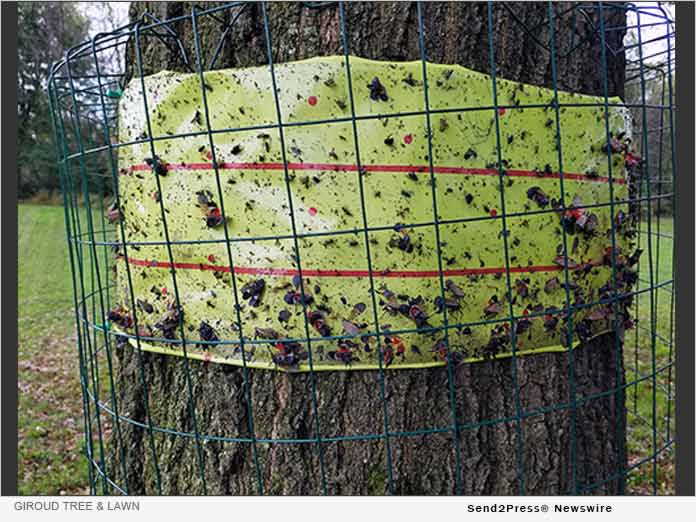
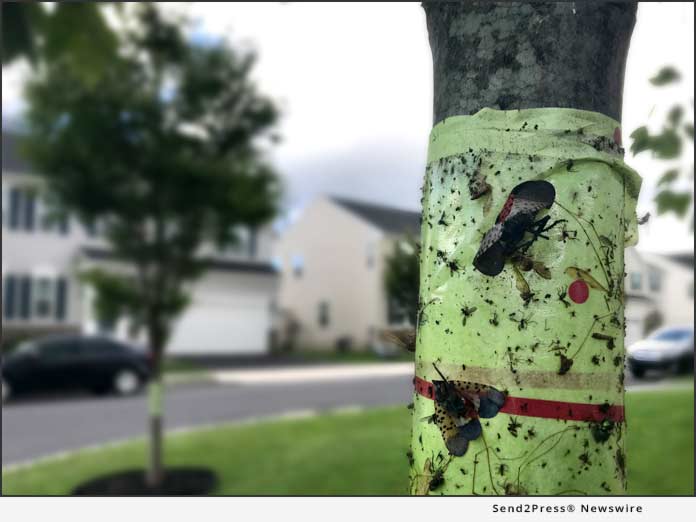
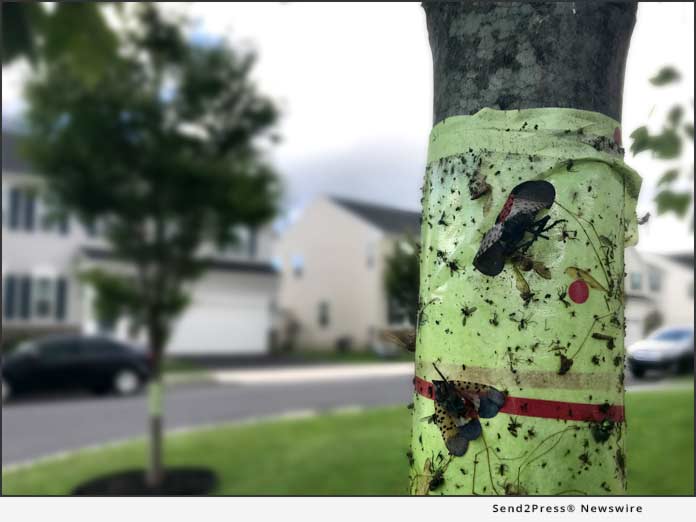
2. Use sticky bands wrapped in chicken wire to capture any nymphs walking up the tree trunk.
3. Call an ISA Certified Arborist to evaluate the property for treating valuable trees and plants when the Spotted Lanternfly Adults emerge.

For more information, visit https://www.giroudtree.com/spotted-lanternfly/

About Giroud Tree and Lawn

Giroud Tree and Lawn specializes in tree service, lawn care and mosquito and tick control programs that make customers love doing business with the company since 1974. Serving Bucks, Montgomery and Philadelphia Counties, the company offers professional tree and lawn evaluation, tree pruning, tree removal, insect and disease control, fertilizing, stump removal, traditional and 100% organic lawn programs and mosquito and tick control. Giroud Arborists are certified by the International Society of Arboriculture (ISA) and have the knowledge and experience required to properly diagnose, treat and maintain trees and lawn health. The company is Accredited by the Tree Care Industry Association and Better Business Bureau. The "Giroud Treework for Charity" program donates free tree care services to parks, historical sites and other non-profit organizations located in the Company's service area.

For more information, visit the company website at http://www.giroudtree.com or call 215-682-7704.

News from Giroud Tree and Lawn

Adult Spotted Lanternfly will be emerging a few short weeks, and it's expected to be a record-breaking year for the invasive insect, says Giroud Tree and Lawn. Not only do Spotted Lanternfly pose a risk to the health of trees and plants, they also cause some really gross problems for homeowners.

Related link: http://www.giroudtree.com

This version of news story was published on ScoopCloud™ (ScoopCloud.com) - part of and © the Neotrope® News Network - all rights reserved.

How to Combat the Spotted Lanternfly Now in the Nymph Stage

HUNTINGDON VALLEY, Pa. /ScoopCloud/ -- The Spotted Lanternfly is a destructive insect that has invaded the Philadelphia area. All winter long, their eggs lay waiting for the warm weather, carefully encased in a protective, hardened layer of secretion. Now that they've emerge as nymphs, it's time to take action!

How to Identify Spotted Lanternfly Nymphs

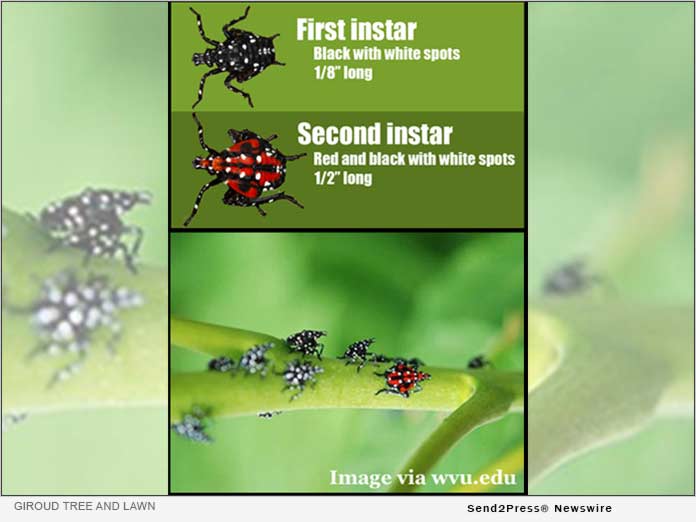
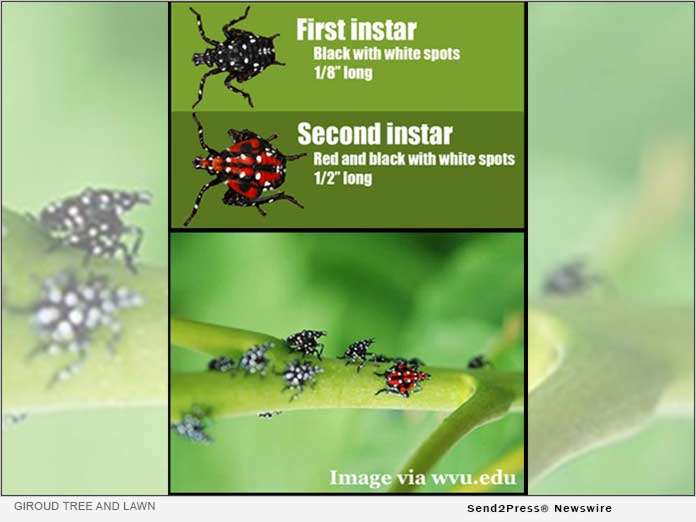
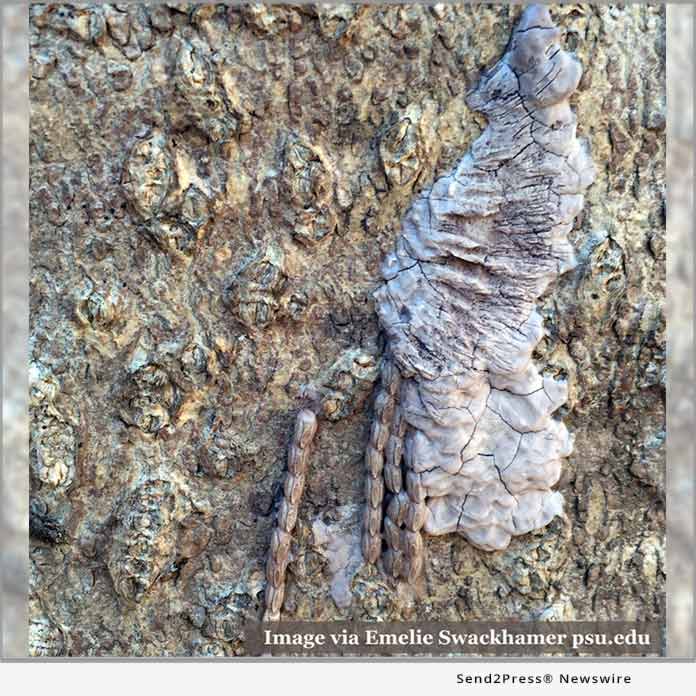
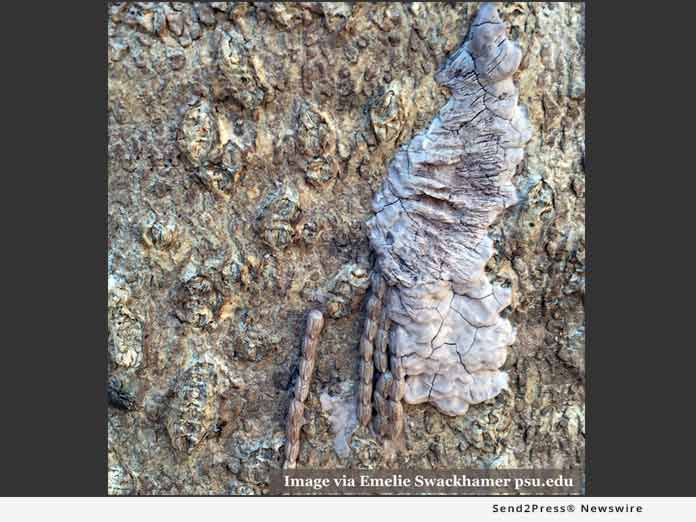
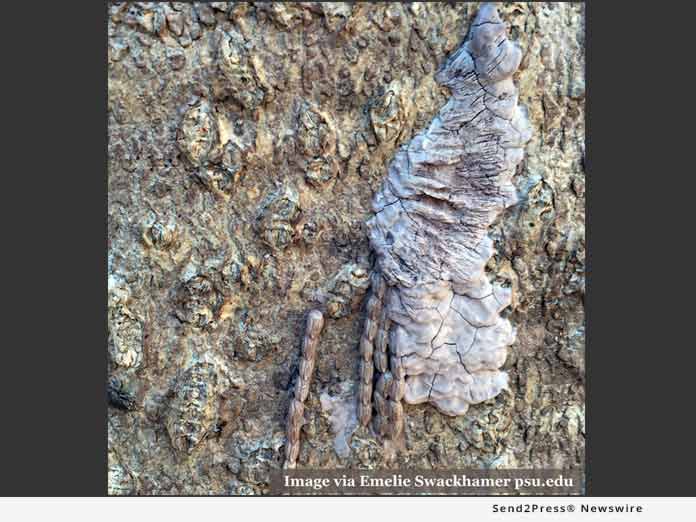
Spotted Lanternfly goes through several identities during its life cycle. Adult females lay eggs in the fall, and they cover the egg masses in a secretion. This secretion dries hard and camouflages to look like dirt or clay. The young nymphs that emerge from the eggs in spring are black with white spots. In early summer, they gain red markings on their bodies. Later in midsummer, they become adults and shed their skin to form wings on their backs.

How to Get Rid of Spotted Lanternfly Nymphs

The experts at Giroud Tree and Lawn have been working closely with Penn State University's Department of Entomology and Cooperative Extension to determine the best treatments and techniques for combating Spotted Lanternfly in each of the life cycle stages. Chemical spray treatments are only recommended if there are high populations of nymphs on a specific plant or tree.

Chemical Control Treatments During the Nymph Stages

Research shows that the best time to control Spotted Lanterfly is at the adult stage. However, there is an exception. Nymph control may be warranted if the population is high enough to cause feeding damage (wilting stems). Or, if Nymphs are focusing heavily on individual plants. In these cases, homeowners should have an ISA Certified Arborist evaluate the situation and determine if targeted treatment is required.

Control of Spotted Lanternfly Nymphs is usually not warranted because nymphs love to move around. The young insects don't stay on a single plant for long. To reach all the plants that might attract nymphs, the entire yard would have to be treated with a long, residual contact spray insecticide. Even with these treatments, nymphs can still invade from other locations!

Also, although insecticide will kill Nymphs, it can also kill beneficial insects and pollinators, such as bees and butterflies. The insect experts at Giroud prefer to use these types of sprays for targeted control, not broad scale treatments.

What's the Solution for Controlling Spotted Lanterfly Nymphs?

Ultimately, the best way to combat Spotted Lanternfly during the Nymph Stage is with manual methods. Sticky bands, Circle Traps, and good old fashioned squishing are key to getting ahead of these awful insects before they reach adulthood.

Sticky bands can be found at most hardware stores and also on Amazon.com. They are easy to install, but they should be changed weekly for the best results. However, it is important to be aware that these sticky bands can accidentally trap other insects and also small animals and birds. To avoid this problem, Penn State recommends cutting the sticky bands lengthwise so the surface area is not as broad. Spotted Lanternfly Nymphs are small and climb up the tree. They will get trapped at the bottom of the sticky band, so there is no need to have such a tall band. Penn State also urges homeowners to wrap the outside of the tree with chicken wire over the area of the sticky band. This will prevent squirrels, birds, and other small animals from becoming stuck to the band.

If homeowners are concerned about trapping small animals and other wildlife in sticky bands, Penn State offers an alternative solution:

"Recent research has shown that an entirely different kind of type of trap is also very effective and can dramatically reduce the chances of capturing other creatures. This new style trap is made of plastic-coated insect screening and does not use any sticky material at all. It is basically a tunnel that SLFs walk into. When they move upward in the trap, they end up in a dead-end collection container where they die." -extension.psu.edu

Nymphs Are a Warning Sign to Take Action

Equally important, recognize that the Nymphs are an early warning sign to get prepared for the swarms. By July or August, the Nymphs will turn into Adults. That's when the real trouble begins. It's also the time when control is most effective. Adults don't move around as much and tend to attack specific trees. As a result, an ISA Certified Arborist can target the high risk trees and protect them from Spotted Lanternfly.

Researchers are anticipating a major infestation of Spotted Lanternfly this season. Once the adults begin to swarm, the demand for treatment will surge so homeowners should have the arborist evaluate the entire property for problem areas as soon as possible.

For more information, visit https://www.giroudtree.com/spotted-lanternfly/

About Giroud Tree and Lawn

Giroud Tree and Lawn specializes in tree service, lawn care and mosquito and tick control programs that make customers love doing business with the company since 1974. Serving Bucks, Montgomery and Philadelphia Counties, the company offers professional tree and lawn evaluation, tree pruning, tree removal, insect and disease control, fertilizing, stump removal, traditional and 100% organic lawn programs and mosquito and tick control. Giroud Arborists are certified by the International Society of Arboriculture (ISA) and have the knowledge and experience required to properly diagnose, treat and maintain trees and lawn health. The company is Accredited by the Tree Care Industry Association and Better Business Bureau. The "Giroud Treework for Charity" program donates free tree care services to parks, historical sites and other non-profit organizations located in the Company's service area. For more information, visit the company website at http://www.giroudtree.com or call 215-682-7704.

News from Giroud Tree and Lawn

The Spotted Lanternfly is a destructive insect that has invaded the Philadelphia area. All winter long, their eggs lay waiting for the warm weather, carefully encased in a protective, hardened layer of secretion. Now that they've emerge as nymphs, it's time to take action!

Related link: http://www.giroudtree.com

This version of news story was published on ScoopCloud™ (ScoopCloud.com) - part of and © the Neotrope® News Network - all rights reserved.

Proper Lawn Mowing Technique is Important for Successful Grass Growth

HUNTINGDON VALLEY, Pa. /ScoopCloud/ -- If a homeowner's lawn looks uneven and just plain ugly in some spots, how the grass is being mowed might be affecting its appearance, says Giroud Tree and Lawn. From how to set the mower height to how soon after the rain falls the grass is cut, good mowing practices are important for keeping a lawn looking vibrant, healthy, and green all season long.

Start with Clean, Sharp Blades

Before mowing the lawn, homeowners should make sure the mower blades are sharp and ready to give an even cut. Always clean mower blades between each mow to prevent the spread of fungus and diseases.

Lawn Mowing Height

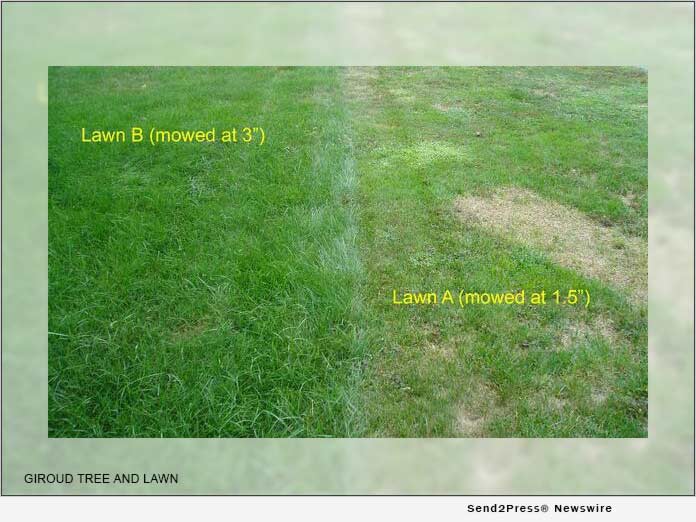
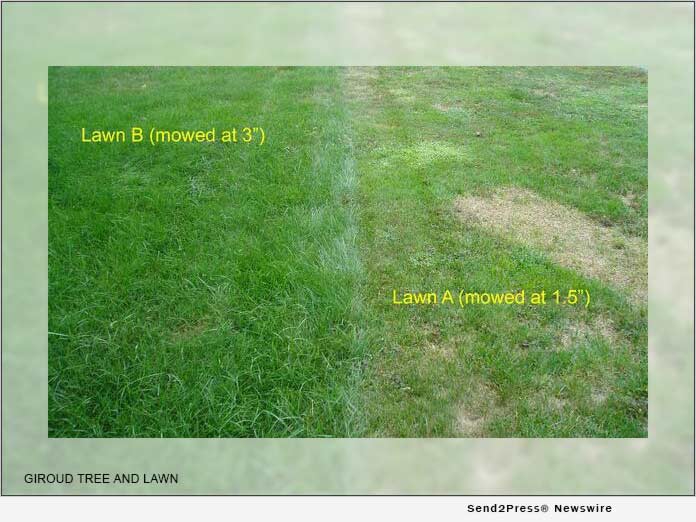
Grass should always be cut at 3-4 inches or higher, especially during the warmer months. Taller grass will provide a canopy to retain soil moisture and will prevent unsightly browning, shade weed and crabgrass seeds, and facilitate deep root growth. Giroud recommends that no more than 1/3 of top growth be removed per cutting.

How Often to Mow

When mowed infrequently, tall, wet grass may leave clumps pf clippings that can smother turf and provide an opening for weed infiltration. Mow on a regular schedule, about every 7-10 days. However, homeowners should also be mindful of the weather! If there experience a dry spell, mow less often to give the grass a chance to grow. If there is a lot of rain, grass will surely grow faster; but be careful about mowing when grass is wet. Clumps of dead, wet grass left behind after a lawn mowing can lead to lawn fungus issues.

Lawn Mowing on Slopes

If the yard has a slope to it, homeowners should be careful about mowing in that area. Always mow slopes sideways to prevent scalping. Not only does this prevent damage to the lawn, but it's also a safer practice for operating the lawn mower.

Still Seeing Lawn Problems?

If homeowners find that the lawn still doesn't look good, there might have an underlying issue with the grass or soil, such as diseases or insect infestations. Call a certified Lawn Care company for a complete Lawn Evaluation.

For more information about good lawn mowing techniques, please check out https://www.giroudtree.com/blog/how-to-mow-your-lawn-the-right-way/

For more information, visit the company website at http://www.giroudtree.com or call 215-682-7704.

About Giroud Tree and Lawn

Giroud Tree and Lawn specializes in tree service, lawn care and mosquito and tick control programs that make customers love doing business with the company since 1974. Serving Bucks, Montgomery and Philadelphia Counties, the company offers professional tree and lawn evaluation, tree pruning, tree removal, insect and disease control, fertilizing, stump removal, traditional and 100% organic lawn programs and mosquito and tick control. Giroud Arborists are certified by the International Society of Arboriculture (ISA) and have the knowledge and experience required to properly diagnose, treat and maintain trees and lawn health.

The company is Accredited by the Tree Care Industry Association and Better Business Bureau. The "Giroud Treework for Charity" program donates free tree care services to parks, historical sites and other non-profit organizations located in the Company's service area. For more information, visit the company website at http://www.giroudtree.com or call 215-682-7704.

News from Giroud Tree and Lawn

If a homeowner's lawn looks uneven and just plain ugly in some spots, how the grass is being mowed might be affecting its appearance, says Giroud Tree and Lawn. From how to set the mower height to how soon after the rain falls the grass is cut, good mowing practices are important for keeping a lawn looking vibrant, healthy, and green all season long.

Related link: http://www.giroudtree.com

This version of news story was published on ScoopCloud™ (ScoopCloud.com) - part of and © the Neotrope® News Network - all rights reserved.

Tips for Growing Grass in Shade

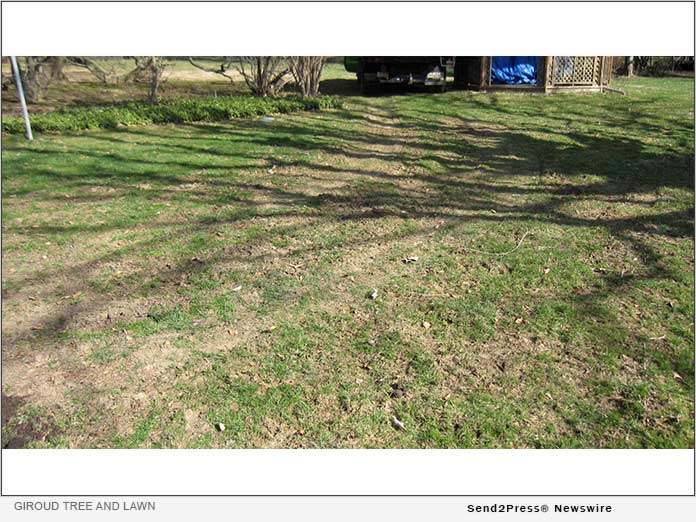
HUNTINGDON VALLEY, Pa. /ScoopCloud/ -- When it comes to growing grass in the shade, the process can be incredibly frustrating for homeowners. The Lawn Care Experts at Giroud Tree and Lawn have several strategies homeowners can try to combat bare spots on shady areas on the lawn.

Grass needs a few vital elements to thrive- sun, water, and a great root system. Trees are in a constant battle with grass for all three of these, so homeowners need to even the playing field.

Pruning Trees to start to good grass growth

The branches and leaves of trees can block sunlight from reaching the grass. Also, much of the rain that falls will run off the leaves of the tree before it filters down to the lawn, leaving grass roots dry. Homeowners should have trees evaluated by an ISA Certified Arborist to see how they can be pruned back. This will allow sunshine and water to reach those blades of grass and promote healthy, green growth!

Keep it clean

Dead leaves, pine needles and other debris fall from trees' branches and litter the ground, blocking sun and rainwater from reaching the lawn. This same debris can lock in moisture without airflow, making the lawn area more susceptible to fungus and disease. It's important to rake up the areas under trees so the grass isn't smothered and festering with infection.

Mow higher in the shade

If grass is having trouble growing in the shade, homeowners should mow a little higher in that area. This grass will need as much help as it can to reach the sun rays!

Check the soil pH

Anything that filters down into the soil can affect its acidity, so trees contribute to pH level issues. The soil should have a pH of 7 in order to grow healthy, vibrant grass.

Alternate ground cover

If all else fails, there are other options for ground cover in the shady areas under trees instead of grass. Shade-friendly plants, such as pachysandra, can be hearty additions to any landscape. Add in some Bleeding Hearts and Thyme for seasonal color and interest and homeowners will have a lovely garden area!

How to Get Started on a Lawn Care Program

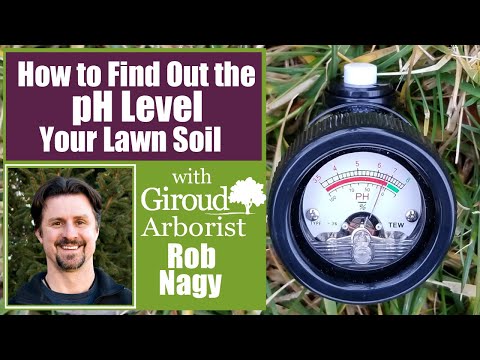
Now is the time for homeowners to schedule a full lawn inspection with an experienced lawn service. The lawn care expert will walk the entire property and create a custom plan to combat any issues on the lawn. Homeowners should choose a lawn service that does a mid-season check-up that includes a pH Soil Test. Maintaining a healthy pH is vital to producing great results for the lawn. Lime applications may be recommended to decrease the acidity in the soil, so the grass will grow healthy and strong!

For more information, check out Giroud Arborist Rob Nagy's demonstration of a pH Soil Test.

About Giroud Tree and Lawn

Giroud Tree and Lawn specializes in tree service, lawn care and mosquito and tick control programs that make customers love doing business with the company since 1974. Serving Bucks, Montgomery and Philadelphia Counties, the company offers professional tree and lawn evaluation, tree pruning, tree removal, insect and disease control, fertilizing, stump removal, traditional and 100% organic lawn programs and mosquito and tick control. Giroud Arborists are certified by the International Society of Arboriculture (ISA) and have the knowledge and experience required to properly diagnose, treat and maintain trees and lawn health. The company is Accredited by the Tree Care Industry Association and Better Business Bureau. The "Giroud Treework for Charity" program donates free tree care services to parks, historical sites and other non-profit organizations located in the Company's service area. For more information, visit the company website at http://www.giroudtree.com or call 215-682-7704.

Links:
- https://www.giroudtree.com/lawn-services/
- https://youtu.be/HJJHpguMdgs

News from Giroud Tree and Lawn

When it comes to growing grass in the shade, the process can be incredibly frustrating for homeowners. The Lawn Care Experts at Giroud Tree and Lawn have several strategies homeowners can try to combat bare spots on shady areas on the lawn.

Related link: http://www.giroudtree.com

This version of news story was published on ScoopCloud™ (ScoopCloud.com) - part of and © the Neotrope® News Network - all rights reserved.

How to Capture and Destroy Spotted Lanternfly Nymphs in 2020

HUNTINGDON VALLEY, Pa. /ScoopCloud/ -- The Spotted Lanternfly is a destructive insect that has officially invaded Philadelphia, Bucks and Montgomery Counties! All winter long, their eggs lay waiting for the warm weather, and the Spotted Lanternfly Nymphs have already started to emerge. The experts at Giroud Tree and Lawn share what to look for and how to capture and destroy these destructive insects.

How Spotted Lanternfly Causes Property Damage and Attracts Dangerous Insects

These insects eat tree sap and then excrete droppings of a sweet, sticky substance called Honeydew. The honeydew will coat the tree, the base of the tree, and anything underneath the tree, including cars, hardscapes, and decking. Then, black, sooty mold grows on the secreted substance. The combination of honeydew and black, sooty mold has an unpleasantly sour stench and is very difficult to remove from surfaces.

Even more unsettling, the secreted honeydew attracts stinging wasps! Wasps can't resist the tantalizing smell of the honeydew, and they will swarm a property for a taste. Homeowners are struggling to rid their yards of stinging wasps, and it's particularly a problem for children playing in the area!

How to Identify the Spotted Lanternfly

One of the things that makes this insect difficult to control is the fact that it goes through several identities during its life cycle. Adult females lay eggs in the fall, and they cover the egg masses in a secretion that dries hard and camouflages to look like dirt or clay. The young nymphs that emerge from the eggs in spring are black with white spots. In early summer, they gain red markings on their bodies. Then, midsummer they become adults and shed their skin to form wings on their backs.

How to Capture and Destroy Spotted Lanternfly Nymphs

The experts at Giroud Tree and Lawn have been working closely with Penn State's Department of Agricultural Sciences to determine the best treatments and techniques for combatting Spotted Lanternfly in each of the life cycle stages. According to Penn State, "Currently, the most effective trap for SLF is a sticky band wrapped around the trunks of trees. SLF nymphs and adults are trapped in the sticky barrier as they crawl up from the ground onto the trunks and move upward to feed on the tree."

Sticky bands can be found at most hardware stores and Amazon.com. They are easy to install, but they should be changed weekly for the best results. It is important to be aware that these sticky bands can accidentally trap other insects and also small animals and birds. To avoid this problem, Penn State recommends cutting the sticky bands lengthwise so the surface area is not as broad. Penn State also urges homeowners to wrap the outside of the tree with chicken wire over the area of the sticky band. This will prevent squirrels, birds and other small animals from becoming stuck to the band.

If homeowners see signs of Spotted Lanternfly on the property, they should have their trees inspected by an ISA Certified Arborist.

About Giroud Tree and Lawn

Giroud Tree and Lawn specializes in tree service, lawn care and mosquito and tick control programs that make customers love doing business with the company since 1974. Serving Bucks, Montgomery and Philadelphia Counties, the company offers professional tree and lawn evaluation, tree pruning, tree removal, insect and disease control, fertilizing, stump removal, traditional and 100% organic lawn programs and mosquito and tick control. Giroud Arborists are certified by the International Society of Arboriculture (ISA) and have the knowledge and experience required to properly diagnose, treat and maintain trees and lawn health.

The company is Accredited by the Tree Care Industry Association and Better Business Bureau. The "Giroud Treework for Charity" program donates free tree care services to parks, historical sites and other non-profit organizations located in the Company's service area. For more information, visit the company website at http://www.giroudtree.com or call 215-682-7704.

News from Giroud Tree and Lawn

The Spotted Lanternfly is a destructive insect that has officially invaded Philadelphia, Bucks and Montgomery Counties! All winter long, their eggs lay waiting for the warm weather, and the Spotted Lanternfly Nymphs have already started to emerge. The experts at Giroud Tree and Lawn share what to look for and how to capture and destroy these destructive insects.

Related link: http://www.giroudtree.com

This version of news story was published on ScoopCloud™ (ScoopCloud.com) - part of and © the Neotrope® News Network - all rights reserved.

Kids Staying Home From School can Keep Busy with a Spotted Lanternfly Egg Hunt in the Yard

HUNTINGDON VALLEY, Pa. /ScoopCloud/ -- Spotted Lanternfly are beautiful but destructive insects that have invaded Pennsylvania. The good news is kids can help get rid of Spotted Lanternfly! The experts at Giroud Tree and Lawn share why these are bad bugs, and what kids need to know to go on a Spotted Lanternfly Egg Hunt!

What Is Spotted Lanternfly?

Spotted Lanternfly is a dangerous, invasive pest. Invasive means this insect is from another country and it has invaded the United States. Spotted Lanternfly came from Asia to the United Sates a few years ago. They've been multiplying and spreading all over the country! If Americans don't stop them from spreading, they can cause big problems.

Why Is Spotted Lanternfly Bad?

Spotted Lanternfly are a problem in many ways because they:
* destroy grapes, apples, and other important crops that are grown by farmers in America.
* damage trees when they feed from them.
* make a sticky mess when they are eating, dripping something called "honeydew" down on to anything underneath them.
* attract stinging bees who love to eat the honeydew they drip!

What do Spotted Lanternfly Look Like?

The Spotted Lanternfly go through 4 different life cycles.

1. Nymphs, black with white dots - the insects hatch from their eggs in May.

2. Nymphs, red with white dots and black marks- you can sometimes see little black nymphs and bigger red nymphs at the same time

3. Adults - In July, the insects get wings! The underside of their wings looks a lot more colorful than the top, so it's important to know what the wings look like on both sides!

4. Egg Masses - Starting in late September, the females will lay their eggs and cover them with a protective substance that hardens to look like clay. These egg masses will stay there all winter long until the next generation of nymphs hatches the following May.

How Kids Can Help Stop the Spread of Spotted Lanternfly

Spotted Lanternfly can lay their eggs anywhere, even underneath a slide!

Now is the perfect time to go on Spotted Lanternfly Egg Hunt! Kids can outside and check all the trees in the front and backyard. If kids find anything that looks like an egg mass, scrape it off with a stick or a card and destroy them by dropping them in a baggy with hand sanitizer or rubbing alcohol.

After kids have checked all the trees on the property, it's time to look for Spotted Egg Masses in other places. The adult females lay eggs pretty much anywhere! They usually lay them in places where the eggs will be out of sight from hungry predator bugs. Look on the underside of outdoor tables and chairs, railings, playhouses, swing sets and slides.

Kids can even make these Spotted Lanternfly egg hunts a part of the Easter celebrations. Just for fun, kids can check out this cool video of a Spotted Lanternfly in a battle with a Praying Mantis! Who will win? https://youtu.be/mfwuhTBr4UQ

For more information about Spotted Lanternfly, please check out https://www.giroudtree.com/spotted-lanternfly/

For more information, visit the company website at http://www.giroudtree.com or call 215-682-7704.

VIDEO (YouTube):
https://youtu.be/mfwuhTBr4UQ

About Giroud Tree and Lawn

Giroud Tree and Lawn specializes in tree service, lawn care and mosquito and tick control programs that make customers love doing business with the company since 1974. Serving Bucks, Montgomery and Philadelphia Counties, the company offers professional tree and lawn evaluation, tree pruning, tree removal, insect and disease control, fertilizing, stump removal, traditional and 100% organic lawn programs and mosquito and tick control. Giroud Arborists are certified by the International Society of Arboriculture (ISA) and have the knowledge and experience required to properly diagnose, treat and maintain trees and lawn health.

The company is Accredited by the Tree Care Industry Association and Better Business Bureau. The "Giroud Treework for Charity" program donates free tree care services to parks, historical sites and other non-profit organizations located in the Company's service area. For more information, visit the company website at http://www.giroudtree.com or call 215-682-7704.

News from Giroud Tree and Lawn

Spotted Lanternfly are beautiful but destructive insects that have invaded Pennsylvania. The good news is kids can help get rid of Spotted Lanternfly! The experts at Giroud Tree and Lawn share why these are bad bugs, and what kids need to know to go on a Spotted Lanternfly Egg Hunt!

Related link: http://www.giroudtree.com

This version of news story was published on ScoopCloud™ (ScoopCloud.com) - part of and © the Neotrope® News Network - all rights reserved.

Giroud Tree and Lawn explains how to identify the difference between mole and vole damage on lawns, trees and shrubs

HUNTINGDON VALLEY, Pa. /ScoopCloud/ -- Mole and vole damage to lawns, trees and shrubs is common in Pennsylvania, but identifying the difference between the two can be confusing. Each of these two pests can cause mild to serious damage on a homeowners property, and late winter is when the effects are often seen. The experts at Giroud Tree and Lawn explain how to identify the difference between the two and what homeowners can do to reverse the damage.

How to Identify Vole Damage on a Lawn

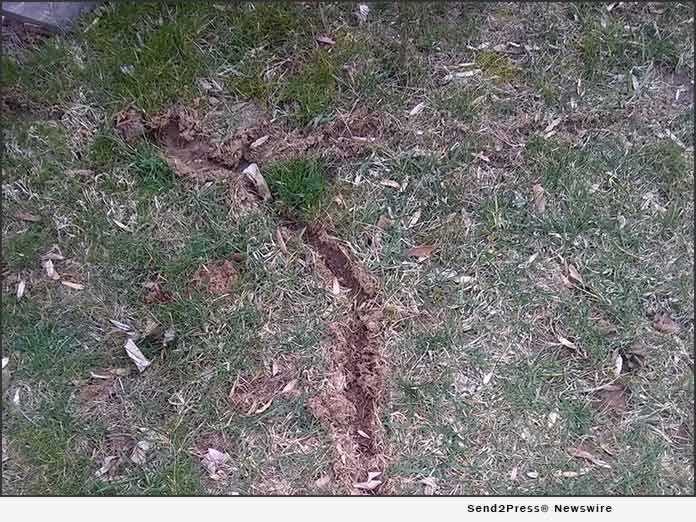
Voles, otherwise known as "Meadow Mice", are small rodents with very active lifestyles in the winter. They live under dense shrubs and mulch and other hiding places like wood or rock piles. Voles eat grass, and in winter, the snow provides the perfect cover for voles to venture from their burrows in search of food without fear of predators. Homeowners can identify vole damage after snow melts by the telltale chiseled pathways through the lawn. Voles create these runways under the cover of snow where predators can't catch them.

How to Identify Mole Damage on a Lawn

Like voles, moles can do a lot of damage to a lawn. However, rather than pathways carved into the grass at the surface, moles tunnel underground and leave piles of soil that act as air vents in their tunnels.

"If you have a lawn that is really infested with moles, you can actually feel it as you walk across the grass," explains Giroud Lawn Care Technician, Paul Ruffenach. "The ground will feel soft because the tunnels have been dug through under your feet."

Damage to Trees and Shrubs

Although lawn damage caused by voles and moles is very easy to see, what can often go unnoticed until it's too late is damage to trees and shrubs. These invasive little creatures feast on the bark of certain trees and shrubs.

"Both voles and moles will chew on the roots, trunks and branches of some shrubs because they are feeding on the starches and the sugars to stay alive in winter," explains Drew Slousky, ISA Certified Giroud Arborist and Vice President. "If they chew the bark completely off, they could kill a shrub or a tree."

Single stemmed trees like Dogwoods and Crabapples will likely die if voles or moles have girdled the tree by eating the bark completely around the trunk. Multi-stemmed shrubs like Juniper, rhododendron, Viburnum, Euonymous (Burning Bush) and Azalea can survive. Professional pruning or fertilization will help with recovery.

How to Protect a Property from Mole and Vole Damage

Take away hiding spots! Moles and voles burrow under anything that may act as a cover in order to keep out of the watchful eyes of predators. Snow, underbrush and overgrown ground cover are all perfect hiding spots.

As the weather warms, mulch also becomes a great cover for them. Giroud always stresses the importance of never piling mulch against the trunk of a tree or shrubs because it can lead to girdling roots. Garden pests like moles and voles are just another reason why proper mulching is important. Creating a space for these rodents to burrow is an invitation for them to chew on the bark of trees and shrubs!

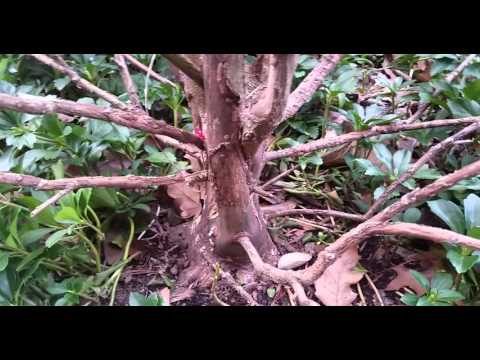
Check out this video from Giroud Arborist, Rob Nagy, which shows how he identified that a rodent was causing an ornamental holly to decline: https://youtu.be/8Ogfh-Yi6Mk

Take Action Now to Correct Mole and Vole Damage

The good news is most lawns, trees and shrubs will recover from minimal mole or vole damage. For lawns:
* Rake the debris and excrement from the runways on the lawn to promote growth
* Fill holes and pathways with topsoil
* Fertilize and overseed areas that do not recover

Getting on a great lawn care treatment and fertilization program is a step in the right direction because it will strengthen the grass' roots and give the lawn a fighting chance against attacks from mole and vole damage and also other pests, insects and diseases!

If homeowners see signs of pest infestation on trees and shrubs, such as chewed trunks and branches, leaf dieback and discoloration, they should have them inspected by an ISA Certified Arborist who may recommend pruning out the damaged branches. Also, a deep root vitamin fertilizer treatment will strengthen the plant and aid in its recovery.

About Giroud Tree and Lawn

Giroud Tree and Lawn specializes in tree service, lawn care and mosquito and tick control programs that make customers love doing business with the company since 1974. Serving Bucks, Montgomery and Philadelphia Counties, the company offers professional tree and lawn evaluation, tree pruning, tree removal, insect and disease control, fertilizing, stump removal, traditional and 100% organic lawn programs and mosquito and tick control. Giroud Arborists are certified by the International Society of Arboriculture (ISA) and have the knowledge and experience required to properly diagnose, treat and maintain trees and lawn health.

The company is Accredited by the Tree Care Industry Association and Better Business Bureau. The "Giroud Treework for Charity" program donates free tree care services to parks, historical sites and other non-profit organizations located in the Company's service area.

For more information, visit the company website at http://www.giroudtree.com or call 215-682-7704.

VIDEO (YouTube): https://youtu.be/8Ogfh-Yi6Mk

News from Giroud Tree and Lawn

Mole and vole damage to lawns, trees and shrubs is common in Pennsylvania, but identifying the difference between the two can be confusing. Each of these two pests can cause mild to serious damage on a homeowners property, and late winter is when the effects are often seen.

Related link: http://www.giroudtree.com

This version of news story was published on ScoopCloud™ (ScoopCloud.com) - part of and © the Neotrope® News Network - all rights reserved.

Tree Crashes on to Glenside Home because of Hidden Danger Inside Trunk

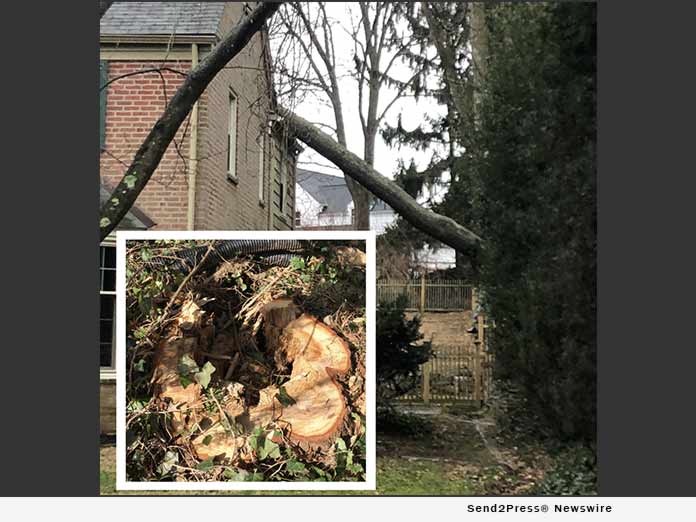
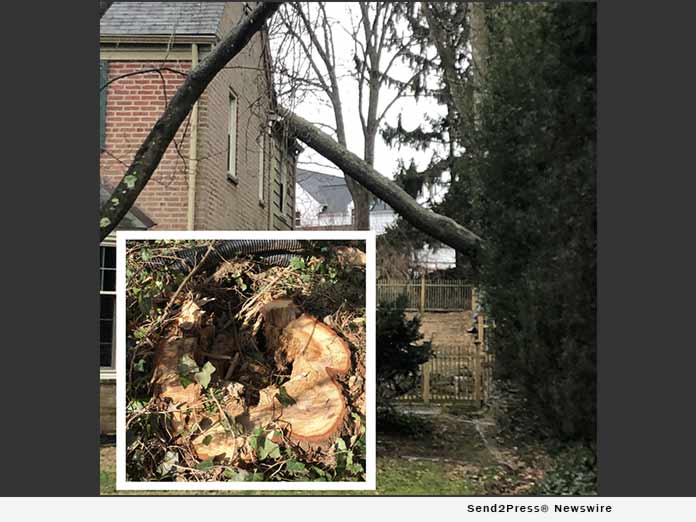
HUNTINGDON VALLEY, Pa. /ScoopCloud/ -- It's late on Friday afternoon, and a Glenside homeowner is out running errands when her cell phone starts dinging with text messages. She checks her phone to find alerts from her neighbors: a tall Hemlock Tree has crashed down onto her house in the 60 mph wind gusts! She rushes home to find the massive tree trunk resting on the side of her roof. This homeowner wasn't expecting to kick off her weekend with storm damage, but thankfully Giroud Tree and Lawn's ISA Certified Arborist, Mike Chenail was able to assess the tree ASAP.

Hidden Danger

The tree originally stood in the middle of a line of other Hemlocks, so what caused this one to fall while the others stood strong against the high winds? As it turns out, this tree was rotted through in the middle of the trunk! It's hard to say what originally caused the decay. Rotted trees can be infected with diseases or infested with insects, or they could even have poor root damage unseen below the surface. However, preventative tree inspections with an ISA Certified Arborist could have alerted the homeowners to a problem before it became a disaster.

Preventing Storm Damage

High winds and icy conditions can strike at any time, and storm damage can be dangerous and expensive! Homeowners should check trees before storms hit. This is the best way to ensure the trees can withstand the crushing force of snow, ice and gusty winds that can send heavy limbs crashing and wreak havoc on the property.

There are preventative measures homeowners can take now starting with a visual check of the trees:

1. Did the trees show signs of stress last summer? Premature fall color change, early leaf drop, abnormally small or pale leaves, or new growth that wilted are all indicators of a potential problem.
2. Does the trunk have a cavity or signs of splitting? Scan the trunk and main leaders for holes (cavities), decay and cracked or split crotches.
3. Is the bark peeling from the trunk? Gently pull on a piece of bark. It should not break off easily.
4. Are twigs and buds developing normally? Scrape either a twig or bud with a thumbnail. It should be a healthy green, not brown or otherwise discolored.
5. Is new growth surviving the strains of winter? Try to bend a twig. Does it snap because it's dry and brittle?

If trees exhibit any of these signs, the homeowner can schedule an inspection with an ISA Certifed Arborist.

Some Trees are More Prone to Storm Damage than Others

If heavy snow strikes, take special care of trees like White Pines, Arborvitae, Bradford Pear and Birch. Before the snow gets too heavy, shake or brush it off shrubs and small trees to prevent breakage. All trees should be inspected, but these trees are more common victims and their branches can easily break under the weight of snow.

Prevent Storm Damage with an Inspection

To keep trees and properties safe, the experts at Giroud Tree and Lawn recommend homeowners do the following:
1. Hazard Inspection: Have an ISA Certified Arborist do a root to crown inspection to identify hazards such as cracks, weak limbs, deadwood or unsafe root systems.
2. Tree Removal: Dead trees are a hazard and must be removed. Winter is an especially good time for removals since the ground is hard and there is less risk of damaging understory plants and lawns.
3. Winter Pruning: Two types of pruning are most critical in the winter: deadwood removal and reducing wind resistance. Selectively thinning branches helps the wind to move more easily through the tree and prevents uprooting. However, never thin more than 25% of a tree's crown at one time. Additionally, dead branches should also be removed since those are the first to break in a storm.
4. Install Cables or Bolts: Trees with multiple trunks or weakly attached limbs are prime targets for splitting. To successfully secure a tree, use a tree service professional with the knowledge required to select the best cable system for each tree's specific situation and install it at the right tension and location in the tree.

About Giroud Tree and Lawn

Giroud Tree and Lawn specializes in tree service, lawn care and mosquito and tick control programs that make customers love doing business with the company since 1974. Serving Bucks, Montgomery and Philadelphia Counties, the company offers professional tree and lawn evaluation, tree pruning, tree removal, insect and disease control, fertilizing, stump removal, traditional and 100% organic lawn programs and mosquito and tick control. Giroud Arborists are certified by the International Society of Arboriculture (ISA) and have the knowledge and experience required to properly diagnose, treat and maintain trees and lawn health.

The company is Accredited by the Tree Care Industry Association and Better Business Bureau. The "Giroud Treework for Charity" program donates free tree care services to parks, historical sites and other non-profit organizations located in the Company's service area. For more information, visit the company website at http://www.giroudtree.com or call 215-682-7704.

News from Giroud Tree and Lawn

It's late on Friday afternoon, and a Glenside homeowner is out running errands when her cell phone starts dinging with text messages. She checks her phone to find alerts from her neighbors: a tall Hemlock Tree has crashed down onto her house in the 60 mph wind gusts! Thankfully Giroud Tree and Lawn's ISA Certified Arborist, Mike Chenail was able to assess the tree ASAP.

Related link: http://www.giroudtree.com

This version of news story was published on ScoopCloud™ (ScoopCloud.com) - part of and © the Neotrope® News Network - all rights reserved.

Now is the Time to Set Up a Spring Lawn Care Program

HUNTINGDON VALLEY, Pa. /ScoopCloud/ -- It's 7 am on a chilly Wednesday morning in February. Giroud Lawn Care Technician, Bill Krowchena, climbs into his lawn service truck with a large Dunkin Donuts coffee. He takes a sip before he starts paging through his clipboard and notes. "We have a lot of stops today, so I need my coffee!"

Boy is he right! Bill has a full day ahead of him visiting lawns in Wynnewood and Ardmore, PA. Homeowners might be wondering: Why in the world is Bill visiting lawns in the dead of winter? Believe it or not, now is the time to evaluate lawns for spring and summer lawn service programs.

Great Lawn Service Starts with a Plan Now

"Timing is everything," explains Bill. "If we don't get customers on the schedule now, they could miss those crucial first treatments, and that sets the tone for the whole season."

An effective lawn care program should have a fertilizer treatment paired with Pre-emergent crabgrass control and broadleaf weed control.

"Crabgrass is such a pain, and it's all over the Philadelphia area," says Bill. "You really have to stay on top of it or it can take over your lawn."

Additionally, if the first treatments are late, it pushes back all of the other treatments. Since a great lawn care program is designed to address specific issues at different times of the season, the lawn could suffer if homeowners don't plan ahead.

"I've seen whole lawns destroyed by grubs in just a few weeks!" explains Bill. "We have preventative grub control built right into the program at just the right time to knock them out."

Weather also plays an important role in lawn service timing. A professional lawn service team stays on top of weather patterns when making the decision on when to start treatments. "We haven't had much snow this year, but in Pennsylvania it's really not unusual to get slammed with a storm in March," notes Bill. "On the other hand, if we have an early spring, we need to get on customers' properties ASAP and start those treatments."

Identifying Trouble Spots Now

Working with an experienced Lawn Care expert now will guarantee the best results from a program. That's because, they identify which areas might be more of a challenge and how to solve it.

"Each lawn is different from the next," explains Bill. "When I'm evaluating a lawn, I look for all kinds of issues. I might see moss growing over here, thinning grass over there, or a big tree that will leaf out, shade grass and slow down growth. Then, I plan strategies for taking care of those issues. For example, I might suggest seeding or aeration for a lawn that needs a little TLC."

An experienced lawn care technician is able to identify the subtle differences in lawn health or appearance issues to correctly diagnose and treat the real problem.

How to Get Started on a Lawn Care Program

Now is the time for homeowners to schedule a full lawn inspection with an experienced lawn service. The lawn care expert will walk the entire property and create a custom plan to combat any issues on the lawn. Homeowners should choose a lawn service that does a mid-season check-up that includes a pH Soil Test. Maintaining a healthy pH is vital to producing great results for the lawn. Lime applications may be recommended to decrease the acidity in the soil, so the grass will grow healthy and strong!

Learn more: https://www.giroudtree.com/blog/lawn-success-story

For more information, check out Giroud Arborist Rob Nagy's demonstration of a pH Soil Test.

About Giroud Tree and Lawn

Giroud Tree and Lawn specializes in tree service, lawn care and mosquito and tick control programs that make customers love doing business with the company since 1974. Serving Bucks, Montgomery and Philadelphia Counties, the company offers professional tree and lawn evaluation, tree pruning, tree removal, insect and disease control, fertilizing, stump removal, traditional and 100% organic lawn programs and mosquito and tick control. Giroud Arborists are certified by the International Society of Arboriculture (ISA) and have the knowledge and experience required to properly diagnose, treat and maintain trees and lawn health. The company is Accredited by the Tree Care Industry Association and Better Business Bureau. The "Giroud Treework for Charity" program donates free tree care services to parks, historical sites and other non-profit organizations located in the Company's service area.

For more information, visit the company website at http://www.giroudtree.com or call 215-682-7704.

News from Giroud Tree and Lawn

It's 7 am on a chilly Wednesday morning in February. Giroud Lawn Care Technician, Bill Krowchena, climbs into his lawn service truck with a large Dunkin Donuts coffee. He takes a sip before he starts paging through his clipboard and notes. "We have a lot of stops today, so I need my coffee!"

Related link: http://www.giroudtree.com

This version of news story was published on ScoopCloud™ (ScoopCloud.com) - part of and © the Neotrope® News Network - all rights reserved.

Homeowners Beware of Dead Tree Branches

HUNTINGDON VALLEY, Pa. /ScoopCloud/ -- A dead tree branch is often a signal of a hidden health issue, and if a tree has a lot of deadwood it could be a big problem! Insect invasions, disease, and poor root systems are just a few reasons why a tree might be in distress, says Giroud Tree and Lawn. Here are a few tips to help homeowners spot problems and take action.

How to Spot Deadwood
* Foliage: Live branches transfer essential nutrients to the tree's foliage. A dead or dying tree branch will show little to no foliage because this process has slowed or stopped.
* Bark: A tree's bark naturally falls off, but is replaced as the branch grows. As a tree branch dies however, it will no longer replace any lost bark, giving a clear warning sign that something is wrong.
* Trunk Decay: Brittle bark or fungus growth on the trunk can mean the entire tree may be dying. As it deteriorates, the branches of the tree will die off, creating a big falling hazard.

Inspecting Trees Branches Can Prevent Catastrophe

In Giroud Tree and Lawn's informative video, Vice President and ISA Certified Arborist, Drew Slousky, inspects a fairly large Maple tree. This Maple lost a massive dead limb in a wind storm. Drew's video explains how this dead tree branch and other deadwood in the tree opened the door for insects and decay. As a result, the tree is no longer safe and must be removed.

Here are the actions to take now
* Inspection: Call an ISA Certified Arborist to inspect not just the tree branches but the entire as well. A trained arborist knows how to spot the underlying issues that cause deadwood.
* Pruning: Removing deadwood is key, but it takes a steady hand and a lot of knowhow to do it right. Cutting too far towards or away from the trunk can be dangerous. Choose a tree service that has years of experience safely and professionally removing deadwood.
* Give the tree some TLC with a Deep Root Feeding: Injecting the tree with an extra boost of nutritious deep root fertilization treatment will help keep the tree and its branches healthy and strong. Homeowners can read more by visiting Giroud's post How Every Tree Benefits from a Deep Root Feeding.

By properly caring for a tree with regular pruning, visually checking for warning signs, and boosting its health with fertilization treatments, homeowners can avoid falling hazards from deadwood and keep the tree strong and able to fight against insects and diseases.

About Giroud Tree and Lawn

Giroud Tree and Lawn specializes in tree service, lawn care and mosquito and tick control programs that make customers love doing business with the company since 1974. Serving Bucks, Montgomery and Philadelphia Counties, the company offers professional tree and lawn evaluation, tree pruning, tree removal, insect and disease control, fertilizing, stump removal, traditional and 100% organic lawn programs and mosquito and tick control. Giroud Arborists are certified by the International Society of Arboriculture (ISA) and have the knowledge and experience required to properly diagnose, treat and maintain trees and lawn health.

The company is Accredited by the Tree Care Industry Association and Better Business Bureau. Giroud has also been awarded the Angie's List Super Service Award(r) every year since 2005. The "Giroud Treework for Charity" program donates free tree care services to parks, historical sites and other non-profit organizations located in the Company's service area.

For more information, visit the company website at http://www.giroudtree.com or call 215-682-7704.

News from Giroud Tree and Lawn

A dead tree branch is often a signal of a hidden health issue, and if a tree has a lot of deadwood it could be a big problem! Insect invasions, disease, and poor root systems are just a few reasons why a tree might be in distress, says Giroud Tree and Lawn. Here are a few tips to help homeowners spot problems and take action.

Related link: http://www.giroudtree.com

This version of news story was published on ScoopCloud™ (ScoopCloud.com) - part of and © the Neotrope® News Network - all rights reserved.

How to Revive Your Property This New Year

HUNTINGDON VALLEY, Pa. /ScoopCloud/ -- The start of a new year is the perfect time to schedule a full property evaluation with an ISA Certified Arborist and Lawn Care Expert. After a compete inspection, they can develop a step-by-step plan to revive the property this year. From Pruning trees to starting a lawn care program, homeowners can breathe new life into the yard and garden.

The Many Wonderful Benefits of Tree Pruning

There are lots of great reasons to have trees pruned this year. Heavy crowns, dense branches, and overweight limbs make trees a big target for seasonal storm damage. When storms strike, Bradford Pear, Silver Maple, Birch, Arborvitae, and White Pine typically are hit the hardest with broken limbs, split trunks, and total tree failure. Ultimately though, all trees are at risk. Maintenance is far cheaper than cleaning up after a storm! Tree pruning and tree trimming involves everything from elevating lower branches and clearing branches away from houses, pools, driveways, and walks. Pruning trees will open up air flow and reduce the weight in the crown. Plus, pruning will help identify structural weaknesses.

Tree Pruning now will also reduce debris that makes a yard messy. Trees that drop fruit, nuts or other debris onto key parts of the property such as the pool area, roof, driveway and, patio are ideal for pruning and can keep the property clean.

Additionally, tree branches may be giving critters direct access to the house! Now is a great time to prune trees away from the house and shed to avoid access by squirrels and other wildlife to rooftops and attics.

Revive Trees with a Deep Root Feeding

Every tree benefits from a Deep Root Feeding! Like a vitamin for humans, trees need to be fertilized annually to maintain good health and fight off disease and insects. Homeowner's should choose a tree care company that uses a time release fertilizer, so it will provide steady doses of nutrients all year long. With this boost, the tree will feed on the abundance of vitamins from the fertilizer rather than over tapping into its own nutrient reserves.

Plant a New Tree

Adding a new element, such as a healthy, new tree, will revive the property for sure! Here are some great reasons to plant a new tree:
* Replace a tree that has died or outgrown its current location and requires tree removal.
* Build a privacy screen or sound barrier
* Provide shade for a patio, porch or other area
* Add color with a tree that flowers or changes color with the seasons
* Create a focal point with a plant that has unusual branch formation, interesting bark or other characteristics

Location, species of tree, and how a new tree will balance the landscape are all important items to consider when planting a new tree. An ISA Certified Arborist should do a full evaluation of the entire property before recommending the best tree.

Revive the Lawn

Now is actually a great time to meet with a Lawn Care Expert to tailor a program for making the lawn healthy and beautiful this upcoming spring and summer. If a lawn revitalization plan is in place early, a Lawn Care Technician can target the best time to kick off the vital first treatments.

About Giroud Tree and Lawn

Giroud Tree and Lawn specializes in tree service, lawn care and mosquito and tick control programs that make customers love doing business with the company since 1974. Serving Bucks, Montgomery and Philadelphia Counties, the company offers professional tree and lawn evaluation, tree pruning, tree removal, insect and disease control, fertilizing, stump removal, traditional and 100% organic lawn programs and mosquito and tick control. Giroud Arborists are certified by the International Society of Arboriculture (ISA) and have the knowledge and experience required to properly diagnose, treat and maintain trees and lawn health. The company is Accredited by the Tree Care Industry Association and Better Business Bureau. Giroud has also been awarded the Angie's List Super Service Award(r) every year since 2005. The "Giroud Treework for Charity" program donates free tree care services to parks, historical sites and other non-profit organizations located in the Company's service area.

For more information, visit the company website at http://www.giroudtree.com or call 215-682-7704.

News from Giroud Tree and Lawn

The start of a new year is the perfect time to schedule a full property evaluation with an ISA Certified Arborist and Lawn Care Expert. After a compete inspection, they can develop a step-by-step plan to revive the property this year. From Pruning trees to starting a lawn care program, homeowners can breathe new life into the yard and garden.

Related link:

This version of news story was published on ScoopCloud™ (ScoopCloud.com) - part of and © the Neotrope® News Network - all rights reserved.

How to Choose Between a Real or Artificial Christmas Tree

HUNTINGDON VALLEY, Pa. /ScoopCloud/ -- The hustle and bustle of the holiday season is fully underway, and homeowners might be heading out this weekend to pick out the perfect Christmas tree. In the decades-long battle of real versus artificial Christmas trees, it can be difficult to decide between the two. The experts at Giroud Tree and Lawn share helpful tips to help homeowners weigh the pros and cons before buying a Christmas tree.

There's a lot to consider when deciding on a real versus artificial Christmas trees. Environmentally speaking, there have been studies that show both real and artificial are better for various reasons. On the one hand, a real tree will decompose and break down much faster than an artificial tree. However, an artificial tree can be reused for many years.

When it comes to pricing, an artificial tree will cost about 1.5 times the amount of a real tree. But again, this is a one-time purchase whereas homeowners will put out that money every year with a real tree.

Many people suffer allergies related to real Christmas trees, including pine scent and mold spores. It's important to note, however, that an artificial tree can also carry mold and dust if not stored properly throughout the year.

An artificial Christmas tree is certainly cleaner than a real tree, which will drop needles and possibly sticky sap while it's in the home. To avoid the need for frequent vacuuming, an artificial tree might be best! However, there's nothing quite like the seasonal smell of pine that comes from a real Christmas tree, and many people don't mind the clean-up in exchange for that signature scent!

The best way to decide between a real versus artificial Christmas tree is to consider all of these factors when it comes to the family's wants and needs. If homeowners decide to go with an artificial Christmas tree, they should check out this list compiled by Good Housekeeping: 14 of the Best Artificial Christmas Trees that Look Incredibly Realistic.

Types of Real Christmas Trees

Walking onto a tree lot can feel overwhelming! In Pennsylvania, there are 3 main types of Christmas trees: Pine, Spruce and Fir. But there are subtle differences within each species variety.

Pine Christmas Trees are Cost Friendly

The needles of Pine Trees can vary from the sharp needles of a Scotch Pine to the softer needles of a White Pine. Overall needle retention is excellent and the tree will look vibrant and healthy through the holiday season. Since Pines are a fast-growing variety, a larger Pine Tree will cost much less than other varieties of the same size.

Spruce Christmas Trees come in a Beautiful Spectrum of Color

The needles of Spruce Trees are much sharper than any other Christmas tree variety. Some homeowners prefer the sharper needles to deter pets and keep kids from playing with the ornaments. There may be more needle drop with a Spruce, but there's no mistaking the beautiful coloring of this ornamental tree, especially the Blue Spruce. Within the Blue Spruce family alone there is a broad range of blue-greens that are sure to make ornaments sparkle!

Fir Trees have that distinct Christmas Tree scent

For that crisp Christmas tree smell, go with a Fir. This dark green tree has been a popular choice for generations, and its strong branches can easily hold heavier ornaments. The Balsam Fir has the strongest scent; while Douglas and White Firs are a little milder. Firs in general have soft needles, so they're much easier to set up without cutting hands. They're also safer for kids and pets.

Always do a quick needle test at the lot to make sure the tree is fresh and will last through the holiday season. Pick up the tree by the trunk and tap it down on the ground a few times. A little bit of droppage is ok, but if it's raining needles move on to the next tree. Do a branch test by gently pulling from the inside of the branch out to see if a lot of needles fall off. According to the Pennsylvania Christmas Tree Growers Association website, to test for tree freshness "bend a needle in half with your fingers. Fresh firs should snap, while fresh pines bend and should not break."

About Giroud Tree and Lawn

Giroud Tree and Lawn specializes in tree service, lawn care and mosquito and tick control programs that make customers love doing business with the company since 1974. Serving Bucks, Montgomery and Philadelphia Counties, the company offers professional tree and lawn evaluation, tree pruning, tree removal, insect and disease control, fertilizing, stump removal, traditional and 100% organic lawn programs and mosquito and tick control. Giroud Arborists are certified by the International Society of Arboriculture (ISA) and have the knowledge and experience required to properly diagnose, treat and maintain trees and lawn health. The company is Accredited by the Tree Care Industry Association and Better Business Bureau. Giroud has also been awarded the Angie's List Super Service Award(r) every year since 2005. The "Giroud Treework for Charity" program donates free tree care services to parks, historical sites and other non-profit organizations located in the Company's service area.

For more information, visit the company website at http://www.giroudtree.com or call 215-682-7704.

News from Giroud Tree and Lawn

The hustle and bustle of the holiday season is fully underway, and homeowners might be heading out this weekend to pick out the perfect Christmas tree. In the decades-long battle of real versus artificial Christmas trees, it can be difficult to decide between the two. The experts at Giroud Tree and Lawn share helpful tips to help homeowners weigh the pros and cons before buying a Christmas tree.

Related link:

This version of news story was published on ScoopCloud™ (ScoopCloud.com) - part of and © the Neotrope® News Network - all rights reserved.

How to Check for Signs of Spotted Lanternfly Before Purchasing a Christmas Tree

HUNTINGDON VALLEY, Pa. /ScoopCloud/ -- Finding the perfect Christmas trees is one of the highlights of the holiday season. However, with the recent invasion of the Spotted Lanternfly, many Pennsylvanians are left wondering if they should be hesitant about bringing a possible tainted topiary into their home. The experts at Giroud Tree and Lawn explain what to look for on Christmas trees before buying one.

Why Is Spotted Lanternfly Spreading So Fast?

Spotted Lanternfly came from Asia, where natural predators keep the species from multiplying too quickly. Unfortunately, here in the United States, it's spreading rapidly because those known predators aren't around to keep it in check.

Spotted Lanternfly and Christmas Trees

While Spotted Lanternfly have invaded Pennsylvania heavily in the last few years, there's not much cause for concern on your Christmas Conifer. The PA Department of Agriculture and Penn State have been working closely with the Pennsylvania Christmas Tree Growers Association, and they have been diligently training all tree growers on proper inspection practices.

Although the Spotted Lanternfly has been seen on many species of trees, they don't appear to show an interest in the varieties used for Christmas trees. In a recent article published by the Penn State Extension, Tanner Delvalle, a horticulture extension educator explains, "Christmas trees are not a preferred host for spotted lanternflies, so the probability of finding a spotted lanternfly or an egg mass on Christmas trees is low and should not be a reason for anyone to forego having a live holiday tree."

Inspect Before Buying a Christmas Tree

Although the Spotted Lanternfly is a cause for concern, the bottom line is that homeowners should always check any live tree before bringing it home. All sorts of insects and critters can hang out in a live tree, so it's best to do a full inspection before purchasing. However, other than the occasional spider, homeowners can rest assured that PA Christmas Tree growers are adhering to strict standards and checking trees before they head to the lot.

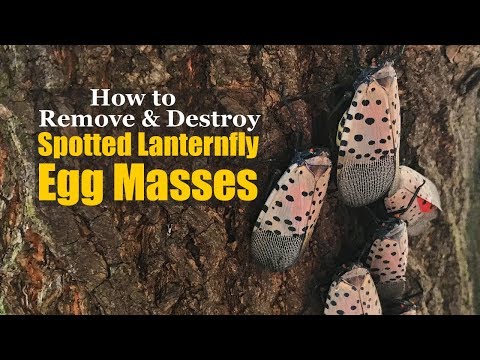
Still, it's a good idea to know how to look for Spotted Lanternfly Egg Masses. At this time of year, all of the adults have died, but they've left behind eggs which will hatch in the spring. These eggs are laid in rows of about 10, and they are covered in a clay-like gray colored secretion. To destroy the egg masses, use a credit card to scrape them off and drop them in a bag with rubbing alcohol.

Before heading out to the Christmas tree lot or farm, homeowners can watch Giroud's instructional video on Spotted Lanternfly Egg Masses to know exactly what to look for.

Pennsylvania Christmas Tree Growers Association Executive Director, Denise Calabrese, states "We encourage all Christmas tree lovers to enjoy everything that a real tree adds to the season. It's a great family tradition and a way to support your local agricultural community. I know that it won't deter me from having a real tree in my home again this year."

About Giroud Tree and Lawn

Giroud Tree and Lawn specializes in tree service, lawn care and mosquito and tick control programs that make customers love doing business with the company since 1974. Serving Bucks, Montgomery and Philadelphia Counties, the company offers professional tree and lawn evaluation, tree pruning, tree removal, insect and disease control, fertilizing, stump removal, traditional and 100% organic lawn programs and mosquito and tick control. Giroud Arborists are certified by the International Society of Arboriculture (ISA) and have the knowledge and experience required to properly diagnose, treat and maintain trees and lawn health. The company is Accredited by the Tree Care Industry Association and Better Business Bureau. Giroud has also been awarded the Angie's List Super Service Award(r) every year since 2005. The "Giroud Treework for Charity" program donates free tree care services to parks, historical sites and other non-profit organizations located in the Company's service area. For more information, visit the company website at http://www.giroudtree.com or call 215-682-7704.

News from Giroud Tree and Lawn

Finding the perfect Christmas trees is one of the highlights of the holiday season. However, with the recent invasion of the Spotted Lanternfly, many Pennsylvanians are left wondering if they should be hesitant about bringing a possible tainted topiary into their home. The experts at Giroud Tree and Lawn explain what to look for on Christmas trees before buying one.

Related link:

This version of news story was published on ScoopCloud™ (ScoopCloud.com) - part of and © the Neotrope® News Network - all rights reserved.

Dead Ash Trees Can Cause Destruction During Winter Snow and Ice Storms

HUNTINGDON VALLEY, Pa. /ScoopCloud/ -- Emerald Ash Borer is a dangerous insect that invades and destroys Ash trees. They have killed thousands of trees across the country since they first appeared in 2002. As winter storm season approaches, there's something in particular that makes infested Ash Trees a big cause for concern- Dead Ash Trees are Dangerous! The experts at Giroud Tree and Lawn explain why this species of trees can pose a threat during a heavy winter storm and why homeowners should have them removed.

Emerald Ash Borers are fast killers

Ash trees infested with Emerald Ash Borers die within 1-3 years. To understand why dead Ash trees are not safe, it is important to understand how the Emerald Ash Borer invades and inevitably kills a tree.

The adult borers swarm the tree and lay eggs under the bark. Once the larvae emerge, they immediately start chewing their way through the wood of the tree. The veins in the grains of the tree allow water to flow through the tree, so when the larvae chew through the wood, they cut off water circulation. Additionally, the adult beetles create thousands of exit wounds as they leave the tree, further causing damage that dries out the tree.

If more than 1/2 of the tree's crown is dead, the Ash cannot be saved. Unfortunately, a dead Ash tree quickly becomes a safety hazard. Tree removal will be necessary, especially if the dead Ash is located near a home, driveway or play area.

Why Dead Ash Trees are Dangerous

Two realities make Ash Trees killed by Emerald Ash Borers a dangerous safety hazard:
1. Moisture Loss: Emerald Ash Borers cut off the flow of water and nutrients through the tree. Additionally, the fatal pest creates thousands of exit wounds. Both conspire to dry out the tree and make it brittle.
2. Weak Structure: The same straight, tight grain that makes Ash great for baseball bats and splitting firewood is also why its limbs and leaders easily split apart. The result is a dry, brittle tree that is at high risk for breaking apart.

Removal Must Be Done ASAP - especially Before Winter Storms Strike!

A dead Ash tree is not a simple tree removal. The brittle tree is so dry that it can break apart in unexpected ways and cause significant damage. Harsh winter weather and unexpected snow and ice storms can trigger a disaster for a dry dead Ash Tree!

The first step is to have the tree evaluated by an ISA Certified Arborist to determine the tree's condition. The Arborist will determine if a tree climber can safely work in the tree or if a crane and/or bucket truck is required. The longer the dead tree is left in the ground, the drier and more dangerous it becomes, making tree removal even more complicated and expensive.

Homeowners should take the following steps now:
1. Inspection: Have an ISA Certified Arborist evaluate the tree and recommend the best action.
2. Tree Removal: If the Ash tree is dead or has become unsafe, prompt removal is required.
3. Treatment: If the Ash tree is still healthy enough to absorb treatment, a systemic trunk injection of Tree-age(r) every two years protects Ash from Emerald Ash Borers.
4. Regular Pruning: In combination with treatment, remove deadwood and prune to promote healthy growth.

About Giroud Tree and Lawn

Giroud Tree and Lawn specializes in tree service, lawn care and mosquito and tick control programs that make customers love doing business with the company since 1974. Serving Bucks, Montgomery and Philadelphia Counties, the company offers professional tree and lawn evaluation, tree pruning, tree removal, insect and disease control, fertilizing, stump removal, traditional and 100% organic lawn programs and mosquito and tick control. Giroud Arborists are certified by the International Society of Arboriculture (ISA) and have the knowledge and experience required to properly diagnose, treat and maintain trees and lawn health.

The company is Accredited by the Tree Care Industry Association and Better Business Bureau. Giroud has also been awarded the Angie's List Super Service Award(r) every year since 2005. The "Giroud Treework for Charity" program donates free tree care services to parks, historical sites and other non-profit organizations located in the Company's service area. For more information, visit the company website at http://www.giroudtree.com or call 215-682-7704.

News from Giroud Tree and Lawn

Emerald Ash Borer is a dangerous insect that invades and destroys Ash trees. They have killed thousands of trees across the country since they first appeared in 2002. As winter storm season approaches, there's something in particular that makes infested Ash Trees a big cause for concern- Dead Ash Trees are Dangerous!

Related link:

This version of news story was published on ScoopCloud™ (ScoopCloud.com) - part of and © the Neotrope® News Network - all rights reserved.

Giroud Tree and Lawn explains homeowners should remove Ailanthus trees, the host plant for Spotted Lanternfly

HUNTINGDON VALLEY, Pa. /ScoopCloud/ -- Researchers are still learning about the Spotted Lanternfly, an invasive insect attacking trees and causing property damage across Pennsylvania. Penn State, along with the PA Department of Agriculture and the USDA, has been researching the habits and life cycle of Spotted Lanternfly since it first appeared in Berks County in 2014.

One thing is certain: the Ailanthus Tree (or Tree of Heaven) is a magnet for these pests. The experts at Giroud Tree and Lawn explain why if homeowners have an Ailanthus tree on the property, removal may be the best way to avoid an invasion of Spotted Lanternfly.

Why Is Spotted Lanternfly Spreading So Fast?

Spotted Lanternfly came from Asia, where natural predators keep the species from multiplying too quickly. Unfortunately, here in the United States, it's spreading rapidly because those known predators aren't around to keep it in check.

What Can Homeowners Do to Control Spotted Lanternfly?

Although this insect's population is growing exponentially each year, there are many things homeowners can do to control it:
* Use sticky bands on trees starting in early May to catch any young nymphs.
* Treat any infested trees with a basal trunk spray in July to kill adults as they crawl up the tree.
* Treat any infested trees with 1-2 foliar sprays in late August - early November to kill adults in the crown of the tree.
* Scrape and destroy all egg masses on any reachable branches and the trunk of the tree. Also check for egg masses on the undersides of every surface outside, including playsets, grills, decking, railings, patio furniture and siding.
* Remove all Ailanthus trees and Ailanthus tree sprouts from the property.

What is an Ailanthus Tree?
The main host tree for Spotted Lanternfly is the Ailanthus Altissima, or Tree of Heaven. Ailanthus trees came to the U.S. from China around the 1780's. Classified as "weed trees", they reproduce by both seed and root sprouts. Shoots can sprout from the tree's roots from as far away as 5o feet around the tree!

Ailanthus trees can grow up to 100 feet tall and the trunk can be nearly 6 feet in diameter. They have a great canopy and often thrive easily in conditions other trees don't. In fact, an Ailanthus tree may be viewed as an important part of the yard and homeowners may be hesitant to remove them. However, if there are any other valuable trees on the property, the Ailanthus will attract Spotted Lanternfly and the insects could also swarm other trees.
Spotted Lanternfly have been known to attack other types of trees, including Black Walnuts, Maples, Birches, Willows, and many more. According to the PA Department of Agriculture, they feed from more than 70 species of trees, and 25 of them are found in Pennsylvania. Keeping an Ailanthus tree is like inviting Spotted Lanternfly to a buffet in the backyard!

How to Remove Ailanthus Trees

If homeowners have an Ailanthus tree or are not sure if a tree is an Ailanthus, they should call an ISA Certified Arborist to evaluate the tree look for signs of Spotted Lanternfly. Giroud Tree and Lawn recommends removing Ailanthus trees and grinding the stumps down as deeply as possible.

After removing the Ailanthus tree and stump, sprouts may still pop up on the property. The good news is they are easy to remove! Grab the shoot by its base and pull upward gently to remove the young tree and all of its roots. To see how to identify and remove an Ailanthus tree, watch this video with Giroud Tree and Lawn's ISA Certified Arborist, Mike Chenail.

About Giroud Tree and Lawn

Giroud Tree and Lawn specializes in tree service, lawn care and mosquito and tick control programs that make customers love doing business with the company since 1974. Serving Bucks, Montgomery and Philadelphia Counties, the company offers professional tree and lawn evaluation, tree pruning, tree removal, insect and disease control, fertilizing, stump removal, traditional and 100% organic lawn programs and mosquito and tick control. Giroud Arborists are certified by the International Society of Arboriculture (ISA) and have the knowledge and experience required to properly diagnose, treat and maintain trees and lawn health. The company is Accredited by the Tree Care Industry Association and Better Business Bureau. Giroud has also been awarded the Angie's List Super Service Award(r) every year since 2005. The "Giroud Treework for Charity" program donates free tree care services to parks, historical sites and other non-profit organizations located in the Company's service area.

For more information, visit the company website at http://www.giroudtree.com or call 215-682-7704.

News from Giroud Tree and Lawn

Researchers are still learning about the Spotted Lanternfly, an invasive insect attacking trees and causing property damage across Pennsylvania. Penn State, along with the PA Department of Agriculture and the USDA, has been researching the habits and life cycle of Spotted Lanternfly since it first appeared in Berks County in 2014.

Related link:

This version of news story was published on ScoopCloud™ (ScoopCloud.com) - part of and © the Neotrope® News Network - all rights reserved.

Cabling Weak, Heavy Tree Branches Now Can Prevent Huge Costs Later

HUNTINGDON VALLEY, Pa. /ScoopCloud/ -- Heavy winds and rough weather can lead to trees splitting apart and dangerous falling limbs. The time and money it costs to clean up these disasters can be astronomical! The experts at Giroud Tree and Lawn explain why cabling a tree now can prevent huge costs in the long run.

There are a few reasons why homeowners may need to have a tree cabled:

Co-dominant Leaders: If a tree has two or more main leaders or trunks, it may be at high risk for splitting apart. The area where the leaders divide is often a major weak spot for a tree.

Overextended, Weakly Attached Limbs: Sometimes a limb that extends from the main trunk may experience aggressive growth. If this limb becomes too big, the weight becomes too much for the trunk to bear and the limb snaps. If caught in time, this limb can be cabled to the main trunk which will ease the weight distribution and prevent breakage.

Some trees are just more susceptible to breakage: Just about any tree with weakly attached limbs or more than one main trunk is at risk for splitting apart or losing major limbs. Check out this report by the University of Illinois which highlights which trees are more at risk for breakage than others.

Oftentimes, homeowners have no idea that a tree is a threat, which is why trees should be inspected by an ISA Certified Arborist on a regular basis. The arborist may recommend cabling to prevent a disaster later.

Here are some reasons why:
* Safety Hazard: People underneath weak limbs can get seriously hurt when branches break.
* Financial Burden: When large limbs and leaders break, they can land on a roof, shed, car or fence. The financial costs that come with falling trees can add up quickly!
* Time is Money: Dealing with contractors, insurance companies, and days lost at work trying to clean up the mess from a fallen tree takes a lot of time!

A Proactive Approach

Installing cables in weak limbs is often the best way to prevent trees from splitting and breaking apart. Tree cables are like a safety net for trees. By reducing the strain on weak limbs, tree cables prevent the limbs from splitting and causing damage or complete tree failure. For cracked trunks, a through bolt helps to keep the trunk from splitting apart.

In Giroud Tree and Lawn's informative video, Giroud ISA Certified Arborist and Vice President, Drew Slousky, shows several large trees that have been saved by cables.
https://youtu.be/vM2X06dzIkE


"The only way for homeowners to be sure trees on the property are safe is to have a Certified Arborist inspect all the trees annually," explains Drew Slousky, Giroud ISA Certified Arborist and Vice President.

If a tree is already cabled, annual inspections are vital! Cable hardware wears down over time. Tree health and structural integrity can also change. For safety and performance, tree cable supports must be inspected by an ISA Certified Arborist annually.

About Giroud Tree and Lawn

Giroud Tree and Lawn specializes in tree service, lawn care and mosquito and tick control programs that make customers love doing business with the company since 1974. Serving Bucks, Montgomery and Philadelphia Counties, the company offers professional tree and lawn evaluation, tree pruning, tree removal, insect and disease control, fertilizing, stump removal, traditional and 100% organic lawn programs and mosquito and tick control. Giroud Arborists are certified by the International Society of Arboriculture (ISA) and have the knowledge and experience required to properly diagnose, treat and maintain trees and lawn health. The company is Accredited by the Tree Care Industry Association and Better Business Bureau. Giroud has also been awarded the Angie's List Super Service Award(r) every year since 2005. The "Giroud Treework for Charity" program donates free tree care services to parks, historical sites and other non-profit organizations located in the Company's service area. For more information, visit the company website at http://www.giroudtree.com or call 215-682-7704.

News from Giroud Tree and Lawn

Heavy winds and rough weather can lead to trees splitting apart and dangerous falling limbs. The time and money it costs to clean up these disasters can be astronomical! The experts at Giroud Tree and Lawn explain why cabling a tree now can prevent huge costs in the long run.

Related link:

This version of news story was published on ScoopCloud™ (ScoopCloud.com) - part of and © the Neotrope® News Network - all rights reserved.

What is Pennsylvania and the Government Doing to Combat and Control the Spotted Lanternfly Invasion

HUNTINGDON VALLEY, Pa. /ScoopCloud/ -- Now that the cooler fall weather is here, the adult Spotted Lanternfly are dying off, but not before laying thousands of eggs which will hatch next spring. Many homeowners are wondering what the government is doing to control the invasive insect. The experts at Giroud Tree and Lawn explain what Pennsylvania is doing to combat Spotted Lanternfly and show homeowners how to remove and destroy Spotted Lanternfly Egg Masses in an instructional video.

There are three main players in the fight against Spotted Lanternfly here in Pennsylvania: the Pennsylvania Department of Agriculture (PDA), the United States Department of Agriculture (USDA), and Penn State College of Agricultural Sciences. Working together, they have been spreading the word about the dangers of this insect to our ecosystem and to homeowners.

Penn State has been researching this insect since it first appeared in the US back in 2014. The hard work done by Emeilie Swackhamer, Penn State Horticulture Director, and her team has been instrumental in understanding how the Spotted Lanternfly is causing damage and how to combat it. She explains in an informational YouTube video that while it's still too early to say what the long-term effects will be, the insects are definitely causing significant die-back and defoliating branches in trees.

The PDA has been working hard to control the insect within the state. They have outlined their efforts on their website as follows:

"The (PDA) has taken on the role of control and treatment and hired more than 20 field staff to:
* Place sticky bands in more than 10,000 locations
* Issue nearly one million permits to more than 17,000 companies
* Survey for Spotted Lanternfly in all 67 counties (33,000 documented points)
* Establish a 14-county quarantine zone
* Kill more than 71,000 Tree of Heaven
* Establish hundreds of trap trees (Tree of Heaven that are left alive and treated with insecticide to kill SLF feeding on the trees)"

The USDA has also been attempting to figure out how to control the insect, even going so far as to import predator wasps from China to test the idea of introducing another invasive insect in order to control this one. However, these trials can take time and they need to research every possible outcome before taking such a measure.

Fred Strathmeyer, Deputy Secretary for Plant Industry and Consumer Protection for PDA, explains the possible negative ramifications in a recent article on PhillyMag.com. "Unleashing (a predator insect), or napalm, or any of the other drastic measures folks have suggested would also devastate the environment, and harm pets and humans and other crops."

How Homeowners Can Help Combat the Spotted Lanternfly Invasion

In an instructional YouTube video, Giroud Tree and Lawn explains what to look for and how to remove and destroy Spotted Lanternfly Egg Masses.

There are 3 important steps homeowners should take if they see Spotted Lanternfly egg masses in the property:
1. Scrape the egg masses from any surfaces using a credit card.
2. Destroy the eggs by dumping the egg masses and any debris into a bottle or bag with rubbing alcohol or hand sanitizer.
3. Report any findings online at http://www.extension.psu.edu/have-you-seen-a-spotted-lanternfly or call the Spotted Lanternfly hotline 1-888-422-3359.

Where to Find Spotted Lanternfly Egg Masses

The first place to look for egg masses is on the undersides of branches of trees where Spotted Lanternfly are feeding. However, these tricky insects will actually lay eggs on virtually any smooth surface, typically on the undersides where the egg masses are better protected from predators.

Egg masses can be found on:
* Benches
* Stones
* Firewood
* Cars
* Playsets
* Railings
* Outdoor Grills
* Patio Furniture

When In Doubt, Call a Certified Arborist

If homeowners have any questions about suspicious masses or any other evidence of Spotted Lanternfly on the property, they should call an ISA Certified Arborist to evaluate the property and look for signs of the insect.

About Giroud Tree and Lawn

Giroud Tree and Lawn specializes in tree service, lawn care and mosquito and tick control programs that make customers love doing business with the company since 1974. Serving Bucks, Montgomery and Philadelphia Counties, the company offers professional tree and lawn evaluation, tree pruning, tree removal, insect and disease control, fertilizing, stump removal, traditional and 100% organic lawn programs and mosquito and tick control. Giroud Arborists are certified by the International Society of Arboriculture (ISA) and have the knowledge and experience required to properly diagnose, treat and maintain trees and lawn health. The company is Accredited by the Tree Care Industry Association and Better Business Bureau. Giroud has also been awarded the Angie's List Super Service Award(r) every year since 2005. The "Giroud Treework for Charity" program donates free tree care services to parks, historical sites and other non-profit organizations located in the Company's service area. For more information, visit the company website at http://www.giroudtree.com or call 215-682-7704.

News from Giroud Tree and Lawn

Now that the cooler fall weather is here, the adult Spotted Lanternfly are dying off, but not before laying thousands of eggs which will hatch next spring. Many homeowners are wondering what the government is doing to control the invasive insect. The experts at Giroud Tree and Lawn explain what Pennsylvania is doing to combat Spotted Lanternfly.

Related link:

This version of news story was published on ScoopCloud™ (ScoopCloud.com) - part of and © the Neotrope® News Network - all rights reserved.

How to Remove and Destroy Spotted Lanternfly Egg Masses

HUNTINGDON VALLEY, Pa. /ScoopCloud/ -- Now that the cooler fall weather is here, the adult Spotted Lanternfly are dying off, but not before laying thousands of eggs which will hatch next spring. Homeowners need to know what to look for because now is the time to take action and destroy as many egg masses as possible. The experts at Giroud Tree and Lawn show homeowners how to remove and destroy Spotted Lanternfly Egg Masses in an instructional video.

Removing and destroying egg masses will greatly reduce the spread of Spotted Lanternfly. The Spotted Lanternfly causes a lot of problems for trees, farmers and homeowners! They destroy crops, damage trees, and attract stinging wasps. The insects also drip a sticky honeydew secretion which can land on hardscapes and cars below.

It is going to take a statewide effort to combat the spread of this insect. Awareness is the first step, and the PA Department of Agriculture is asking for the public's help in combating the Spotted Lanternfly by destroying egg masses now through next May. One female Spotted Lanternfly can lay up to 100 eggs!

In an instructional YouTube video, Giroud Tree and Lawn explains what to look for and how to remove and destroy Spotted Lanternfly Egg Masses. There are 3 important steps homeowners should take if they see Spotted Lanternfly egg masses in the property:
1. Scrape the egg masses from any surfaces using a credit card.
2. Destroy the eggs by dumping the egg masses and any debris into a bottle or bag with rubbing alcohol or hand sanitizer.
3. Report any findings online at http://www.extension.psu.edu/have-you-seen-a-spotted-lanternfly or call the Spotted Lanternfly hotline 1-888-422-3359.

Where to Find Spotted Lanternfly Egg Masses

The first place to look for egg masses is on the undersides of branches of trees where Spotted Lanternfly are feeding. However, these tricky insects will actually lay eggs on virtually any smooth surface, typically on the undersides where the egg masses are better protected from predators.

Egg masses can be found on:
* Benches
* Stones
* Firewood
* Cars
* Playsets
* Railings
* Outdoor Grills
* Patio Furniture

When In Doubt, Call a Certified Arborist

If homeowners have any questions about suspicious masses or any other evidence of Spotted Lanternfly on the property, they should call an ISA Certified Arborist to evaluate the property and look for signs of the insect.

About Giroud Tree and Lawn:

Giroud Tree and Lawn specializes in tree service, lawn care and mosquito and tick control programs that make customers love doing business with the company since 1974. Serving Bucks, Montgomery and Philadelphia Counties, the company offers professional tree and lawn evaluation, tree pruning, tree removal, insect and disease control, fertilizing, stump removal, traditional and 100% organic lawn programs and mosquito and tick control. Giroud Arborists are certified by the International Society of Arboriculture (ISA) and have the knowledge and experience required to properly diagnose, treat and maintain trees and lawn health.

The company is Accredited by the Tree Care Industry Association and Better Business Bureau. Giroud has also been awarded the Angie's List Super Service Award(r) every year since 2005. The "Giroud Treework for Charity" program donates free tree care services to parks, historical sites and other non-profit organizations located in the Company's service area.

For more information, visit the company website at http://www.giroudtree.com or call 215-682-7704.

VIDEO (YouTube): https://youtu.be/2R69LEnBOCs

News from Giroud Tree and Lawn

Now that the cooler fall weather is here, the adult Spotted Lanternfly are dying off, but not before laying thousands of eggs which will hatch next spring. The experts at Giroud Tree and Lawn show homeowners how to remove and destroy Spotted Lanternfly Egg Masses in an instructional video.

Related link:

This version of news story was published on ScoopCloud™ (ScoopCloud.com) - part of and © the Neotrope® News Network - all rights reserved.

5 Fall Warning Signs of Tree Problems

Trees with Health Problems Change Color or Drop Leaves Too Early - Giroud Tree and Lawn Urges Homeowners to Be Alert for Fall Warning Signs of Sick Trees /ScoopCloud/ -- Tree service is needed for trees that change color too early or drop leaves prematurely. Most trees should be in full leaf and green through September; Giroud Tree and Lawn provides the top five Fall warning signs and actions Philadelphia homeowners can take to keep trees healthy and safe.

Trees with fall colors are not a good sign in September. Sycamores, Oaks, Maples and other hardwoods should be in full leaf and green through September. When a tree is under stress, its leaves will change color early as the tree shuts down for winter before other trees of the same type. Giroud Tree and Lawn provides the top five Fall warning signs for trees and the tree service actions Philadelphia homeowners can take to keep trees healthy and safe.

This fall, Philadelphia homeowners need to be on the alert for the five major warning signs that a tree's health is in jeopardy.

1) Leaf Issues: Leaves of the same type of tree should change color and drop at about the same time. Changes before late September may be a sign of health problems. Last year's drought is having a big impact on many trees. According to the University of Massachusetts at Amherst, "negative effects of drought on plant growth and health may continue to be a problem for years to come."

2) Decay: Mushrooms and shelf fungi are symptoms of decay when growing out of the root system or trunk of a tree. Another sign of decay is a cavity. If the decay is extensive, then the tree may be hazardous.

3) Disease: With so much rainfall this summer, fungal diseases are rampant. In particular, Bacterial Leaf Scorch (BLS) has affected many Oaks and other hardwoods. If BLS is identified in the Fall, the tree should be treated with a Biostimulant now and treated with an Antibiotic the following Spring.

4) Insects: When a tree is in trouble Borers such as Bronze Birch Borer and other bark beetles often move in. One of the biggest Borer problems is Emerald Ash Borer. A 100% fatal pest, professional treatment with a Tree-age trunk injection is the only way to protect Ash from Emerald Ash Borer.

5) Excessive deadwood: Dead branches can be a serious safety hazard to people and property. Brittle branches tend to break more easily in wind, snow and ice.

The following are the key Fall tree service actions Philadelphia homeowners can take now to protect tree health and safety.

1) Start with a professional tree inspection
Spotting problems or hazards early is the main purpose of the inspection. An ISA Certified Arborist will check for cracks, decay, excessive deadwood and other problems that may require action.

2) Prune now for health, beauty and safety
Fall is a great time to prune most trees. Tree trimming should include deadwood removal, elimination of crossed branches and establishment of a healthy growth pattern.

3) Install cable supports in weak limbs
Trees with multiple trunks or included bark often require tree cable supports to keep from splitting apart. The hardware must fit the specific problem and be installed at the proper height and tension.

4) Treat destructive pests
Fall treatments are available for pests such as Emerald Ash Borer, Spider Mites, Lace Bugs, Hemlock Adelgid and Scale. Treatments must be completed before cold weather hits.

5) Fertilize trees
Many trees are showing signs of health problems from last year's drought. A Fall injection of time-release fertilizer stimulates root growth, improves root absorption capability and provides vital nutrients to help the tree get through the winter and have a strong start in the spring.

6) Stop Deer Damage
Fall and winter are prime times for deer damage. An Arborist can determine the best deer repellent for the property.

7) Prevent Winter Burn
Cold wind sucks moisture from leaves and needles on evergreens. Anti-desiccants provide a protective coating that prevents moisture loss.

"Homeowners who want healthy and safe trees, need to get outside and look for warning signs of health problems," says Lou Giroud, ISA Certified Arborist and President of Giroud Tree and Lawn. "If there's a concern, the best place to start is for an ISA Certified Arborist to inspect the tree and ensure it gets the tree service needed to make it through the winter and emerge healthy and strong next Spring."

About Giroud Tree and Lawn

Giroud Tree and Lawn specializes in tree service, lawn care and mosquito and tick control programs that make customers love doing business with the company since 1974. Serving Bucks, Montgomery and Philadelphia Counties, the company offers professional tree and lawn evaluation, tree pruning, tree removal, insect and disease control, fertilizing, stump removal, traditional and 100% organic lawn programs and mosquito and tick control. Giroud Arborists are certified by the International Society of Arboriculture (ISA) and have the knowledge and experience required to properly diagnose, treat and maintain trees and lawn health.

The company is Accredited by the Tree Care Industry Association and Better Business Bureau. Giroud has also been awarded the Angie's List Super Service Award(r) every year since 2005. The "Giroud Treework for Charity" program donates free tree care services to parks, historical sites and other non-profit organizations located in the Company's service area. For more information, visit the company website at http://www.giroudtree.com or call 215-682-7704.

Media Contact
Jeanne Hafner
Giroud Tree and Lawn
215-682-7704
Jhafner@giroudtree.com

News from Giroud Tree and Lawn

Tree service is needed for trees that change color too early or drop leaves prematurely. Most trees should be in full leaf and green through September; Giroud Tree and Lawn provides the top five Fall warning signs and actions Philadelphia homeowners can take to keep trees healthy and safe.

Related link:

This version of news story was published on ScoopCloud™ (ScoopCloud.com) - part of and © the Neotrope® News Network - all rights reserved.

4 Steps to Take Now to Achieve a Beautiful Lawn Next Year

HUNTINGDON VALLEY, Pa. /ScoopCloud/ -- As the summer winds down and we move into fall, homeowners' yards are going to need some special attention before the cold weather hits. To help grass thrive all winter and emerge healthy and vibrant in spring, there are a few actions homeowners need to take this fall. The Lawn Care Experts at Giroud explain 4 Steps for Fall to have a beautiful lawn next year. These include aeration, seeding, fertilization and testing the soil pH.

Beautiful Lawns Begin in the Fall

If homeowners want a great yard next spring, the lawn needs to be prepared for the long winter ahead. In order for grass to emerge from dormancy next season with vigor, it needs vitamins, nutrients, great soil and room to breathe!

Here are the 4 steps homeowners can take now to achieve a beautiful lawn next spring:
1) Aeration: Every lawn benefits from aeration. It breaks up dense thatch and fractures compacted soil. By opening access to air, water and nutrients, the lawn is able to breath and grow. It promotes deeper grass root growth, makes turf more tolerant of heat and drought, and provides an excellent base for seeding. According to Mike McGrath, organic gardening expert and host of the popular WHYY radio show, You Bet Your Garden: "Occasional aeration is an absolutely essential element of any lawn care plan: chemical, organic, or anything in between."

2) Seeding: Bare, thin and shaded areas need seeding. Also, lawns with disease or drought issues can be improved by over-seeding with newer, more disease and drought resistant grass varieties. Seeding in the Fall promotes strong root growth, better seed germination and less competition from weeds and crabgrass.

3) Soil pH Test: Balanced soil pH is essential to a healthy lawn. A simple pH test will show if the lawn is out of balance. Most lawns in the Philadelphia region are too acidic. Adding lime will reduce acidity and enable the grass to better absorb nutrients.

A pH Test is a simple process! Rob Nagy, ISA Certified Giroud Arborist, explains in the YouTube video how to measure pH in the soil and what to do if it's not balanced. Lawn Care experts should measure pH at least once a year. If it's out of line, Fall is a great time to fix it.

4) Fertilization: Lawns should be fertilized with a fall formula that establishes strong root systems. According to The Spruce, "Fall is the time when cool season grasses recover from summer stresses such as drought, heat, and disease. If the lawn has been properly fertilized in the late summer and fall, turf grass can begin to store carbohydrate reserves in the stems, rhizomes, and stolons. These carbohydrate reserves help grass resist winter injury and disease, and serve as a source of energy for root and shoot growth the following spring. A late fall fertilization will also provide better winter color, enhanced spring green up and increased rooting."

Why is Fall the Best Time to Fix Lawn Problems?

While figuring out the best actions to take will depend on the condition of the lawn, now through late fall, depending on the weather, is the best time to fix lawn problems. Moderate daytime temperatures and cooler nights in the Fall give homeowners the best chance for success and a beautiful lawn next spring! The soil and grass will respond more favorably to these lawn fixes in the fall weather!

About Giroud Tree and Lawn

Giroud Tree and Lawn specializes in tree service, lawn care and mosquito and tick control programs that make customers love doing business with the company since 1974. Serving Bucks, Montgomery and Philadelphia Counties, the company offers professional tree and lawn evaluation, tree pruning, tree removal, insect and disease control, fertilizing, stump removal, traditional and 100% organic lawn programs and mosquito and tick control. Giroud Arborists are certified by the International Society of Arboriculture (ISA) and have the knowledge and experience required to properly diagnose, treat and maintain trees and lawn health.

The company is Accredited by the Tree Care Industry Association and Better Business Bureau. Giroud has also been awarded the Angie's List Super Service Award(r) every year since 2005. The "Giroud Treework for Charity" program donates free tree care services to parks, historical sites and other non-profit organizations located in the Company's service area.

For more information, visit the company website at http://www.giroudtree.com or call 215-682-7704.

News from Giroud Tree and Lawn

As the summer winds down and we move into fall, homeowners' yards are going to need some special attention before the cold weather hits. To help grass thrive all winter and emerge healthy and vibrant in spring, there are a few actions homeowners need to take this fall. The Lawn Care Experts at Giroud explain 4 Steps for Fall to have a beautiful lawn next year. These include aeration, seeding, fertilization and testing the soil pH.

Related link:

This version of news story was published on ScoopCloud™ (ScoopCloud.com) - part of and © the Neotrope® News Network - all rights reserved.

Everything You Need to Know About Spotted Lanternfly

HUNTINGDON VALLEY, Pa. /ScoopCloud/ -- Giroud Tree and Lawn explains what Spotted Lanternfly is, how they harm trees and properties, and how to get rid of them. Spotted Lanternfly have been seen all over Philadelphia, Bucks and Montgomery Counties. The experts at Giroud Tree and Lawn have been working closely with the PA Department of Agriculture and Penn State to answer everything you need to know about Spotted Lanternfly. Plus, learn how to report Spotted Lanternfly sightings and the best methods for combatting the insect and treating trees.

What is Spotted Lanternfly?

Spotted Lanternfly are an invasive insect that is swarming the area in concerning numbers. First spotted in 2014, Penn State's Agriculture Extension has been monitoring Spotted Lanternfly and issuing warnings about this invasive insect. They're a problem for local farmers who are losing fruit and timber crops to the insects' voracious appetite. Homeowners are also seeing impacts that range from annoying to significant damage.

What Does Spotted Lanternfly Look Like?

This insect is difficult to control because it goes through several identities during its life cycle. Adult females lay eggs in the fall and cover the egg masses in a secretion that dries hard and camouflages to look like dirt or clay. The young nymphs that emerge from the eggs in spring are black with white spots at first, then they gain red markings on their bodies. Midsummer they become adults and shed their skin to form wings on their backs.

These wings are their true tell-tale, with bright red markings on a background of black, white and beige patterns. When the adults are at rest or feeding on tree sap, their signature red marks are hidden underneath their folded wings making them more difficult to identify.

Spotted Lanternfly Harms Trees

The Spotted Lanternfly feeds primarily on the Tree of Heaven, which is common throughout the region. Unfortunately, these flies also swarm other types of trees, including Black Walnuts, Maples, Apples, Willows, and many more. According to the PA Department of Agriculture, they attack more than 70 species of trees, and 25 of them are found in Pennsylvania.

At this point, it's hard to determine the long-term damage to trees. Emeilie Swackhamer, Penn State Horticulture Director, has been following the Spotted Lanternfly and monitoring infested trees for 3 years. She explains in an informational YouTube video that while it's still too early to say what the long-term effects will be, the insects are definitely causing significant die-back and defoliating branches in trees.

Spotted Lanternfly Causes Property Damage

These insects eat tree sap and then excrete droppings of a sweet, sticky substance called Honeydew. The honeydew will coat the tree, the base of the tree, and anything underneath the tree, including cars, hardscapes and decking. Then, black, sooty mold grows on the secreted substance. The combination of honeydew and black, sooty mold has an unpleasantly sour stench and is very difficult to remove from surfaces.

Spotted Lanternfly Attracts Dangerous Insects

The secreted honeydew attracts stinging wasps, who can't resist the tantalizing smell of the honeydew. Stinging wasps are particularly a problem for children playing in the area.

How to Get Rid of Spotted Lanternfly

It is going to take a statewide effort to combat the spread of this insect. Awareness is the first step!

"We are fully prepared to combat the Spotted Lanternfly," says Matt Giroud, Director of Field Operations at Giroud Tree & Lawn. "We are prepped and ready to treat these trees. The challenge is making the community aware of the problem."

The experts at Giroud Tree and Lawn have been working closely with Penn State's Department of Agricultural Sciences to determine the best treatments and techniques for combatting Spotted Lanternfly in each of the life cycle stages.

How to Get Rid of Spotted Lanternfly Nymphs

The most effective way to trap Spotted Lanternfly Nymphs is by wrapping trees with sticky bands, which can be found at most hardware stores and online. They are easy to install, but should be changed weekly. However, sticky bands can accidentally trap other insects and small animals and birds. Penn State recommends cutting the sticky bands lengthwise so the surface area is not as broad, and then wrap the outside of the tree with chicken wire over the area of the sticky band. This will prevent squirrels, birds and other small animals from becoming stuck.

How to Get Rid of Spotted Lanternfly Adults

Adult Spotted Lanternfly should be squashed and killed. However, these insects will attack a tree in swarms, making it difficult to squish them all! Chemical treatments may be necessary for large infestations of Spotted Lanternfly on a property.

Homeowners should call an ISA Certified Arborist if there are signs of Spotted Lanternfly on the property. Penn State and the PA Department of Agriculture have recommended a two-part treatment program to eliminate Spotted Lanternfly.
* July-Mid-September: Dinotefuran is applied as a Basal Trunk Spray. For a few weeks after treatment, the insects are killed on contact or when they crawl on treated surfaces. After the insecticide is absorbed through the tree's vascular system, Spotted Lanternfly are killed when they feed on the tree.
* September-Mid-November: Bifenthrin is sprayed on trees with Spotted Lanternfly. This treatment kills the insects on contact and when they walk over surfaces with the residue on it.

How to Find and Destroy Spotted Lanternfly Egg Masses

Adult Spotted Lanternfly start to lay their eggs in September through November, and one female Spotted Lanternfly can lay up to 100 eggs. Removing and destroying egg masses will greatly reduce the spread of Spotted Lanternfly.
* Destroy any eggs and coated egg masses. One female Spotted Lanternfly can lay up to 100 eggs! They can easily be scraped off. Put them into a bag with rubbing alcohol to kill them.
* Always check benches, stones, firewood, and anything else before moving them. Spotted Lanterfly will lay eggs on virtually any smooth surface, typically on the undersides where the egg masses are better protected from predators. Egg masses can be found on benches, stones, firewood, cars, playsets, railings, outdoor grills, and patio furniture.
* Along with eggs and egg masses, look for honeydew secretions, black, sooty mold and swarms of wasps.

In this instructional video, Giroud Tree and Lawn explains what to look for and how to remove and destroy Spotted Lanternfly Egg Masses: https://youtu.be/2R69LEnBOCs

How to Report Spotted Lanternfly Sightings

An incredible amount of research and field study goes into figuring out the best ways to combat Spotted Lanternfly. Penn State and the PA Department of Agriculture urge everyone to report their Spotted Lanternfly sightings. They have created a webpage for easy reporting:

Click Here to Report your sightings of Spotted Lanternfly!
Or call 1-888-4BadFly to report over the phone: https://extension.psu.edu/have-you-seen-a-spotted-lanternfly

About Giroud Tree and Lawn

Giroud Tree and Lawn specializes in tree service, lawn care and mosquito and tick control programs that make customers love doing business with the company since 1974. Serving Bucks, Montgomery and Philadelphia Counties, the company offers professional tree and lawn evaluation, tree pruning, tree removal, insect and disease control, fertilizing, stump removal, traditional and 100% organic lawn programs and mosquito and tick control. Giroud Arborists are certified by the International Society of Arboriculture (ISA) and have the knowledge and experience required to properly diagnose, treat and maintain trees and lawn health.

The company is Accredited by the Tree Care Industry Association and Better Business Bureau. Giroud has also been awarded the Angie's List Super Service Award(r) every year since 2005. The "Giroud Treework for Charity" program donates free tree care services to parks, historical sites and other non-profit organizations located in the Company's service area.

For more information, visit the company website at http://www.giroudtree.com/ or call 215-682-7704.
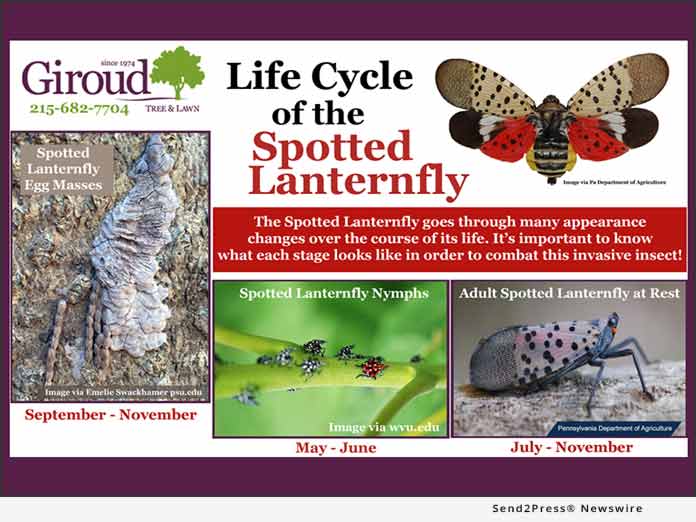
News from Giroud Tree and Lawn

Giroud Tree and Lawn explains what Spotted Lanternfly is, how they harm trees and properties, and how to get rid of them. Spotted Lanternfly have been seen all over Philadelphia, Bucks and Montgomery Counties in 2019.

Related link:

This version of news story was published on ScoopCloud™ (ScoopCloud.com) - part of and © the Neotrope® News Network - all rights reserved.
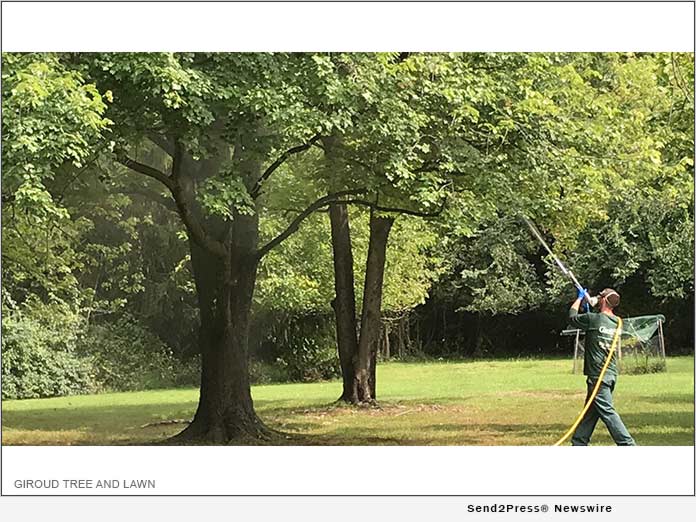
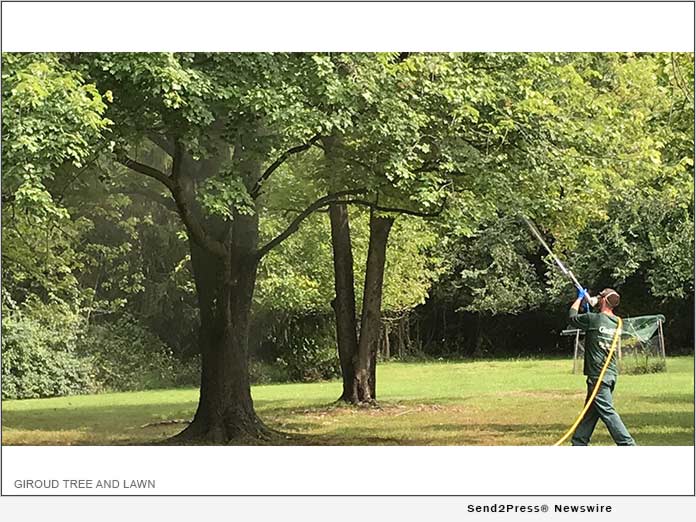
How to Keep Kids Safe from Mosquitoes and Ticks this Summer

HUNTINGDON VALLEY, Pa. /ScoopCloud/ -- In the midst of summer, kids need protection from disease-carrying mosquitoes and ticks. The experts at Giroud Tree and Lawn share a summertime checklist to keep kids safe from biting insects.

Making Kids Aware of Dangerous Insects

Teaching kids ways to prevent mosquito and tick bites will empower them to be mindful of their surroundings while out in nature. It's important to start mosquito and tick bite prevention habits early and reinforce them often. Parents can work together as a family to prepare for outside play and to check for mosquito bites and ticks once back home.

Summertime Checklist to Keep Kids Safe from Biting Insects
* Wear light and neutral colored clothing: Mosquitoes are attracted to things that mimic nature like the colors in flowers, foliage or animals. Dress kids in white, beige or khaki if they're heading out for an adventure.
* Go Natural: Avoid heavily scented shampoos and any products that contain fragrances
* Cover up: If kids are playing outside near water or woods, they should wear lightweight, long sleeves, long pants, and socks. Mosquitoes are most attracted to areas where the skin is thinner and the blood vessels are closer to the surface such as the ears, wrists, and ankles. Parents should teach kids to tuck their pants into their socks if they will be walking through high grasses or underbrush. This will prevent ticks from crawling up their legs.
* Use Repellents: Of course, DEET is the go-to chemical repellent. But there are natural alternatives. Often sold in health food stores, non-toxic, botanical repellents should be reapplied about every thirty minutes to remain effective. Repellents containing soybean oil protect for about ninety minutes-comparable to DEET. When mosquitoes start landing on the skink again, that's the signal to reapply repellent.
* Always Perform a Full Body Tick Check after Outside Play: Kids might be exhausted after playing outside all day in the hot summer sun, but it's vital to always check for ticks once they've arrived home.

Protect Kids by Protecting the Property

There is a lot homeowners can do to protect the property. It takes an all-out assault on the parts of the yard that attract mosquitoes and ticks as well as creating a pest repellent barrier.
* Treat the Hot Spots and Perimeter of the Yard: Some insect control companies have both Organic and Traditional Mosquito and Tick Control treatment plans. Most treatments kill the pests on contact and then repel for several weeks.
* Remove or Empty Objects that Collect Water: Mosquitoes need water for two stages of their life cycle. Keep rain gutters clear and unclogged. Remove old tires, buckets, plastic covers, or any other container. Empty and change the water in birdbaths, fountains, wading pools, rain barrels and potted plant trays at least once a week. Drain temporary pools of water or fill with dirt. "Consider purchasing a battery operated water motion machine or a water baffler machine for your pond," suggests Giroud Plant Health Care Manager, Rodney Stahl. "These water agitators will keep water in motion and deter mosquitoes from breeding"
* Prune or Remove Overgrown Vegetation: Mosquitoes are shade lovers. An ISA Certified Arborist can eliminate shady habitats in two ways. First, cleaning up and/or clearing overgrown areas. Second, pruning tree branches and shrubs around the lawn edge to let in more sunlight.
* Use yellow light bulbs in outdoor fixtures. They aren't as attractive to bugs.
* Plant mosquito-repelling plants. These include scented geraniums, lemon thyme, marigold, tansy, citrus plants, sweet basil and/or sassafras near the home.

About Giroud Tree and Lawn:

Giroud Tree and Lawn specializes in tree service, lawn care and mosquito and tick control programs that make customers love doing business with the company since 1974. Serving Bucks, Montgomery and Philadelphia Counties, the company offers professional tree and lawn evaluation, tree pruning, tree removal, insect and disease control, fertilizing, stump removal, traditional and 100% organic lawn programs and mosquito and tick control. Giroud Arborists are certified by the International Society of Arboriculture (ISA) and have the knowledge and experience required to properly diagnose, treat and maintain trees and lawn health. The company is Accredited by the Tree Care Industry Association and Better Business Bureau. Giroud has also been awarded the Angie's List Super Service Award(r) every year since 2005. The "Giroud Treework for Charity" program donates free tree care services to parks, historical sites and other non-profit organizations located in the Company's service area.

For more information, visit the company website at http://www.giroudtree.com or call 215-682-7704.

News from Giroud Tree and Lawn

In the midst of summer, kids need protection from disease-carrying mosquitoes and ticks. The experts at Giroud Tree and Lawn share a summertime checklist to keep kids safe from biting insects. Teaching kids ways to prevent mosquito and tick bites will empower them to be mindful of their surroundings while out in nature.

Related link:

This version of news story was published on ScoopCloud™ (ScoopCloud.com) - part of and © the Neotrope® News Network - all rights reserved.
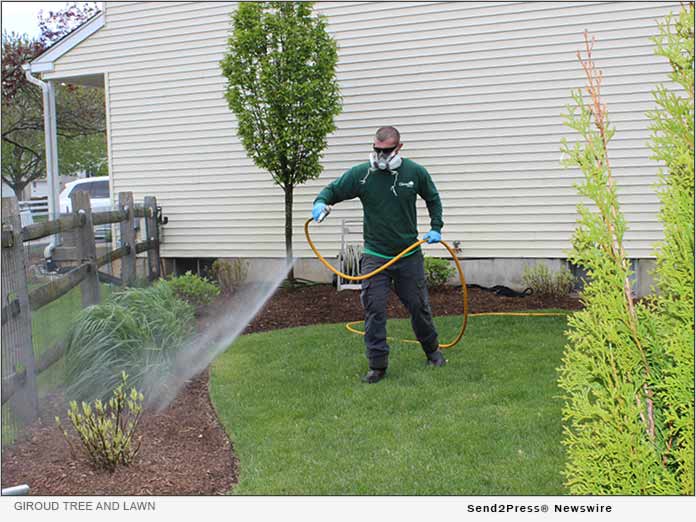
How to Capture and Destroy Spotted Lanternfly Nymphs

HUNTINGDON VALLEY, Pa. /ScoopCloud/ -- The Spotted Lanternfly is a destructive insect that has officially invaded Philadelphia, Bucks and Montgomery Counties! All winter long, their eggs lay waiting for the warm weather, and the Spotted Lanternfly Nymphs have already started to emerge. The experts at Giroud Tree and Lawn share what to look for and how to capture and destroy these destructive insects.

How Spotted Lanternfly Causes Property Damage and Attracts Dangerous Insects

These insects eat tree sap and then excrete droppings of a sweet, sticky substance called Honeydew. The honeydew will coat the tree, the base of the tree, and anything underneath the tree, including cars, hardscapes, and decking. Then, black, sooty mold grows on the secreted substance. The combination of honeydew and black, sooty mold has an unpleasantly sour stench and is very difficult to remove from surfaces.

Even more unsettling, the secreted honeydew attracts stinging wasps! Wasps can't resist the tantalizing smell of the honeydew, and they will swarm a property for a taste. Homeowners are struggling to rid their yards of stinging wasps, and it's particularly a problem for children playing in the area!

How to Identify the Spotted Lanternfly

One of the things that makes this insect difficult to control is the fact that it goes through several identities during its life cycle. Adult females lay eggs in the fall, and they cover the egg masses in a secretion that dries hard and camouflages to look like dirt or clay. The young nymphs that emerge from the eggs in spring are black with white spots. In early summer, they gain red markings on their bodies. Then, midsummer they become adults and shed their skin to form wings on their backs.

How to Capture and Destroy Spotted Lanternfly Nymphs

The experts at Giroud Tree and Lawn have been working closely with Penn State's Department of Agricultural Sciences to determine the best treatments and techniques for combatting Spotted Lanternfly in each of the life cycle stages. According to Penn State, "Currently, the most effective trap for SLF is a sticky band wrapped around the trunks of trees. SLF nymphs and adults are trapped in the sticky barrier as they crawl up from the ground onto the trunks and move upward to feed on the tree."

Sticky bands can be found at most hardware stores and Amazon.com. They are easy to install, but they should be changed weekly for the best results. It is important to be aware that these sticky bands can accidentally trap other insects and also small animals and birds. To avoid this problem, Penn State recommends cutting the sticky bands lengthwise so the surface area is not as broad. Penn State also urges homeowners to wrap the outside of the tree with chicken wire over the area of the sticky band. This will prevent squirrels, birds and other small animals from becoming stuck to the band.
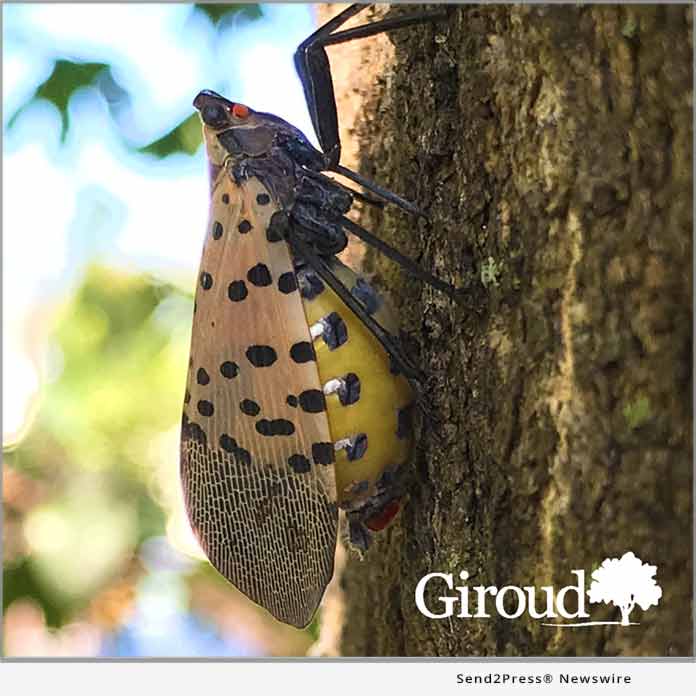
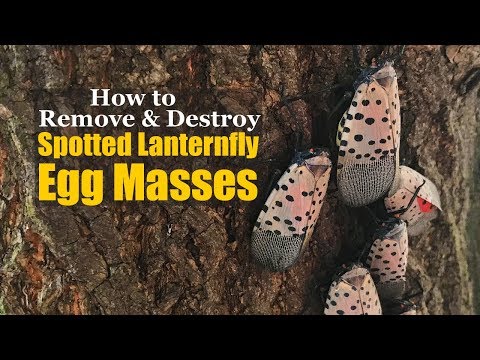
If homeowners see signs of Spotted Lanternfly on the property, they should have their trees inspected by an ISA Certified Arborist.

About Giroud Tree and Lawn:

Giroud Tree and Lawn specializes in tree service, lawn care and mosquito and tick control programs that make customers love doing business with the company since 1974. Serving Bucks, Montgomery and Philadelphia Counties, the company offers professional tree and lawn evaluation, tree pruning, tree removal, insect and disease control, fertilizing, stump removal, traditional and 100% organic lawn programs and mosquito and tick control. Giroud Arborists are certified by the International Society of Arboriculture (ISA) and have the knowledge and experience required to properly diagnose, treat and maintain trees and lawn health.

The company is Accredited by the Tree Care Industry Association and Better Business Bureau. Giroud has also been awarded the Angie's List Super Service Award(r) every year since 2005. The "Giroud Treework for Charity" program donates free tree care services to parks, historical sites and other non-profit organizations located in the Company's service area. For more information, visit the company website at http://www.giroudtree.com or call 215-682-7704.

News from Giroud Tree and Lawn

The Spotted Lanternfly is a destructive insect that has officially invaded Philadelphia, Bucks and Montgomery Counties! All winter long, their eggs lay waiting for the warm weather, and the Spotted Lanternfly Nymphs have already started to emerge. The experts at Giroud Tree and Lawn share what to look for and how to capture and destroy these destructive insects.

Related link:

This version of news story was published on ScoopCloud™ (ScoopCloud.com) - part of and © the Neotrope® News Network - all rights reserved.