Tag Archives: pest control

Bug-A-Salt Wins Settlement Over Dillard’s Dept. Store

SANTA MONICA, Calif. /ScoopCloud/ -- Bug-A-Salt (a subsidiary of Skell Inc.) this month prevailed in a patent and trademark infringement lawsuit against Dillard's Department Stores, according to the Bug-A-Salt, attorney, Liat Cohen, Esq.

Dillard's, in a settlement, paid an undisclosed sum of money for selling counterfeit Bug-A-Salt guns to kill flies, mosquitos, and other insects. The case number is 1:20-CV-O1567-UNA and was filed in United States District Court of Delaware.

Lorenzo Maggiore, CEO of Skell Inc., and inventor of the Bug-A-Salt, stated "We have a zero-tolerance policy against pirates and other knock-off artists who try to profit from our product and we will take action to protect our Intellectual Property rights from any of these counterfeiters."

The lawsuit was initiated by Skell's attorney, Liat Cohen, who zealously took steps to see the case moved through the legal system with maximum effect.

"Liat (Cohen) has assisted us on many issues and the successful outcome against Dillard's sends a message. We don't put up with people trying to profit off of our hard work," said Bug-A-Salt's President, Erika Schimik.

Bug-A-Salt's sales have been steadily increasing, even during the Covid 19 epidemic. Their products can be found at https://www.bugasalt.com/.

News from Liat Cohen attorney at law

Bug-A-Salt (a subsidiary of Skell Inc.) this month prevailed in a patent and trademark infringement lawsuit against Dillard's Department Stores, according to the Bug-A-Salt, attorney, Liat Cohen, Esq.

Related link: https://liatlaw.com/

This version of news story was published on ScoopCloud™ (ScoopCloud.com) - part of and © the Neotrope® News Network - all rights reserved.

Time-Sensitive Treatments for Spotted Lanternfly Need to Be Scheduled Now in Early Fall

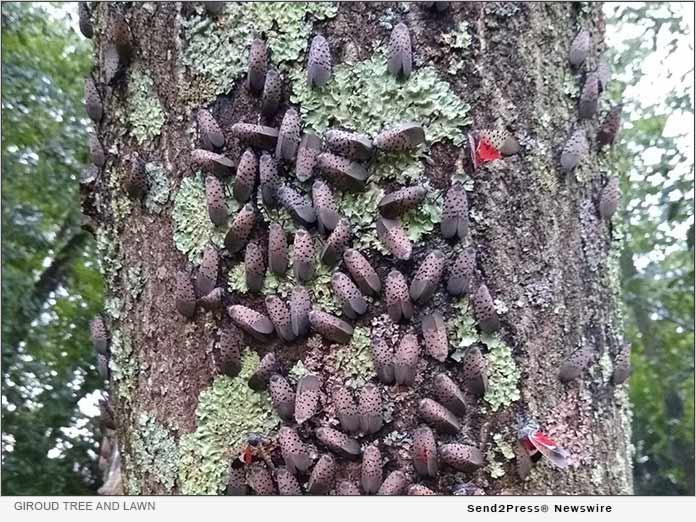
HUNTINGDON VALLEY, Pa. /ScoopCloud/ -- Adult Spotted Lanternfly are swarming area trees in a record-breaking year for the invasive insect. Not only do Spotted Lanternfly pose a risk to the health of trees and plants, they also cause some really gross problems for homeowners.

As the bugs feed on trees, they drip sour-smelling, sticky excrement called "honeydew." It coats everything underneath where the insects are feeding. The tacky honeydew is difficult to remove from hardscapes, decks, cars, and other valuable objects on the property.

What's even worse is that the tantalizing honeydew, along with the black, sooty mold that grows from it, attracts stinging wasps. Wasps will swarm a property, and that's especially a problem if there are children playing in the yard.

Treatments Need to be Carefully Timed

Spotted Lanternfly has only been in the US since 2014, but the insect has multiplied rapidly. To determine the best way to control this new invasive pest, researchers at Penn State and the PA Department of Agriculture recommend a control program that targets the pest during the Adult stage. This stage occurs between July and November.

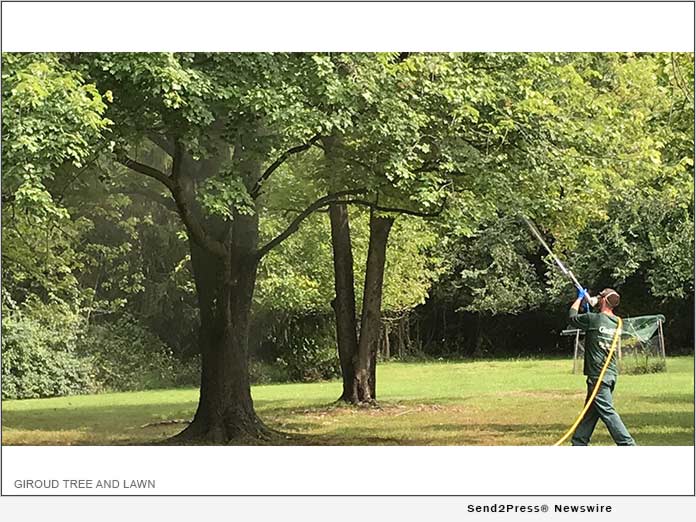
The Adult stage is when Spotted Lanternfly is most vulnerable to treatment. By September through November, the Adults can be found everywhere on the host trees. 1-2 sprays are needed on the trunk, limbs and foliage. This spray kills the insect on contact and the residual kills any Spotted Lanternfly that walk over or feed on the tree for up to 30 days.

Like many Tree companies battling Spotted Lanternfly, Giroud Tree and Lawn is seeing a very high interest in the control program this year.

"We're confident that these treatments will do the job," says Rodney Stahl, Jr, Giroud's Plant Healthcare Manager. "The problem is that our schedule is filling up. Homeowners, who want to have their trees treated, need to get on a program now before it's too late."

Call an ISA Certified Arborist to evaluate the property for treating valuable trees and plants when the Spotted Lanternfly Adults emerge.

For more information, visit https://www.giroudtree.com/spotted-lanternfly/

About Giroud Tree and Lawn

Giroud Tree and Lawn specializes in tree service, lawn care and mosquito and tick control programs that make customers love doing business with the company since 1974. Serving Bucks, Montgomery and Philadelphia Counties, the company offers professional tree and lawn evaluation, tree pruning, tree removal, insect and disease control, fertilizing, stump removal, traditional and 100% organic lawn programs and mosquito and tick control. Giroud Arborists are certified by the International Society of Arboriculture (ISA) and have the knowledge and experience required to properly diagnose, treat and maintain trees and lawn health.

The company is Accredited by the Tree Care Industry Association and Better Business Bureau. The "Giroud Treework for Charity" program donates free tree care services to parks, historical sites and other non-profit organizations located in the Company's service area.

For more information, visit the company website at http://www.giroudtree.com or call 215-682-7704.

News from Giroud Tree and Lawn

Adult Spotted Lanternfly are swarming area trees in a record-breaking year for the invasive insect. Not only do Spotted Lanternfly pose a risk to the health of trees and plants, they also cause some really gross problems for homeowners.

Related link: http://www.giroudtree.com

This version of news story was published on ScoopCloud™ (ScoopCloud.com) - part of and © the Neotrope® News Network - all rights reserved.

Tick Hot Spots in the Yard

HUNTINGDON VALLEY, Pa. /ScoopCloud/ -- While some bugs are just annoying, ticks carry a variety of diseases that can pose serious risks to people and pets, says Giroud Tree and Lawn. Fortunately, there are many actions homeowners can take to protect the property from these dangerous insects and the illnesses they can carry. It all starts with knowing where ticks love to hang out in the yard.

Where ticks love to hide:

The best way to control ticks is to target their habitats and make the yard a place where they don't want to hang out. They love dark, shady spots. Oftentimes, we think of ticks jumping down from above. But they also hang out in high grasses, underbrush, and weedy areas.

How Homeowners Can Control Ticks on the Property:

Clean Up the Yard: Ticks are shade lovers and can't survive in the sun! Cleaning up overgrown vegetation will give ticks fewer places to hang out. Additionally, pruning tree branches and shrubs around the lawn edge will let in more sunlight.

Mow the lawn regularly: Keeping the grass tidy will prevent ticks from traveling across tall grass. Mowing on schedule will also prevent clumps of grass, which ticks love to hide in.

Choose plants that deter ticks: Ticks are deterred by mint, lavender, rosemary, marigolds and citronella grass. An added bonus is that mosquitoes and fleas also hate these strong-smelling plants, so start planting!

Keep Deer Off the Property: Deer are the primary carrier of ticks through the yard. Use Deer Repellent treatments to deter deer from feeding on valuable plants and carrying ticks into the yard. Go a step further and check the landscape to identify and remove plants that are attracting deer to the yard.

Tick Control Treatments: Many companies offer both 100% organic and traditional chemical based treatments to control ticks. Choose a reputable company with the proper certifications to assess the property for tick "Hot Spots." They will suggest a treatment plan to attack ticks where they gather.

Keep ticks from biting people and pest with these tips:

Wear light and neutral colored clothing: Insects are attracted to things that mimic nature like the colors in flowers, foliage or animals. Plus, tiny ticks are easier to spot on a white shirt than a dark article of clothing.

Cover up: Wear lightweight clothing, long sleeves, long pants, and socks. Tuck pants into socks when walking through high grasses or underbrush. Always wear a hat and pull back loose hair that hitch-hiking insects can latch on to.

Use Repellents: Of course, DEET is the go-to chemical repellent. But there are natural alternatives. Often sold in health food stores, non-toxic, botanical repellents should be reapplied about every thirty minutes to remain effective. Repellents containing soybean oil protect for about ninety minutes-comparable to DEET.

Always perform a full body tick check after being outside. It's important to note that ticks are everyone outside, even in the backyard. When it comes to these insects and the diseases they transmit, quick removal is vital! Be sure to do a full check on the kids and pets, too.

For more information, visit https://www.giroudtree.com/blog/where-ticks-hide-in-your-yard/

About Giroud Tree and Lawn

Giroud Tree and Lawn specializes in tree service, lawn care and mosquito and tick control programs that make customers love doing business with the company since 1974. Serving Bucks, Montgomery and Philadelphia Counties, the company offers professional tree and lawn evaluation, tree pruning, tree removal, insect and disease control, fertilizing, stump removal, traditional and 100% organic lawn programs and mosquito and tick control. Giroud Arborists are certified by the International Society of Arboriculture (ISA) and have the knowledge and experience required to properly diagnose, treat and maintain trees and lawn health. The company is Accredited by the Tree Care Industry Association and Better Business Bureau. The "Giroud Treework for Charity" program donates free tree care services to parks, historical sites and other non-profit organizations located in the Company's service area.

For more information, visit the company website at http://www.giroudtree.com or call 215-682-7704.

News from Giroud Tree and Lawn

While some bugs are just annoying, ticks carry a variety of diseases that can pose serious risks to people and pets, says Giroud Tree and Lawn. Fortunately, there are many actions homeowners can take to protect the property from these dangerous insects and the illnesses they can carry. It all starts with knowing where ticks love to hang out in the yard.

Related link: http://www.giroudtree.com

This version of news story was published on ScoopCloud™ (ScoopCloud.com) - part of and © the Neotrope® News Network - all rights reserved.

Time-Sensitive Treatments for Spotted Lanternfly Need to Be Scheduled Now Before the Adults Emerge

HUNTINGDON VALLEY, Pa. /ScoopCloud/ -- Adult Spotted Lanternfly will be emerging a few short weeks, and it's expected to be a record-breaking year for the invasive insect, says Giroud Tree and Lawn. Not only do Spotted Lanternfly pose a risk to the health of trees and plants, they also cause some really gross problems for homeowners.

As the bugs feed on trees, they drip sour-smelling, sticky excrement called "honeydew." It coats everything underneath where the insects are feeding. The tacky honeydew is difficult to remove from hardscapes, decks, cars, and other valuable objects on the property.

What's even worse is that the tantalizing honeydew, along with the black, sooty mold that grows from it, attracts stinging wasps. Wasps will swarm a property, and that's especially a problem if there are children playing in the yard.

Treatments Need to be Carefully Timed

Spotted Lanternfly has only been in the US since 2014, but the insect has multiplied rapidly. To determine the best way to control this new invasive pest, researchers at Penn State and the PA Department of Agriculture recommend a control program that targets the pest during the Adult stage. This stage occurs between July and November.

The Adult stage is when Spotted Lanternfly is most vulnerable to treatment. Adults tend to stay in one place and attack favorite host trees, as opposed to the younger nymphs that quickly hop from plant to plant. As a result, there is much more success in killing the adults when trees are treated at carefully timed intervals.

The first treatment of the 2-part control plan recommended by Penn State should be done between July and September. This is a basal trunk spray that kills the pest on contact. It's also absorbed up through the tree's vascular system and kills the bugs as they feed on the tree. The treatment lasts for up to 60 days.

By September through November, the Adults can be found everywhere on the host trees. 1-2 additional sprays are needed on the trunk, limbs and foliage. This spray kills the insect on contact and the residual kills any Spotted Lanternfly that walk over or feed on the tree for up to 30 days.

Like many Tree companies battling Spotted Lanternfly, Giroud Tree and Lawn is seeing a very high interest in the control program this year.

"We're confident that these treatments will do the job," says Rodney Stahl, Jr, Giroud's Plant Healthcare Manager. "The problem is that our schedule is filling up. July is already booked and August is beginning to fill up. Soon, we'll have more requests for treatments than we can handle. Homeowners, who want to have their trees treated, need to get on a program now before it's too late."

Steps Homeowners Should Take Now
1. Check for nymphs now on trees, plants, flowers, and any surface in the yard. If these early stage insects are seen, that's a clear warning sign that the property is at risk once they turn into adults.
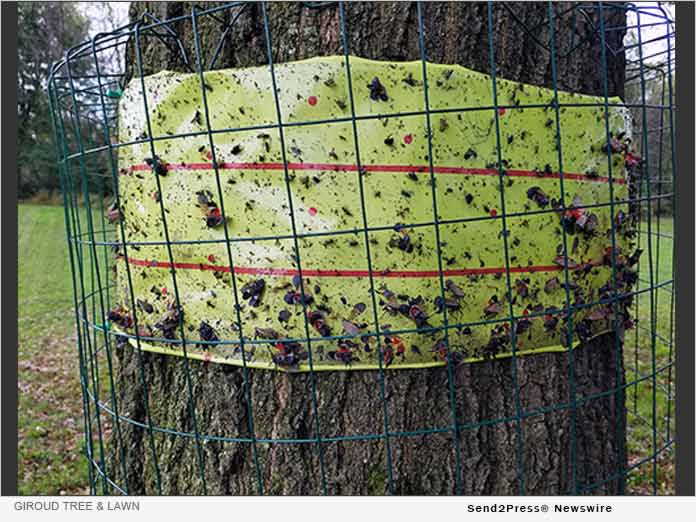
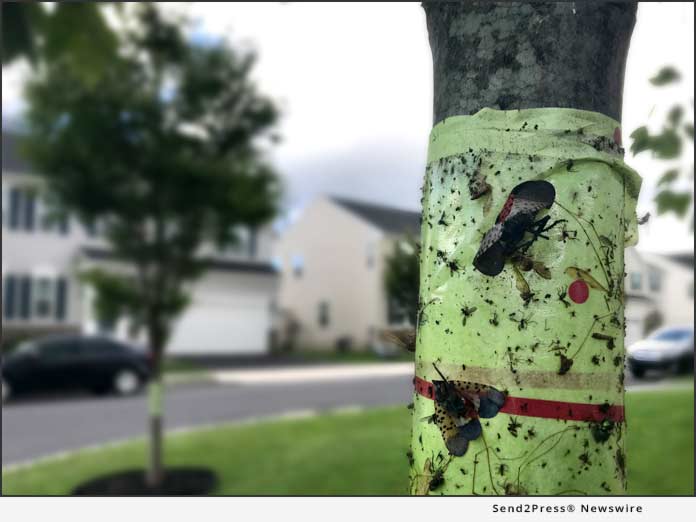
2. Use sticky bands wrapped in chicken wire to capture any nymphs walking up the tree trunk.
3. Call an ISA Certified Arborist to evaluate the property for treating valuable trees and plants when the Spotted Lanternfly Adults emerge.

For more information, visit https://www.giroudtree.com/spotted-lanternfly/

About Giroud Tree and Lawn

Giroud Tree and Lawn specializes in tree service, lawn care and mosquito and tick control programs that make customers love doing business with the company since 1974. Serving Bucks, Montgomery and Philadelphia Counties, the company offers professional tree and lawn evaluation, tree pruning, tree removal, insect and disease control, fertilizing, stump removal, traditional and 100% organic lawn programs and mosquito and tick control. Giroud Arborists are certified by the International Society of Arboriculture (ISA) and have the knowledge and experience required to properly diagnose, treat and maintain trees and lawn health. The company is Accredited by the Tree Care Industry Association and Better Business Bureau. The "Giroud Treework for Charity" program donates free tree care services to parks, historical sites and other non-profit organizations located in the Company's service area.

For more information, visit the company website at http://www.giroudtree.com or call 215-682-7704.

News from Giroud Tree and Lawn

Adult Spotted Lanternfly will be emerging a few short weeks, and it's expected to be a record-breaking year for the invasive insect, says Giroud Tree and Lawn. Not only do Spotted Lanternfly pose a risk to the health of trees and plants, they also cause some really gross problems for homeowners.

Related link: http://www.giroudtree.com

This version of news story was published on ScoopCloud™ (ScoopCloud.com) - part of and © the Neotrope® News Network - all rights reserved.

How to Combat the Spotted Lanternfly Now in the Nymph Stage

HUNTINGDON VALLEY, Pa. /ScoopCloud/ -- The Spotted Lanternfly is a destructive insect that has invaded the Philadelphia area. All winter long, their eggs lay waiting for the warm weather, carefully encased in a protective, hardened layer of secretion. Now that they've emerge as nymphs, it's time to take action!

How to Identify Spotted Lanternfly Nymphs

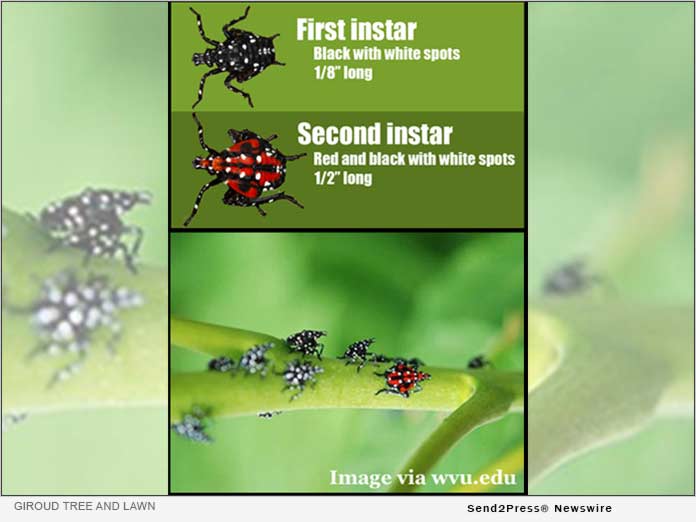
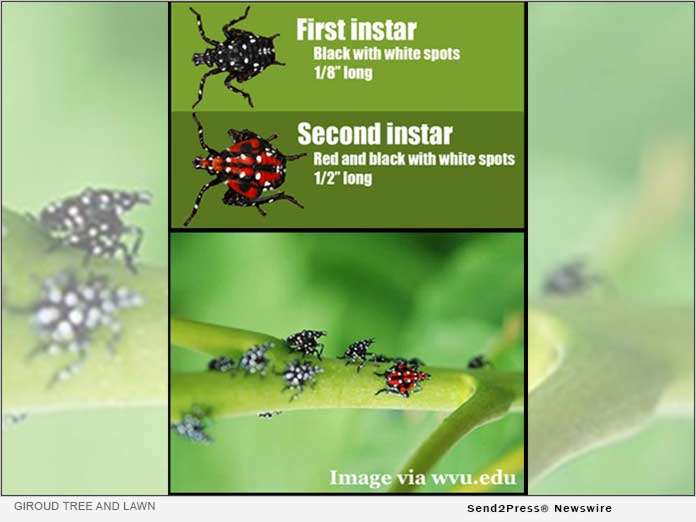
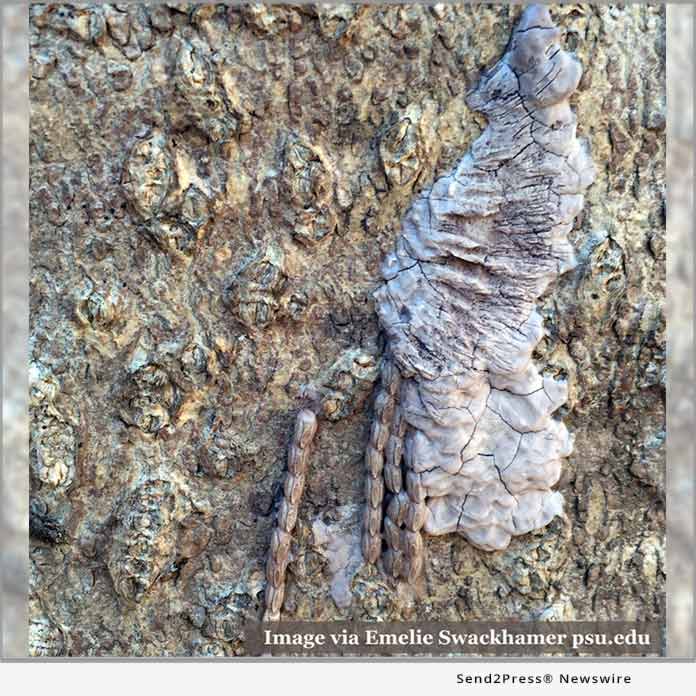
Spotted Lanternfly goes through several identities during its life cycle. Adult females lay eggs in the fall, and they cover the egg masses in a secretion. This secretion dries hard and camouflages to look like dirt or clay. The young nymphs that emerge from the eggs in spring are black with white spots. In early summer, they gain red markings on their bodies. Later in midsummer, they become adults and shed their skin to form wings on their backs.

How to Get Rid of Spotted Lanternfly Nymphs

The experts at Giroud Tree and Lawn have been working closely with Penn State University's Department of Entomology and Cooperative Extension to determine the best treatments and techniques for combating Spotted Lanternfly in each of the life cycle stages. Chemical spray treatments are only recommended if there are high populations of nymphs on a specific plant or tree.

Chemical Control Treatments During the Nymph Stages

Research shows that the best time to control Spotted Lanterfly is at the adult stage. However, there is an exception. Nymph control may be warranted if the population is high enough to cause feeding damage (wilting stems). Or, if Nymphs are focusing heavily on individual plants. In these cases, homeowners should have an ISA Certified Arborist evaluate the situation and determine if targeted treatment is required.

Control of Spotted Lanternfly Nymphs is usually not warranted because nymphs love to move around. The young insects don't stay on a single plant for long. To reach all the plants that might attract nymphs, the entire yard would have to be treated with a long, residual contact spray insecticide. Even with these treatments, nymphs can still invade from other locations!

Also, although insecticide will kill Nymphs, it can also kill beneficial insects and pollinators, such as bees and butterflies. The insect experts at Giroud prefer to use these types of sprays for targeted control, not broad scale treatments.

What's the Solution for Controlling Spotted Lanterfly Nymphs?

Ultimately, the best way to combat Spotted Lanternfly during the Nymph Stage is with manual methods. Sticky bands, Circle Traps, and good old fashioned squishing are key to getting ahead of these awful insects before they reach adulthood.

Sticky bands can be found at most hardware stores and also on Amazon.com. They are easy to install, but they should be changed weekly for the best results. However, it is important to be aware that these sticky bands can accidentally trap other insects and also small animals and birds. To avoid this problem, Penn State recommends cutting the sticky bands lengthwise so the surface area is not as broad. Spotted Lanternfly Nymphs are small and climb up the tree. They will get trapped at the bottom of the sticky band, so there is no need to have such a tall band. Penn State also urges homeowners to wrap the outside of the tree with chicken wire over the area of the sticky band. This will prevent squirrels, birds, and other small animals from becoming stuck to the band.

If homeowners are concerned about trapping small animals and other wildlife in sticky bands, Penn State offers an alternative solution:

"Recent research has shown that an entirely different kind of type of trap is also very effective and can dramatically reduce the chances of capturing other creatures. This new style trap is made of plastic-coated insect screening and does not use any sticky material at all. It is basically a tunnel that SLFs walk into. When they move upward in the trap, they end up in a dead-end collection container where they die." -extension.psu.edu

Nymphs Are a Warning Sign to Take Action

Equally important, recognize that the Nymphs are an early warning sign to get prepared for the swarms. By July or August, the Nymphs will turn into Adults. That's when the real trouble begins. It's also the time when control is most effective. Adults don't move around as much and tend to attack specific trees. As a result, an ISA Certified Arborist can target the high risk trees and protect them from Spotted Lanternfly.

Researchers are anticipating a major infestation of Spotted Lanternfly this season. Once the adults begin to swarm, the demand for treatment will surge so homeowners should have the arborist evaluate the entire property for problem areas as soon as possible.

For more information, visit https://www.giroudtree.com/spotted-lanternfly/

About Giroud Tree and Lawn

Giroud Tree and Lawn specializes in tree service, lawn care and mosquito and tick control programs that make customers love doing business with the company since 1974. Serving Bucks, Montgomery and Philadelphia Counties, the company offers professional tree and lawn evaluation, tree pruning, tree removal, insect and disease control, fertilizing, stump removal, traditional and 100% organic lawn programs and mosquito and tick control. Giroud Arborists are certified by the International Society of Arboriculture (ISA) and have the knowledge and experience required to properly diagnose, treat and maintain trees and lawn health. The company is Accredited by the Tree Care Industry Association and Better Business Bureau. The "Giroud Treework for Charity" program donates free tree care services to parks, historical sites and other non-profit organizations located in the Company's service area. For more information, visit the company website at http://www.giroudtree.com or call 215-682-7704.

News from Giroud Tree and Lawn

The Spotted Lanternfly is a destructive insect that has invaded the Philadelphia area. All winter long, their eggs lay waiting for the warm weather, carefully encased in a protective, hardened layer of secretion. Now that they've emerge as nymphs, it's time to take action!

Related link: http://www.giroudtree.com

This version of news story was published on ScoopCloud™ (ScoopCloud.com) - part of and © the Neotrope® News Network - all rights reserved.

How to Capture and Destroy Spotted Lanternfly Nymphs in 2020

HUNTINGDON VALLEY, Pa. /ScoopCloud/ -- The Spotted Lanternfly is a destructive insect that has officially invaded Philadelphia, Bucks and Montgomery Counties! All winter long, their eggs lay waiting for the warm weather, and the Spotted Lanternfly Nymphs have already started to emerge. The experts at Giroud Tree and Lawn share what to look for and how to capture and destroy these destructive insects.

How Spotted Lanternfly Causes Property Damage and Attracts Dangerous Insects

These insects eat tree sap and then excrete droppings of a sweet, sticky substance called Honeydew. The honeydew will coat the tree, the base of the tree, and anything underneath the tree, including cars, hardscapes, and decking. Then, black, sooty mold grows on the secreted substance. The combination of honeydew and black, sooty mold has an unpleasantly sour stench and is very difficult to remove from surfaces.

Even more unsettling, the secreted honeydew attracts stinging wasps! Wasps can't resist the tantalizing smell of the honeydew, and they will swarm a property for a taste. Homeowners are struggling to rid their yards of stinging wasps, and it's particularly a problem for children playing in the area!

How to Identify the Spotted Lanternfly

One of the things that makes this insect difficult to control is the fact that it goes through several identities during its life cycle. Adult females lay eggs in the fall, and they cover the egg masses in a secretion that dries hard and camouflages to look like dirt or clay. The young nymphs that emerge from the eggs in spring are black with white spots. In early summer, they gain red markings on their bodies. Then, midsummer they become adults and shed their skin to form wings on their backs.

How to Capture and Destroy Spotted Lanternfly Nymphs

The experts at Giroud Tree and Lawn have been working closely with Penn State's Department of Agricultural Sciences to determine the best treatments and techniques for combatting Spotted Lanternfly in each of the life cycle stages. According to Penn State, "Currently, the most effective trap for SLF is a sticky band wrapped around the trunks of trees. SLF nymphs and adults are trapped in the sticky barrier as they crawl up from the ground onto the trunks and move upward to feed on the tree."

Sticky bands can be found at most hardware stores and Amazon.com. They are easy to install, but they should be changed weekly for the best results. It is important to be aware that these sticky bands can accidentally trap other insects and also small animals and birds. To avoid this problem, Penn State recommends cutting the sticky bands lengthwise so the surface area is not as broad. Penn State also urges homeowners to wrap the outside of the tree with chicken wire over the area of the sticky band. This will prevent squirrels, birds and other small animals from becoming stuck to the band.

If homeowners see signs of Spotted Lanternfly on the property, they should have their trees inspected by an ISA Certified Arborist.

About Giroud Tree and Lawn

Giroud Tree and Lawn specializes in tree service, lawn care and mosquito and tick control programs that make customers love doing business with the company since 1974. Serving Bucks, Montgomery and Philadelphia Counties, the company offers professional tree and lawn evaluation, tree pruning, tree removal, insect and disease control, fertilizing, stump removal, traditional and 100% organic lawn programs and mosquito and tick control. Giroud Arborists are certified by the International Society of Arboriculture (ISA) and have the knowledge and experience required to properly diagnose, treat and maintain trees and lawn health.

The company is Accredited by the Tree Care Industry Association and Better Business Bureau. The "Giroud Treework for Charity" program donates free tree care services to parks, historical sites and other non-profit organizations located in the Company's service area. For more information, visit the company website at http://www.giroudtree.com or call 215-682-7704.

News from Giroud Tree and Lawn

The Spotted Lanternfly is a destructive insect that has officially invaded Philadelphia, Bucks and Montgomery Counties! All winter long, their eggs lay waiting for the warm weather, and the Spotted Lanternfly Nymphs have already started to emerge. The experts at Giroud Tree and Lawn share what to look for and how to capture and destroy these destructive insects.

Related link: http://www.giroudtree.com

This version of news story was published on ScoopCloud™ (ScoopCloud.com) - part of and © the Neotrope® News Network - all rights reserved.

Kids Staying Home From School can Keep Busy with a Spotted Lanternfly Egg Hunt in the Yard

HUNTINGDON VALLEY, Pa. /ScoopCloud/ -- Spotted Lanternfly are beautiful but destructive insects that have invaded Pennsylvania. The good news is kids can help get rid of Spotted Lanternfly! The experts at Giroud Tree and Lawn share why these are bad bugs, and what kids need to know to go on a Spotted Lanternfly Egg Hunt!

What Is Spotted Lanternfly?

Spotted Lanternfly is a dangerous, invasive pest. Invasive means this insect is from another country and it has invaded the United States. Spotted Lanternfly came from Asia to the United Sates a few years ago. They've been multiplying and spreading all over the country! If Americans don't stop them from spreading, they can cause big problems.

Why Is Spotted Lanternfly Bad?

Spotted Lanternfly are a problem in many ways because they:
* destroy grapes, apples, and other important crops that are grown by farmers in America.
* damage trees when they feed from them.
* make a sticky mess when they are eating, dripping something called "honeydew" down on to anything underneath them.
* attract stinging bees who love to eat the honeydew they drip!

What do Spotted Lanternfly Look Like?

The Spotted Lanternfly go through 4 different life cycles.

1. Nymphs, black with white dots - the insects hatch from their eggs in May.

2. Nymphs, red with white dots and black marks- you can sometimes see little black nymphs and bigger red nymphs at the same time

3. Adults - In July, the insects get wings! The underside of their wings looks a lot more colorful than the top, so it's important to know what the wings look like on both sides!

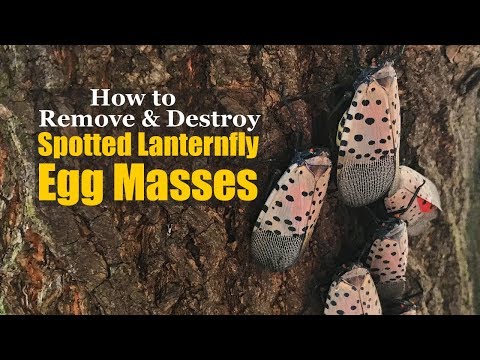
4. Egg Masses - Starting in late September, the females will lay their eggs and cover them with a protective substance that hardens to look like clay. These egg masses will stay there all winter long until the next generation of nymphs hatches the following May.

How Kids Can Help Stop the Spread of Spotted Lanternfly

Spotted Lanternfly can lay their eggs anywhere, even underneath a slide!

Now is the perfect time to go on Spotted Lanternfly Egg Hunt! Kids can outside and check all the trees in the front and backyard. If kids find anything that looks like an egg mass, scrape it off with a stick or a card and destroy them by dropping them in a baggy with hand sanitizer or rubbing alcohol.

After kids have checked all the trees on the property, it's time to look for Spotted Egg Masses in other places. The adult females lay eggs pretty much anywhere! They usually lay them in places where the eggs will be out of sight from hungry predator bugs. Look on the underside of outdoor tables and chairs, railings, playhouses, swing sets and slides.

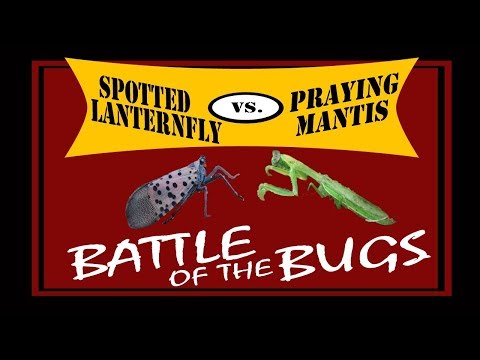
Kids can even make these Spotted Lanternfly egg hunts a part of the Easter celebrations. Just for fun, kids can check out this cool video of a Spotted Lanternfly in a battle with a Praying Mantis! Who will win? https://youtu.be/mfwuhTBr4UQ

For more information about Spotted Lanternfly, please check out https://www.giroudtree.com/spotted-lanternfly/

For more information, visit the company website at http://www.giroudtree.com or call 215-682-7704.

VIDEO (YouTube):
https://youtu.be/mfwuhTBr4UQ

About Giroud Tree and Lawn

Giroud Tree and Lawn specializes in tree service, lawn care and mosquito and tick control programs that make customers love doing business with the company since 1974. Serving Bucks, Montgomery and Philadelphia Counties, the company offers professional tree and lawn evaluation, tree pruning, tree removal, insect and disease control, fertilizing, stump removal, traditional and 100% organic lawn programs and mosquito and tick control. Giroud Arborists are certified by the International Society of Arboriculture (ISA) and have the knowledge and experience required to properly diagnose, treat and maintain trees and lawn health.

The company is Accredited by the Tree Care Industry Association and Better Business Bureau. The "Giroud Treework for Charity" program donates free tree care services to parks, historical sites and other non-profit organizations located in the Company's service area. For more information, visit the company website at http://www.giroudtree.com or call 215-682-7704.

News from Giroud Tree and Lawn

Spotted Lanternfly are beautiful but destructive insects that have invaded Pennsylvania. The good news is kids can help get rid of Spotted Lanternfly! The experts at Giroud Tree and Lawn share why these are bad bugs, and what kids need to know to go on a Spotted Lanternfly Egg Hunt!

Related link: http://www.giroudtree.com

This version of news story was published on ScoopCloud™ (ScoopCloud.com) - part of and © the Neotrope® News Network - all rights reserved.

Giroud Tree and Lawn explains how to identify the difference between mole and vole damage on lawns, trees and shrubs

HUNTINGDON VALLEY, Pa. /ScoopCloud/ -- Mole and vole damage to lawns, trees and shrubs is common in Pennsylvania, but identifying the difference between the two can be confusing. Each of these two pests can cause mild to serious damage on a homeowners property, and late winter is when the effects are often seen. The experts at Giroud Tree and Lawn explain how to identify the difference between the two and what homeowners can do to reverse the damage.

How to Identify Vole Damage on a Lawn

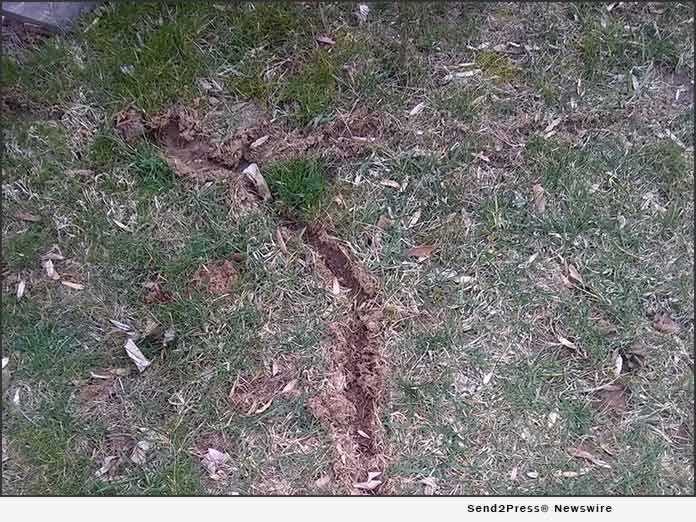
Voles, otherwise known as "Meadow Mice", are small rodents with very active lifestyles in the winter. They live under dense shrubs and mulch and other hiding places like wood or rock piles. Voles eat grass, and in winter, the snow provides the perfect cover for voles to venture from their burrows in search of food without fear of predators. Homeowners can identify vole damage after snow melts by the telltale chiseled pathways through the lawn. Voles create these runways under the cover of snow where predators can't catch them.

How to Identify Mole Damage on a Lawn

Like voles, moles can do a lot of damage to a lawn. However, rather than pathways carved into the grass at the surface, moles tunnel underground and leave piles of soil that act as air vents in their tunnels.

"If you have a lawn that is really infested with moles, you can actually feel it as you walk across the grass," explains Giroud Lawn Care Technician, Paul Ruffenach. "The ground will feel soft because the tunnels have been dug through under your feet."

Damage to Trees and Shrubs

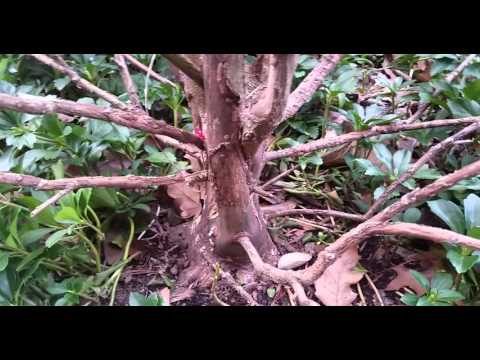
Although lawn damage caused by voles and moles is very easy to see, what can often go unnoticed until it's too late is damage to trees and shrubs. These invasive little creatures feast on the bark of certain trees and shrubs.

"Both voles and moles will chew on the roots, trunks and branches of some shrubs because they are feeding on the starches and the sugars to stay alive in winter," explains Drew Slousky, ISA Certified Giroud Arborist and Vice President. "If they chew the bark completely off, they could kill a shrub or a tree."

Single stemmed trees like Dogwoods and Crabapples will likely die if voles or moles have girdled the tree by eating the bark completely around the trunk. Multi-stemmed shrubs like Juniper, rhododendron, Viburnum, Euonymous (Burning Bush) and Azalea can survive. Professional pruning or fertilization will help with recovery.

How to Protect a Property from Mole and Vole Damage

Take away hiding spots! Moles and voles burrow under anything that may act as a cover in order to keep out of the watchful eyes of predators. Snow, underbrush and overgrown ground cover are all perfect hiding spots.

As the weather warms, mulch also becomes a great cover for them. Giroud always stresses the importance of never piling mulch against the trunk of a tree or shrubs because it can lead to girdling roots. Garden pests like moles and voles are just another reason why proper mulching is important. Creating a space for these rodents to burrow is an invitation for them to chew on the bark of trees and shrubs!

Check out this video from Giroud Arborist, Rob Nagy, which shows how he identified that a rodent was causing an ornamental holly to decline: https://youtu.be/8Ogfh-Yi6Mk

Take Action Now to Correct Mole and Vole Damage

The good news is most lawns, trees and shrubs will recover from minimal mole or vole damage. For lawns:
* Rake the debris and excrement from the runways on the lawn to promote growth
* Fill holes and pathways with topsoil
* Fertilize and overseed areas that do not recover

Getting on a great lawn care treatment and fertilization program is a step in the right direction because it will strengthen the grass' roots and give the lawn a fighting chance against attacks from mole and vole damage and also other pests, insects and diseases!

If homeowners see signs of pest infestation on trees and shrubs, such as chewed trunks and branches, leaf dieback and discoloration, they should have them inspected by an ISA Certified Arborist who may recommend pruning out the damaged branches. Also, a deep root vitamin fertilizer treatment will strengthen the plant and aid in its recovery.

About Giroud Tree and Lawn

Giroud Tree and Lawn specializes in tree service, lawn care and mosquito and tick control programs that make customers love doing business with the company since 1974. Serving Bucks, Montgomery and Philadelphia Counties, the company offers professional tree and lawn evaluation, tree pruning, tree removal, insect and disease control, fertilizing, stump removal, traditional and 100% organic lawn programs and mosquito and tick control. Giroud Arborists are certified by the International Society of Arboriculture (ISA) and have the knowledge and experience required to properly diagnose, treat and maintain trees and lawn health.

The company is Accredited by the Tree Care Industry Association and Better Business Bureau. The "Giroud Treework for Charity" program donates free tree care services to parks, historical sites and other non-profit organizations located in the Company's service area.

For more information, visit the company website at http://www.giroudtree.com or call 215-682-7704.

VIDEO (YouTube): https://youtu.be/8Ogfh-Yi6Mk

News from Giroud Tree and Lawn

Mole and vole damage to lawns, trees and shrubs is common in Pennsylvania, but identifying the difference between the two can be confusing. Each of these two pests can cause mild to serious damage on a homeowners property, and late winter is when the effects are often seen.

Related link: http://www.giroudtree.com

This version of news story was published on ScoopCloud™ (ScoopCloud.com) - part of and © the Neotrope® News Network - all rights reserved.

4Ry, USDA and Texas A&M AgriLife to Develop Innovative Spraying Technology for Cattle Fever Ticks

ALBUQUERQUE, N.M. /ScoopCloud/ -- 4Ry Inc. announced today that 4Ry(R) and Texas A&M AgriLife Research have signed a research agreement. They will collaborate with the USDA's Agricultural Research Service (ARS) to more efficiently and effectively spray cattle to eliminate cattle fever ticks.

Cattle fever ticks are vectors of pathogens causing bovine babesiosis, also known as cattle tick fever, and are the focus of the US Cattle Fever Tick Eradication Program. The project will adapt 4Ry's Charge Injected Precision Spraying (ChIPS)(TM) for conductive fluids. Many pesticides registered to spray cattle are water-based, which makes them conductive.

Dr. Arnold Kelly, PhD, 4ry's Chief Technology Officer and cofounder, will modify 4Ry's patented Spray Triode Atomizer, the heart of the ChIPS system. Pete Teel, PhD, Texas A&M AgriLife Research entomologist, regents professor and interim department head, Department of Entomology will lead the project and provide administrative guidance. Field testing will be conducted by Texas A&M AgriLife Research and USDA ARS at the USDA-ARS Cattle Fever Tick Research Laboratory in Edinburg, Texas.

Meeting all the project milestones will document that the ChIPS system allows for more complete and targeted coverage of cattle with fewer environmental and operator health hazards. Charged spray droplets are attracted to the cow and thoroughly coat all areas with little aerosol drift or overspray. By reducing the amount of fluid sprayed and wasted, ChIPS more efficiently covers cattle, generates substantial cost savings, and reduces health and environmental risks.

"Successful development of our sprayer for conductive fluids will allow ranchers to integrate this technology for sustainable eradication of the invasive fever ticks that cost the cattle industry millions of dollars before they were eliminated from the U.S.," said David Bird, 4Ry's CEO. "The tick problem is particularly bad in South Texas counties that border Mexico. Our modified sprayer will also improve management of other livestock pests, so it will be welcomed wherever those pests are found in association with cattle production."

"Texas A&M AgriLife Research and the USDA, Agricultural Research Service have a long history of dedicated joint research efforts in support of the US Cattle Industry and the regulatory agencies responsible for the U.S. Cattle Fever Tick Eradication Program," Teel said. "The opportunity to collaborate with 4Ry, Inc., on the development and application of this new technology could significantly improve how cattle receive acaricide treatment to prevent the re-establishment of cattle fever ticks in the U.S."

About 4Ry

4Ry is based in Albuquerque. It is commercializing charge-injected atomization and spraying technologies invented by Dr. Arnold Kelly. For more information, please visit http://www.4rysprays.com.

4Ry(R) is a registered U.S. trademark.

About the USDA-ARS

ARS is the USDA's chief scientific in-house research agency. Over 2000 scientists and post-doctoral researchers are engaged in over 600 research projects with 15 National Programs at over 90 research locations.

About Texas A&M AgriLife

Texas A&M AgriLife is the largest comprehensive agriculture program in the nation. It brings together a college and four Texas agencies focused on agriculture and life sciences. It has 5,000 employees and a presence in every county in Texas.

Media Contact
Robert Gore
Vice President, 4Ry Agricultural Solutions
310-283-2628
rgore@4rysprays.com

News from 4Ry Inc.

4Ry Inc. announced today that 4Ry® and Texas A&M AgriLife Research have signed a research agreement. They will collaborate with the USDA's Agricultural Research Service (ARS) to more efficiently and effectively spray cattle to eliminate cattle fever ticks.

Related link:

This version of news story was published on ScoopCloud™ (ScoopCloud.com) - part of and © the Neotrope® News Network - all rights reserved.

How to Check for Signs of Spotted Lanternfly Before Purchasing a Christmas Tree

HUNTINGDON VALLEY, Pa. /ScoopCloud/ -- Finding the perfect Christmas trees is one of the highlights of the holiday season. However, with the recent invasion of the Spotted Lanternfly, many Pennsylvanians are left wondering if they should be hesitant about bringing a possible tainted topiary into their home. The experts at Giroud Tree and Lawn explain what to look for on Christmas trees before buying one.

Why Is Spotted Lanternfly Spreading So Fast?

Spotted Lanternfly came from Asia, where natural predators keep the species from multiplying too quickly. Unfortunately, here in the United States, it's spreading rapidly because those known predators aren't around to keep it in check.

Spotted Lanternfly and Christmas Trees

While Spotted Lanternfly have invaded Pennsylvania heavily in the last few years, there's not much cause for concern on your Christmas Conifer. The PA Department of Agriculture and Penn State have been working closely with the Pennsylvania Christmas Tree Growers Association, and they have been diligently training all tree growers on proper inspection practices.

Although the Spotted Lanternfly has been seen on many species of trees, they don't appear to show an interest in the varieties used for Christmas trees. In a recent article published by the Penn State Extension, Tanner Delvalle, a horticulture extension educator explains, "Christmas trees are not a preferred host for spotted lanternflies, so the probability of finding a spotted lanternfly or an egg mass on Christmas trees is low and should not be a reason for anyone to forego having a live holiday tree."

Inspect Before Buying a Christmas Tree

Although the Spotted Lanternfly is a cause for concern, the bottom line is that homeowners should always check any live tree before bringing it home. All sorts of insects and critters can hang out in a live tree, so it's best to do a full inspection before purchasing. However, other than the occasional spider, homeowners can rest assured that PA Christmas Tree growers are adhering to strict standards and checking trees before they head to the lot.

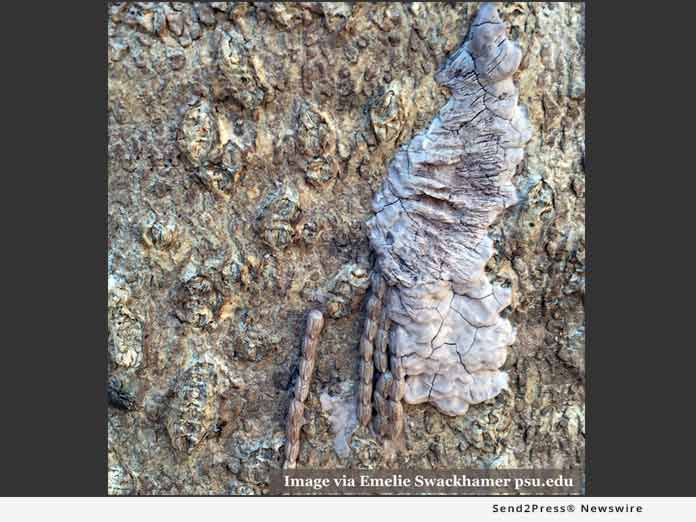
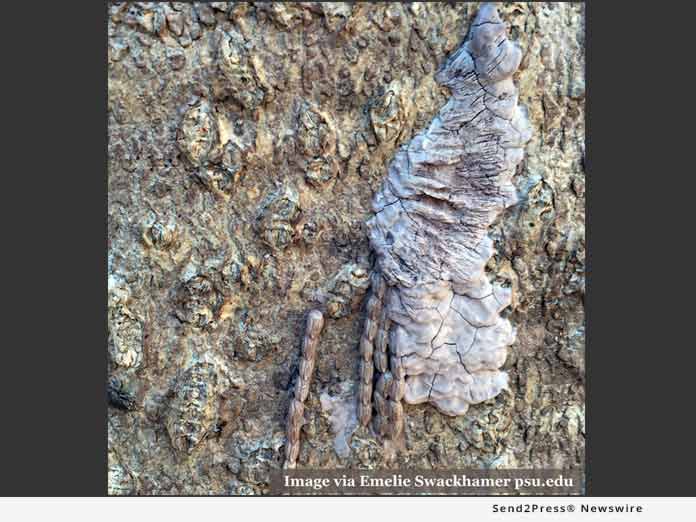
Still, it's a good idea to know how to look for Spotted Lanternfly Egg Masses. At this time of year, all of the adults have died, but they've left behind eggs which will hatch in the spring. These eggs are laid in rows of about 10, and they are covered in a clay-like gray colored secretion. To destroy the egg masses, use a credit card to scrape them off and drop them in a bag with rubbing alcohol.

Before heading out to the Christmas tree lot or farm, homeowners can watch Giroud's instructional video on Spotted Lanternfly Egg Masses to know exactly what to look for.

Pennsylvania Christmas Tree Growers Association Executive Director, Denise Calabrese, states "We encourage all Christmas tree lovers to enjoy everything that a real tree adds to the season. It's a great family tradition and a way to support your local agricultural community. I know that it won't deter me from having a real tree in my home again this year."

About Giroud Tree and Lawn

Giroud Tree and Lawn specializes in tree service, lawn care and mosquito and tick control programs that make customers love doing business with the company since 1974. Serving Bucks, Montgomery and Philadelphia Counties, the company offers professional tree and lawn evaluation, tree pruning, tree removal, insect and disease control, fertilizing, stump removal, traditional and 100% organic lawn programs and mosquito and tick control. Giroud Arborists are certified by the International Society of Arboriculture (ISA) and have the knowledge and experience required to properly diagnose, treat and maintain trees and lawn health. The company is Accredited by the Tree Care Industry Association and Better Business Bureau. Giroud has also been awarded the Angie's List Super Service Award(r) every year since 2005. The "Giroud Treework for Charity" program donates free tree care services to parks, historical sites and other non-profit organizations located in the Company's service area. For more information, visit the company website at http://www.giroudtree.com or call 215-682-7704.

News from Giroud Tree and Lawn

Finding the perfect Christmas trees is one of the highlights of the holiday season. However, with the recent invasion of the Spotted Lanternfly, many Pennsylvanians are left wondering if they should be hesitant about bringing a possible tainted topiary into their home. The experts at Giroud Tree and Lawn explain what to look for on Christmas trees before buying one.

Related link:

This version of news story was published on ScoopCloud™ (ScoopCloud.com) - part of and © the Neotrope® News Network - all rights reserved.

Dead Ash Trees Can Cause Destruction During Winter Snow and Ice Storms

HUNTINGDON VALLEY, Pa. /ScoopCloud/ -- Emerald Ash Borer is a dangerous insect that invades and destroys Ash trees. They have killed thousands of trees across the country since they first appeared in 2002. As winter storm season approaches, there's something in particular that makes infested Ash Trees a big cause for concern- Dead Ash Trees are Dangerous! The experts at Giroud Tree and Lawn explain why this species of trees can pose a threat during a heavy winter storm and why homeowners should have them removed.

Emerald Ash Borers are fast killers

Ash trees infested with Emerald Ash Borers die within 1-3 years. To understand why dead Ash trees are not safe, it is important to understand how the Emerald Ash Borer invades and inevitably kills a tree.

The adult borers swarm the tree and lay eggs under the bark. Once the larvae emerge, they immediately start chewing their way through the wood of the tree. The veins in the grains of the tree allow water to flow through the tree, so when the larvae chew through the wood, they cut off water circulation. Additionally, the adult beetles create thousands of exit wounds as they leave the tree, further causing damage that dries out the tree.

If more than 1/2 of the tree's crown is dead, the Ash cannot be saved. Unfortunately, a dead Ash tree quickly becomes a safety hazard. Tree removal will be necessary, especially if the dead Ash is located near a home, driveway or play area.

Why Dead Ash Trees are Dangerous

Two realities make Ash Trees killed by Emerald Ash Borers a dangerous safety hazard:
1. Moisture Loss: Emerald Ash Borers cut off the flow of water and nutrients through the tree. Additionally, the fatal pest creates thousands of exit wounds. Both conspire to dry out the tree and make it brittle.
2. Weak Structure: The same straight, tight grain that makes Ash great for baseball bats and splitting firewood is also why its limbs and leaders easily split apart. The result is a dry, brittle tree that is at high risk for breaking apart.

Removal Must Be Done ASAP - especially Before Winter Storms Strike!

A dead Ash tree is not a simple tree removal. The brittle tree is so dry that it can break apart in unexpected ways and cause significant damage. Harsh winter weather and unexpected snow and ice storms can trigger a disaster for a dry dead Ash Tree!

The first step is to have the tree evaluated by an ISA Certified Arborist to determine the tree's condition. The Arborist will determine if a tree climber can safely work in the tree or if a crane and/or bucket truck is required. The longer the dead tree is left in the ground, the drier and more dangerous it becomes, making tree removal even more complicated and expensive.

Homeowners should take the following steps now:
1. Inspection: Have an ISA Certified Arborist evaluate the tree and recommend the best action.
2. Tree Removal: If the Ash tree is dead or has become unsafe, prompt removal is required.
3. Treatment: If the Ash tree is still healthy enough to absorb treatment, a systemic trunk injection of Tree-age(r) every two years protects Ash from Emerald Ash Borers.
4. Regular Pruning: In combination with treatment, remove deadwood and prune to promote healthy growth.

About Giroud Tree and Lawn

Giroud Tree and Lawn specializes in tree service, lawn care and mosquito and tick control programs that make customers love doing business with the company since 1974. Serving Bucks, Montgomery and Philadelphia Counties, the company offers professional tree and lawn evaluation, tree pruning, tree removal, insect and disease control, fertilizing, stump removal, traditional and 100% organic lawn programs and mosquito and tick control. Giroud Arborists are certified by the International Society of Arboriculture (ISA) and have the knowledge and experience required to properly diagnose, treat and maintain trees and lawn health.

The company is Accredited by the Tree Care Industry Association and Better Business Bureau. Giroud has also been awarded the Angie's List Super Service Award(r) every year since 2005. The "Giroud Treework for Charity" program donates free tree care services to parks, historical sites and other non-profit organizations located in the Company's service area. For more information, visit the company website at http://www.giroudtree.com or call 215-682-7704.

News from Giroud Tree and Lawn

Emerald Ash Borer is a dangerous insect that invades and destroys Ash trees. They have killed thousands of trees across the country since they first appeared in 2002. As winter storm season approaches, there's something in particular that makes infested Ash Trees a big cause for concern- Dead Ash Trees are Dangerous!

Related link:

This version of news story was published on ScoopCloud™ (ScoopCloud.com) - part of and © the Neotrope® News Network - all rights reserved.

Giroud Tree and Lawn explains homeowners should remove Ailanthus trees, the host plant for Spotted Lanternfly

HUNTINGDON VALLEY, Pa. /ScoopCloud/ -- Researchers are still learning about the Spotted Lanternfly, an invasive insect attacking trees and causing property damage across Pennsylvania. Penn State, along with the PA Department of Agriculture and the USDA, has been researching the habits and life cycle of Spotted Lanternfly since it first appeared in Berks County in 2014.

One thing is certain: the Ailanthus Tree (or Tree of Heaven) is a magnet for these pests. The experts at Giroud Tree and Lawn explain why if homeowners have an Ailanthus tree on the property, removal may be the best way to avoid an invasion of Spotted Lanternfly.

Why Is Spotted Lanternfly Spreading So Fast?

Spotted Lanternfly came from Asia, where natural predators keep the species from multiplying too quickly. Unfortunately, here in the United States, it's spreading rapidly because those known predators aren't around to keep it in check.

What Can Homeowners Do to Control Spotted Lanternfly?

Although this insect's population is growing exponentially each year, there are many things homeowners can do to control it:
* Use sticky bands on trees starting in early May to catch any young nymphs.
* Treat any infested trees with a basal trunk spray in July to kill adults as they crawl up the tree.
* Treat any infested trees with 1-2 foliar sprays in late August - early November to kill adults in the crown of the tree.
* Scrape and destroy all egg masses on any reachable branches and the trunk of the tree. Also check for egg masses on the undersides of every surface outside, including playsets, grills, decking, railings, patio furniture and siding.
* Remove all Ailanthus trees and Ailanthus tree sprouts from the property.

What is an Ailanthus Tree?
The main host tree for Spotted Lanternfly is the Ailanthus Altissima, or Tree of Heaven. Ailanthus trees came to the U.S. from China around the 1780's. Classified as "weed trees", they reproduce by both seed and root sprouts. Shoots can sprout from the tree's roots from as far away as 5o feet around the tree!

Ailanthus trees can grow up to 100 feet tall and the trunk can be nearly 6 feet in diameter. They have a great canopy and often thrive easily in conditions other trees don't. In fact, an Ailanthus tree may be viewed as an important part of the yard and homeowners may be hesitant to remove them. However, if there are any other valuable trees on the property, the Ailanthus will attract Spotted Lanternfly and the insects could also swarm other trees.
Spotted Lanternfly have been known to attack other types of trees, including Black Walnuts, Maples, Birches, Willows, and many more. According to the PA Department of Agriculture, they feed from more than 70 species of trees, and 25 of them are found in Pennsylvania. Keeping an Ailanthus tree is like inviting Spotted Lanternfly to a buffet in the backyard!

How to Remove Ailanthus Trees

If homeowners have an Ailanthus tree or are not sure if a tree is an Ailanthus, they should call an ISA Certified Arborist to evaluate the tree look for signs of Spotted Lanternfly. Giroud Tree and Lawn recommends removing Ailanthus trees and grinding the stumps down as deeply as possible.

After removing the Ailanthus tree and stump, sprouts may still pop up on the property. The good news is they are easy to remove! Grab the shoot by its base and pull upward gently to remove the young tree and all of its roots. To see how to identify and remove an Ailanthus tree, watch this video with Giroud Tree and Lawn's ISA Certified Arborist, Mike Chenail.

About Giroud Tree and Lawn

Giroud Tree and Lawn specializes in tree service, lawn care and mosquito and tick control programs that make customers love doing business with the company since 1974. Serving Bucks, Montgomery and Philadelphia Counties, the company offers professional tree and lawn evaluation, tree pruning, tree removal, insect and disease control, fertilizing, stump removal, traditional and 100% organic lawn programs and mosquito and tick control. Giroud Arborists are certified by the International Society of Arboriculture (ISA) and have the knowledge and experience required to properly diagnose, treat and maintain trees and lawn health. The company is Accredited by the Tree Care Industry Association and Better Business Bureau. Giroud has also been awarded the Angie's List Super Service Award(r) every year since 2005. The "Giroud Treework for Charity" program donates free tree care services to parks, historical sites and other non-profit organizations located in the Company's service area.

For more information, visit the company website at http://www.giroudtree.com or call 215-682-7704.

News from Giroud Tree and Lawn

Researchers are still learning about the Spotted Lanternfly, an invasive insect attacking trees and causing property damage across Pennsylvania. Penn State, along with the PA Department of Agriculture and the USDA, has been researching the habits and life cycle of Spotted Lanternfly since it first appeared in Berks County in 2014.

Related link:

This version of news story was published on ScoopCloud™ (ScoopCloud.com) - part of and © the Neotrope® News Network - all rights reserved.

Everything You Need to Know About Spotted Lanternfly

HUNTINGDON VALLEY, Pa. /ScoopCloud/ -- Giroud Tree and Lawn explains what Spotted Lanternfly is, how they harm trees and properties, and how to get rid of them. Spotted Lanternfly have been seen all over Philadelphia, Bucks and Montgomery Counties. The experts at Giroud Tree and Lawn have been working closely with the PA Department of Agriculture and Penn State to answer everything you need to know about Spotted Lanternfly. Plus, learn how to report Spotted Lanternfly sightings and the best methods for combatting the insect and treating trees.

What is Spotted Lanternfly?

Spotted Lanternfly are an invasive insect that is swarming the area in concerning numbers. First spotted in 2014, Penn State's Agriculture Extension has been monitoring Spotted Lanternfly and issuing warnings about this invasive insect. They're a problem for local farmers who are losing fruit and timber crops to the insects' voracious appetite. Homeowners are also seeing impacts that range from annoying to significant damage.

What Does Spotted Lanternfly Look Like?

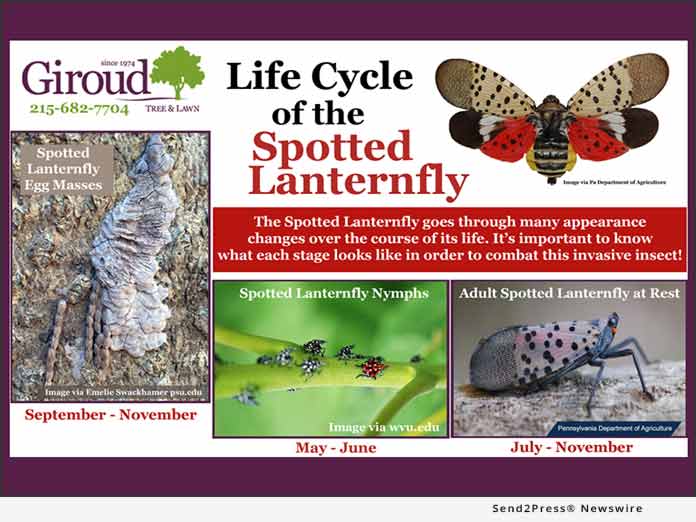
This insect is difficult to control because it goes through several identities during its life cycle. Adult females lay eggs in the fall and cover the egg masses in a secretion that dries hard and camouflages to look like dirt or clay. The young nymphs that emerge from the eggs in spring are black with white spots at first, then they gain red markings on their bodies. Midsummer they become adults and shed their skin to form wings on their backs.

These wings are their true tell-tale, with bright red markings on a background of black, white and beige patterns. When the adults are at rest or feeding on tree sap, their signature red marks are hidden underneath their folded wings making them more difficult to identify.

Spotted Lanternfly Harms Trees

The Spotted Lanternfly feeds primarily on the Tree of Heaven, which is common throughout the region. Unfortunately, these flies also swarm other types of trees, including Black Walnuts, Maples, Apples, Willows, and many more. According to the PA Department of Agriculture, they attack more than 70 species of trees, and 25 of them are found in Pennsylvania.

At this point, it's hard to determine the long-term damage to trees. Emeilie Swackhamer, Penn State Horticulture Director, has been following the Spotted Lanternfly and monitoring infested trees for 3 years. She explains in an informational YouTube video that while it's still too early to say what the long-term effects will be, the insects are definitely causing significant die-back and defoliating branches in trees.

Spotted Lanternfly Causes Property Damage

These insects eat tree sap and then excrete droppings of a sweet, sticky substance called Honeydew. The honeydew will coat the tree, the base of the tree, and anything underneath the tree, including cars, hardscapes and decking. Then, black, sooty mold grows on the secreted substance. The combination of honeydew and black, sooty mold has an unpleasantly sour stench and is very difficult to remove from surfaces.

Spotted Lanternfly Attracts Dangerous Insects

The secreted honeydew attracts stinging wasps, who can't resist the tantalizing smell of the honeydew. Stinging wasps are particularly a problem for children playing in the area.

How to Get Rid of Spotted Lanternfly

It is going to take a statewide effort to combat the spread of this insect. Awareness is the first step!

"We are fully prepared to combat the Spotted Lanternfly," says Matt Giroud, Director of Field Operations at Giroud Tree & Lawn. "We are prepped and ready to treat these trees. The challenge is making the community aware of the problem."

The experts at Giroud Tree and Lawn have been working closely with Penn State's Department of Agricultural Sciences to determine the best treatments and techniques for combatting Spotted Lanternfly in each of the life cycle stages.

How to Get Rid of Spotted Lanternfly Nymphs

The most effective way to trap Spotted Lanternfly Nymphs is by wrapping trees with sticky bands, which can be found at most hardware stores and online. They are easy to install, but should be changed weekly. However, sticky bands can accidentally trap other insects and small animals and birds. Penn State recommends cutting the sticky bands lengthwise so the surface area is not as broad, and then wrap the outside of the tree with chicken wire over the area of the sticky band. This will prevent squirrels, birds and other small animals from becoming stuck.

How to Get Rid of Spotted Lanternfly Adults

Adult Spotted Lanternfly should be squashed and killed. However, these insects will attack a tree in swarms, making it difficult to squish them all! Chemical treatments may be necessary for large infestations of Spotted Lanternfly on a property.

Homeowners should call an ISA Certified Arborist if there are signs of Spotted Lanternfly on the property. Penn State and the PA Department of Agriculture have recommended a two-part treatment program to eliminate Spotted Lanternfly.
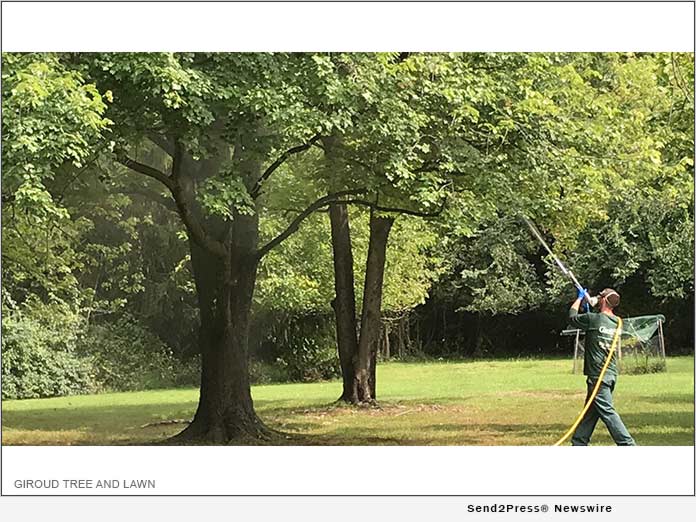
* July-Mid-September: Dinotefuran is applied as a Basal Trunk Spray. For a few weeks after treatment, the insects are killed on contact or when they crawl on treated surfaces. After the insecticide is absorbed through the tree's vascular system, Spotted Lanternfly are killed when they feed on the tree.
* September-Mid-November: Bifenthrin is sprayed on trees with Spotted Lanternfly. This treatment kills the insects on contact and when they walk over surfaces with the residue on it.

How to Find and Destroy Spotted Lanternfly Egg Masses

Adult Spotted Lanternfly start to lay their eggs in September through November, and one female Spotted Lanternfly can lay up to 100 eggs. Removing and destroying egg masses will greatly reduce the spread of Spotted Lanternfly.
* Destroy any eggs and coated egg masses. One female Spotted Lanternfly can lay up to 100 eggs! They can easily be scraped off. Put them into a bag with rubbing alcohol to kill them.
* Always check benches, stones, firewood, and anything else before moving them. Spotted Lanterfly will lay eggs on virtually any smooth surface, typically on the undersides where the egg masses are better protected from predators. Egg masses can be found on benches, stones, firewood, cars, playsets, railings, outdoor grills, and patio furniture.
* Along with eggs and egg masses, look for honeydew secretions, black, sooty mold and swarms of wasps.

In this instructional video, Giroud Tree and Lawn explains what to look for and how to remove and destroy Spotted Lanternfly Egg Masses: https://youtu.be/2R69LEnBOCs

How to Report Spotted Lanternfly Sightings

An incredible amount of research and field study goes into figuring out the best ways to combat Spotted Lanternfly. Penn State and the PA Department of Agriculture urge everyone to report their Spotted Lanternfly sightings. They have created a webpage for easy reporting:

Click Here to Report your sightings of Spotted Lanternfly!
Or call 1-888-4BadFly to report over the phone: https://extension.psu.edu/have-you-seen-a-spotted-lanternfly

About Giroud Tree and Lawn

Giroud Tree and Lawn specializes in tree service, lawn care and mosquito and tick control programs that make customers love doing business with the company since 1974. Serving Bucks, Montgomery and Philadelphia Counties, the company offers professional tree and lawn evaluation, tree pruning, tree removal, insect and disease control, fertilizing, stump removal, traditional and 100% organic lawn programs and mosquito and tick control. Giroud Arborists are certified by the International Society of Arboriculture (ISA) and have the knowledge and experience required to properly diagnose, treat and maintain trees and lawn health.

The company is Accredited by the Tree Care Industry Association and Better Business Bureau. Giroud has also been awarded the Angie's List Super Service Award(r) every year since 2005. The "Giroud Treework for Charity" program donates free tree care services to parks, historical sites and other non-profit organizations located in the Company's service area.

For more information, visit the company website at http://www.giroudtree.com/ or call 215-682-7704.
News from Giroud Tree and Lawn

Giroud Tree and Lawn explains what Spotted Lanternfly is, how they harm trees and properties, and how to get rid of them. Spotted Lanternfly have been seen all over Philadelphia, Bucks and Montgomery Counties in 2019.

Related link:

This version of news story was published on ScoopCloud™ (ScoopCloud.com) - part of and © the Neotrope® News Network - all rights reserved.


How to Keep Kids Safe from Mosquitoes and Ticks this Summer

HUNTINGDON VALLEY, Pa. /ScoopCloud/ -- In the midst of summer, kids need protection from disease-carrying mosquitoes and ticks. The experts at Giroud Tree and Lawn share a summertime checklist to keep kids safe from biting insects.

Making Kids Aware of Dangerous Insects

Teaching kids ways to prevent mosquito and tick bites will empower them to be mindful of their surroundings while out in nature. It's important to start mosquito and tick bite prevention habits early and reinforce them often. Parents can work together as a family to prepare for outside play and to check for mosquito bites and ticks once back home.

Summertime Checklist to Keep Kids Safe from Biting Insects
* Wear light and neutral colored clothing: Mosquitoes are attracted to things that mimic nature like the colors in flowers, foliage or animals. Dress kids in white, beige or khaki if they're heading out for an adventure.
* Go Natural: Avoid heavily scented shampoos and any products that contain fragrances
* Cover up: If kids are playing outside near water or woods, they should wear lightweight, long sleeves, long pants, and socks. Mosquitoes are most attracted to areas where the skin is thinner and the blood vessels are closer to the surface such as the ears, wrists, and ankles. Parents should teach kids to tuck their pants into their socks if they will be walking through high grasses or underbrush. This will prevent ticks from crawling up their legs.
* Use Repellents: Of course, DEET is the go-to chemical repellent. But there are natural alternatives. Often sold in health food stores, non-toxic, botanical repellents should be reapplied about every thirty minutes to remain effective. Repellents containing soybean oil protect for about ninety minutes-comparable to DEET. When mosquitoes start landing on the skink again, that's the signal to reapply repellent.
* Always Perform a Full Body Tick Check after Outside Play: Kids might be exhausted after playing outside all day in the hot summer sun, but it's vital to always check for ticks once they've arrived home.

Protect Kids by Protecting the Property

There is a lot homeowners can do to protect the property. It takes an all-out assault on the parts of the yard that attract mosquitoes and ticks as well as creating a pest repellent barrier.
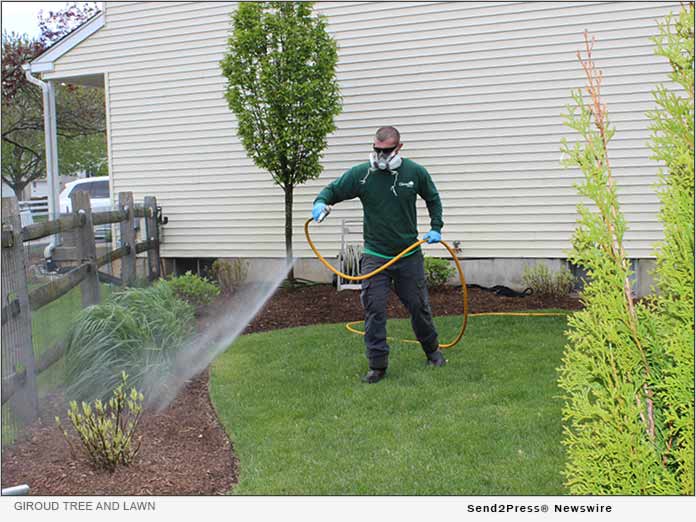
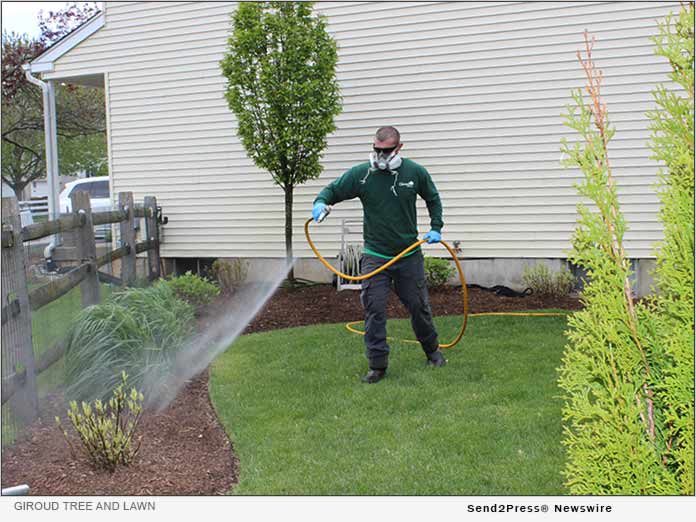
* Treat the Hot Spots and Perimeter of the Yard: Some insect control companies have both Organic and Traditional Mosquito and Tick Control treatment plans. Most treatments kill the pests on contact and then repel for several weeks.
* Remove or Empty Objects that Collect Water: Mosquitoes need water for two stages of their life cycle. Keep rain gutters clear and unclogged. Remove old tires, buckets, plastic covers, or any other container. Empty and change the water in birdbaths, fountains, wading pools, rain barrels and potted plant trays at least once a week. Drain temporary pools of water or fill with dirt. "Consider purchasing a battery operated water motion machine or a water baffler machine for your pond," suggests Giroud Plant Health Care Manager, Rodney Stahl. "These water agitators will keep water in motion and deter mosquitoes from breeding"
* Prune or Remove Overgrown Vegetation: Mosquitoes are shade lovers. An ISA Certified Arborist can eliminate shady habitats in two ways. First, cleaning up and/or clearing overgrown areas. Second, pruning tree branches and shrubs around the lawn edge to let in more sunlight.
* Use yellow light bulbs in outdoor fixtures. They aren't as attractive to bugs.
* Plant mosquito-repelling plants. These include scented geraniums, lemon thyme, marigold, tansy, citrus plants, sweet basil and/or sassafras near the home.

About Giroud Tree and Lawn:

Giroud Tree and Lawn specializes in tree service, lawn care and mosquito and tick control programs that make customers love doing business with the company since 1974. Serving Bucks, Montgomery and Philadelphia Counties, the company offers professional tree and lawn evaluation, tree pruning, tree removal, insect and disease control, fertilizing, stump removal, traditional and 100% organic lawn programs and mosquito and tick control. Giroud Arborists are certified by the International Society of Arboriculture (ISA) and have the knowledge and experience required to properly diagnose, treat and maintain trees and lawn health. The company is Accredited by the Tree Care Industry Association and Better Business Bureau. Giroud has also been awarded the Angie's List Super Service Award(r) every year since 2005. The "Giroud Treework for Charity" program donates free tree care services to parks, historical sites and other non-profit organizations located in the Company's service area.

For more information, visit the company website at http://www.giroudtree.com or call 215-682-7704.

News from Giroud Tree and Lawn

In the midst of summer, kids need protection from disease-carrying mosquitoes and ticks. The experts at Giroud Tree and Lawn share a summertime checklist to keep kids safe from biting insects. Teaching kids ways to prevent mosquito and tick bites will empower them to be mindful of their surroundings while out in nature.

Related link:

This version of news story was published on ScoopCloud™ (ScoopCloud.com) - part of and © the Neotrope® News Network - all rights reserved.
How to Capture and Destroy Spotted Lanternfly Nymphs

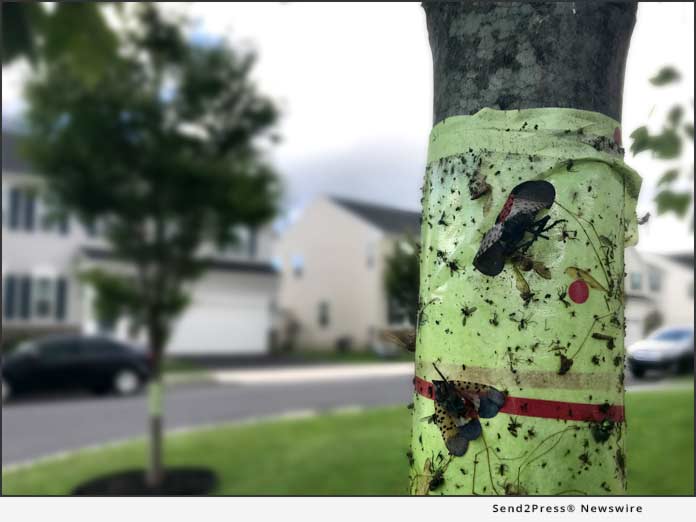
HUNTINGDON VALLEY, Pa. /ScoopCloud/ -- The Spotted Lanternfly is a destructive insect that has officially invaded Philadelphia, Bucks and Montgomery Counties! All winter long, their eggs lay waiting for the warm weather, and the Spotted Lanternfly Nymphs have already started to emerge. The experts at Giroud Tree and Lawn share what to look for and how to capture and destroy these destructive insects.

How Spotted Lanternfly Causes Property Damage and Attracts Dangerous Insects

These insects eat tree sap and then excrete droppings of a sweet, sticky substance called Honeydew. The honeydew will coat the tree, the base of the tree, and anything underneath the tree, including cars, hardscapes, and decking. Then, black, sooty mold grows on the secreted substance. The combination of honeydew and black, sooty mold has an unpleasantly sour stench and is very difficult to remove from surfaces.

Even more unsettling, the secreted honeydew attracts stinging wasps! Wasps can't resist the tantalizing smell of the honeydew, and they will swarm a property for a taste. Homeowners are struggling to rid their yards of stinging wasps, and it's particularly a problem for children playing in the area!

How to Identify the Spotted Lanternfly

One of the things that makes this insect difficult to control is the fact that it goes through several identities during its life cycle. Adult females lay eggs in the fall, and they cover the egg masses in a secretion that dries hard and camouflages to look like dirt or clay. The young nymphs that emerge from the eggs in spring are black with white spots. In early summer, they gain red markings on their bodies. Then, midsummer they become adults and shed their skin to form wings on their backs.

How to Capture and Destroy Spotted Lanternfly Nymphs

The experts at Giroud Tree and Lawn have been working closely with Penn State's Department of Agricultural Sciences to determine the best treatments and techniques for combatting Spotted Lanternfly in each of the life cycle stages. According to Penn State, "Currently, the most effective trap for SLF is a sticky band wrapped around the trunks of trees. SLF nymphs and adults are trapped in the sticky barrier as they crawl up from the ground onto the trunks and move upward to feed on the tree."

Sticky bands can be found at most hardware stores and Amazon.com. They are easy to install, but they should be changed weekly for the best results. It is important to be aware that these sticky bands can accidentally trap other insects and also small animals and birds. To avoid this problem, Penn State recommends cutting the sticky bands lengthwise so the surface area is not as broad. Penn State also urges homeowners to wrap the outside of the tree with chicken wire over the area of the sticky band. This will prevent squirrels, birds and other small animals from becoming stuck to the band.

If homeowners see signs of Spotted Lanternfly on the property, they should have their trees inspected by an ISA Certified Arborist.

About Giroud Tree and Lawn:

Giroud Tree and Lawn specializes in tree service, lawn care and mosquito and tick control programs that make customers love doing business with the company since 1974. Serving Bucks, Montgomery and Philadelphia Counties, the company offers professional tree and lawn evaluation, tree pruning, tree removal, insect and disease control, fertilizing, stump removal, traditional and 100% organic lawn programs and mosquito and tick control. Giroud Arborists are certified by the International Society of Arboriculture (ISA) and have the knowledge and experience required to properly diagnose, treat and maintain trees and lawn health.

The company is Accredited by the Tree Care Industry Association and Better Business Bureau. Giroud has also been awarded the Angie's List Super Service Award(r) every year since 2005. The "Giroud Treework for Charity" program donates free tree care services to parks, historical sites and other non-profit organizations located in the Company's service area. For more information, visit the company website at http://www.giroudtree.com or call 215-682-7704.

News from Giroud Tree and Lawn

The Spotted Lanternfly is a destructive insect that has officially invaded Philadelphia, Bucks and Montgomery Counties! All winter long, their eggs lay waiting for the warm weather, and the Spotted Lanternfly Nymphs have already started to emerge. The experts at Giroud Tree and Lawn share what to look for and how to capture and destroy these destructive insects.

Related link:

This version of news story was published on ScoopCloud™ (ScoopCloud.com) - part of and © the Neotrope® News Network - all rights reserved.
Griffin Pest Solutions Named A Top 100 Company

pest control

KALAMAZOO, Mich., June 5, 2015 (SEND2PRESS NEWSWIRE) -- Kalamazoo-based Griffin Pest Solutions (www.griffinpest.com) ranked 79th on the 2015 Pest Control Technology magazine Top 100 List, an annual compilation of the leading pest management companies in the United States. The list was included in the magazine's May issue (www.pctonline.com).

Griffin, a family-owned company, is part of a nationwide industry that generated an estimated $7.4 billion in revenue in 2014 - a 3.5 percent increase from the previous year - and that has experienced consistent growth over the last five years.

The company provides vital pest management services to both residential and commercial clients in Michigan, northern Indiana and northwest Ohio. It operates service centers in Kalamazoo, Dexter, Livonia and Wyoming, Michigan.

Griffin's residential services protect customers' homes from potentially destructive pests including carpenter ants, and annoying and potentially threatening pests including ants, stinging insects, rodents, cockroaches and bed bugs.

The company's commercial services safeguard leading food processing, healthcare, hospitality, education, agriculture, education and multi-family housing facilities from an array of pests including rodents, cockroaches, nuisance birds, stored product pests, and flies.

"Being named to the PCT Top 100 List is a testament to the passionate dedication of our team and validates the business model we have followed of delivering quality, dependable and innovative service to commercial and residential clients," says Pam Blauvelt, vice president of operations for Griffin Pest Solutions.

About Griffin Pest Solutions:

Griffin Pest Solutions ( http://www.griffinpest.com/ ), founded in 1929, delivers innovative integrated pest management solutions to commercial and residential pest management clients in Michigan, northern Indiana and northwest Ohio.

*IMAGE for media (logo): Send2Press.com/mediaboom/15-0605-griffin-pest-300dpi.jpg

Twitter: @GriffinPest

To view the original version on Send2Press Newswire, visit: https://www.send2press.com/newswire/griffin-pest-solutions-named-a-top-100-company-2015-0605-01.shtml.

NEWS SOURCE Griffin Pest Solutions :: This press release was issued on behalf of the news source (who is solely responsible for its accuracy) by and Copr. © 2015 Send2Press® Newswire, a service of Neotrope®.