Category Archives: Offshore Wind Project

New Jersey’s Save LBI Calls for Accountability on Offshore Wind Decommissioning, Urges U.S. Dept. of Interior to Reverse Previously Approved Deferrals

LONG BEACH ISLAND, N.J., Oct. 16, 2025 (SEND2PRESS NEWSWIRE) — Save Long Beach Island, Inc. (Save LBI), a grass-roots organization dedicated to sound energy policies and preserving our shore and ocean environment, today urged the U.S. Department of Interior (DOI) to end the egregious practice of letting operators of offshore wind farms postpone providing financial assurance earmarked for the future decommissioning and removal of turbines and related infrastructure.
Save Long Beach Island (Save LBI)
Image caption: Save Long Beach Island (Save LBI).

The organization, which is backed by more than 10,000 supporters, also urged the agency to take two specific actions: 1) Invalidate previous financial assurance deferrals granted to offshore wind projects, compelling developers to provide that assurance soon after turbine operation begins, and 2) mandate that all future renewable energy approvals comply with strict regulations under the Code of Federal Requirements (CFR).

In a letter to DOI Secretary Doug Burgum, Save LBI said the practice of deferring financial responsibility “appears to be pervasive” and cited specific instances where the DOI’s Bureau of Ocean Energy Management (BOEM) authorized the owners of Rhode Island’s Revolution Wind and Massachusetts’ Vineyard Wind projects to postpone payments for 15 years, giving the developers excessive leeway in establishing funding necessary to cover the substantial costs of decommissioning the planned 127 wind turbines off the coast of New England.

Citing one of many examples, the letter — signed by Save LBI attorney Thomas Stavola and Bob Stern, Ph.D scientist and president of the organization — says BOEM authorized a deferral for Revolution Wind on the basis that “providing the full amount of its decommissioning financial assurance prior to receiving any revenue under its power purchase agreements (PPAs) would be an unnecessary and unreasonable financial burden on the company.” However, such revenues are received by the company well before the 15-year deferral given.

A Lack of Accountability

BOEM’s approval of Revolution’s “departure request” ignores CFR requirements, which state, “Any departure approved under this section and its rationale must…be consistent with subsection 8(p) of the OCS Lands Act…[and] protect the environment and the public health and safety to the same degree as if there was no approved departure from this part…”

Calling the approvals “patently absurd,” Stavola said “BOEM abdicated its responsibility to the American people by relying heavily on the ‘financial strength’ of the project instead of upholding its duty to protect the environment, public health, and safety.”

BOEM’s action in the case of Revolution Wind undermines CFR criteria in a number of ways, including:

  • Increasing risk to federal taxpayers, as delineated by the Government Accountability Office (GAO).
  • Foreclosing the possibility of using funds set aside for turbine decommissioning to address unforeseen events — such as Vineyard Wind’s blade failure in the summer of 2024.
  • Heightening the risk that an offshore wind developer will be incapable of meeting financial assurance obligations 15 years down the road, leaving taxpayers to foot the bill.
  • Elevating the possibility of littering the ocean with abandoned offshore wind infrastructure, which could potentially occur after only 10 to 15 years of operation — well before the structure’s official life expectancy. Long-term risks include the potential for derelict turbines, foundations, cables, substations to become hazards for marine wildlife, while leakage of lubricants, hydraulic fluids, and other pollutants contaminates the marine environment.
  • Precluding a key enforcement tool. Without financial assurance, the mechanism that would compel full-site restoration is removed. CFR decommissioning requirements for offshore wind projects include the removal of all facilities, projects, cables, pipelines, obstructions, and clearing the seafloor of all obstructions created by activities authorized under the lease. What’s more, if developers become financially insolvent, regulators lose leverage to enforce compliance.
  • Creating navigational/safety hazards. Abandoned turbines would pose hazards to vessels, fisheries, and navigation, as well as military and commercial radars.
  • Degrading the marine environment in perpetuity. Abandoned turbines will harm marine habitats and interfere with the migration of the critically endangered North Atlantic right whale.

“Beyond the many negatives created by not holding offshore wind developers accountable, there are other fundamental problems,” Stern noted. “It’s not clear what decommissioning means in the context of prior BOEM deferrals or whether the amount of financial assurance specified is up to the task.”

The Save LBI leader stressed the importance of explicitly defining what ‘decommissioning’ means and specifying the level of financial commitment required to fully remediate a site that is no longer active. “Decommissioning could range from merely removing turbine blades to removing the entire turbine tower along with the blades and a subsection of the foundation. We don’t know whether the amount of financial assurance includes onshore storage, processing, and ultimate disposal of materials.”

According to Save LBI estimates, the latter decommissioning effort could cost twice as much as the $325.4 million BOEM assigned to Revolution Wind. The Burgum letter states: “We would suggest that this subject requires major surgery in your upcoming Outer-Continental Shelf rule revisions, and that you consider the following elements in such a revision: a) that turbine removal down to a section of the foundation be required in all cases, b) that a preliminary turbine removal plan and cost be included in the Construction and Operations Plan, c) that BOEM prescribe methods of calculating the cost of turbine removal, including onshore processing and disposal, and, d) that financial assurance begin one year after commencement of operation and be provided for the full cost amount no later than 10 years after commencement of operation.

About Save LBI

Save LBI is a not-for-profit, non-partisan organization that has been active in ongoing litigation and other efforts to protect the coastal and marine environment from the senseless industrialization of our oceans. The organization is led by Beach Haven, N.J. resident Bob Stern, a Ph.D. scientist with experience in environmental planning and environmental law. He is a former manager of the U.S. Department of Energy office responsible for overseeing environmental protection related to energy projects and the Bureau of Air Quality Planning within the New Jersey Department of Environmental Protection (NJDEP). For more information on Save LBI and its efforts, please visit SaveLBI.org.

Contact: https://www.savelbi.org/contact

For more information click here: https://www.savelbi.org

NEWS SOURCE: Save Long Beach Island (Save LBI)


This press release was issued on behalf of the news source (Save Long Beach Island (Save LBI)), who is solely responsible for its accuracy, by Send2Press Newswire. Image, if any, was provided by the news source and not this website or the wire service. Information is believed accurate, as provided by the news source, but is not guaranteed.

To view the original story, visit: https://www.send2press.com/wire/new-jerseys-save-lbi-calls-for-accountability-on-offshore-wind-decommissioning-urges-u-s-dept-of-interior-to-reverse-previously-approved-deferrals/

Copr. © 2025 Send2Press® Newswire, Calif., USA. -- REF: S2P STORY ID: S2P130218 NOREL-3B
 

NJ Coalition Demands Full Accounting of All Costs Associated with Controversial Atlantic Shores South Offshore Wind Project

Save LBI Urges NJ Board of Public Utilities to Include Costs Omitted in Prior Review of the Multibillion Project

BEACH HAVEN, N.J., Nov. 12, 2024 (SEND2PRESS NEWSWIRE) — Save Long Beach Island (Save LBI), a New Jersey citizens group working to protect the ocean and local shore communities from the destructive impact of offshore wind projects, has called on the New Jersey Board of Public Utilities (BPU) to conduct a comprehensive cost-benefit analysis of the federally-approved Atlantic Shores Offshore Wind South project that includes costs omitted in previous economic analyses of the controversial plan to place two-hundred wind turbines off the coast of southern Long Beach Island, Brigantine, and Atlantic City.

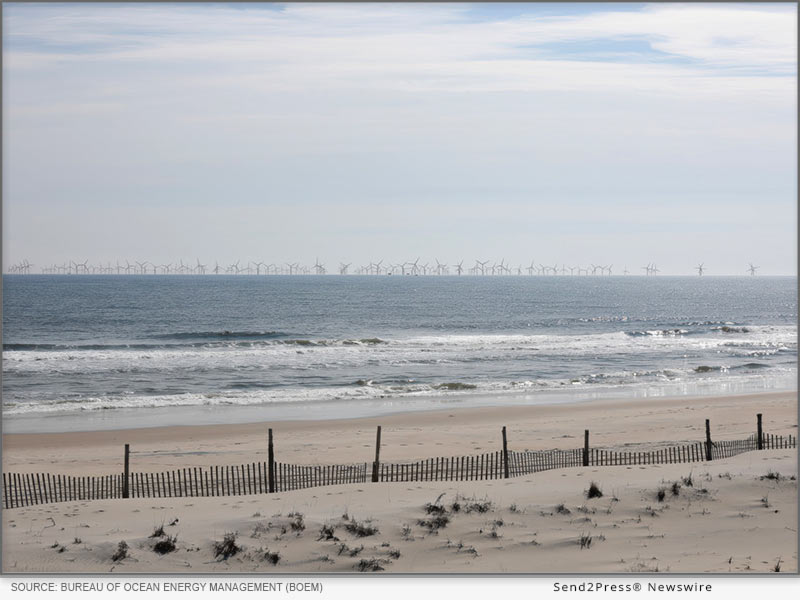
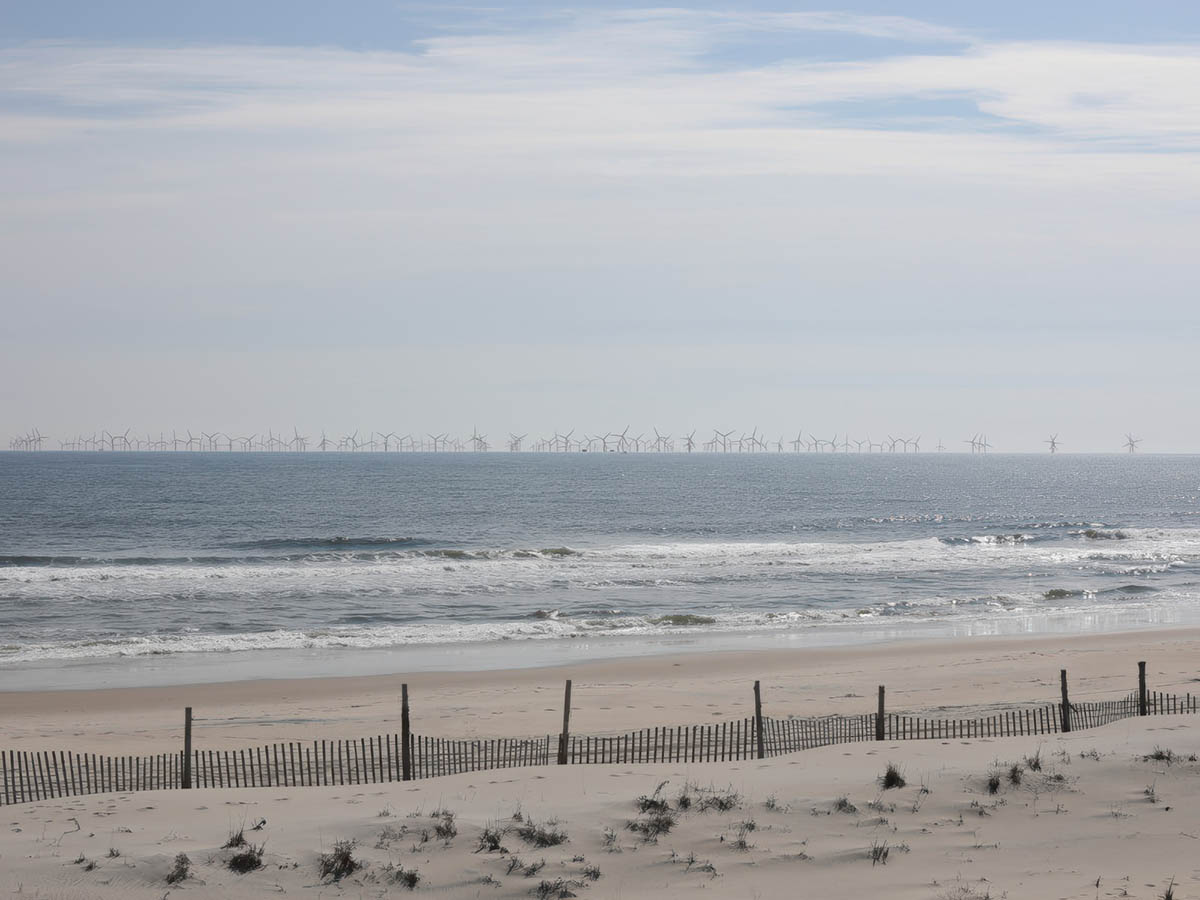
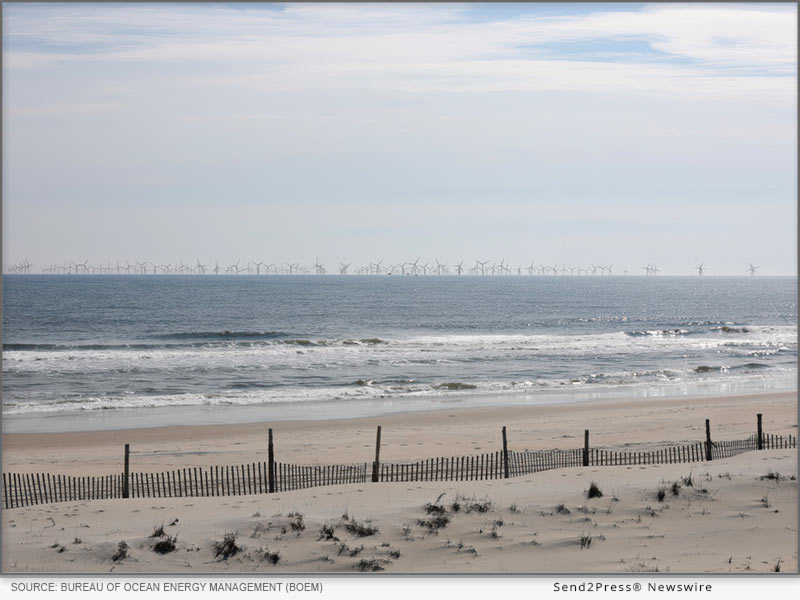
Visual simulation of Atlantic Shores South project as it would appear from Holgate, NJ. Source: Bureau of Ocean Energy Management (BOEM)
Photo caption: Visual simulation of Atlantic Shores South project from Holgate, New Jersey. Source: Bureau of Ocean Energy Management (BOEM).

If the additional anticipated subsidies are approved, the project would cost New Jerseyans an estimated $110 billion over its lifespan, almost twice the amount of the entire State budget for 2025 of $55.9 billion, according to Save LBI. This staggering amount includes $73 billion in generic costs that occur for all such projects and an additional $37 billion in costs associated with siting 1,048-foot-tall wind turbines radically close to the coast. (See generic and site-specific cost breakdowns below.)

The State’s Offshore Wind and Economic Development Act requires a cost-benefit analysis showing a net benefit to the State before electric rate subsidies can be awarded to an offshore wind project. In a letter dated October 30, Save LBI asked the NJ BPU to include costs that were not factored into the previous financial calculus for the Atlantic Shores South project, including the sizeable cost associated with siting the turbines closer to shore than anywhere else in the world.

“The BPU is looking at spending an enormous amount of public money on a single project,” said Bob Stern, president and co-founder of Save LBI. “It’s no wonder potential recipients of that largess show up in droves at wind-energy-sponsored events such as the Offshore Windpower Conference & Exhibition held recently in Atlantic City.”

Save LBI has provided a breakdown of the $110 billion project cost to the BPU and awaits the Board’s award decision and cost-benefit analysis to see: (1) the full costs of the Atlantic Shores South project, (2) what possible benefit would outweigh this huge cost in order to satisfy the State’s “net benefit” test, and (3) how the extra $37 billion could be justified compared to other projects. The NJ BPU is expected to make a final determination in December.

Save LBI has also called on NJ State legislators to review and hold hearings on these costs to determine whether or not the Atlantic Shores South project is a wise use of the State’s limited resources.

GENERIC COSTS OF ATLANTIC SHORES SOUTH

1. Substantially higher electricity rates across the State’s residential, commercial, and industrial sectors. The BPU is considering a more highly subsidized price for the Atlantic Shores project that would increase average bills by around 12% (11% residential, 13% commercial, and 15% industrial). Based on 2024 numbers, the cost of this increase over the lifetime of the project would be $20 billion [*note 1]. It’s worth noting that the NJ BPU has underestimated prior electric bill increases by about 40% [*note 2].

2. State investment in the Paulsboro, Salem County, and Sea Girt facilities. In addition to direct subsidies of individual offshore wind projects, the State is investing substantial NJ taxpayer money to provide infrastructure support for the Atlantic Shores South project and other offshore wind projects. To date it has committed at least $250 million for the Paulsboro marine terminal [*note 3], $637.6 million (with another $462 million planned) for the Salem county windport,[*Note 4] and another $1.2 billion for the Sea Girt/Larrabee transmission system/upgrade (with an additional $7.1 billion expected to follow) [*note 2]. Combined, we’re looking at another $9.7 billion. And this does not take into account a new, even more costly offshore transmission system, now on the drawing boards, that would divert power from wind projects off the coast of NJ to New York. All of these additional State costs should be proportionally allocated to each project that will use them when evaluating costs verses benefits, with an assumed $3 billion allocated to this project.

3. Loss in business revenue and jobs due to electric rate increases. A 2011 study [*note 5] found that a 2 percent increase in Statewide electric rates results in an annual loss of 2,219 jobs, with an average decrease in wages of $111 per year, which adds up to a Statewide loss of $330 million in annual disposable income. A 12 percent rate increase from the Atlantic Shores project would result in a present (2024) value cost increase of $40 billion [*note 1]. Costs such as these have been omitted from previous BPU cost-benefit analyses, but are major and should be included.

4. State cost of removal and onshore processing of wind turbines at the end of their useful life. These costs are likely to fall to the State because there are no federal or State requirements for the company to remove the turbines. What’s more, Atlantic Shores or government agencies have never disclosed a feasibility study or cost analysis for the removal and onshore processing of the turbines — a massive undertaking that could approach the cost of installation, on the order of $10 billion. The BPU cost benefit analysis should clearly state whether turbine removal and processing is included in the project decommissioning plan, what cost was allocated toward that, and what provision was made to provide for financial assurance for funding that cost. It should be noted that any failure to address this issue, resulting in the turbines left in place after their useful life, would incur additional long-term costs such as those discussed below in items 6, 7 and 8.

5. Energy back-up costs and the “wake effect.” The introduction of intermittent wind-powered energy to the regional electric supply system requires more back-up sources, potentially within New Jersey. In addition, the BPU has not considered the “wake effect”: how wind is diminished in a row of turbines that is downwind from another row, which will significantly reduce the power output of the Atlantic Shores project due to the close spacing between turbines. A recent study [*note 9] of a wind complex close to the Atlantic Shore South area indicates that the internal wake effect within the complex itself is significant in terms of reductions in wind speed. The nature and cost of the necessary energy back-up should be included to attain an accurate cost-benefit analysis.

ADDITIONAL COSTS ASSOCIATED WITH SITING WIND TURBINES CLOSE TO SHORE

6. Loss in tourism. A 2024 study [*note 6] estimated the Atlantic Shores project would cause a $668 million loss in annual tourism revenue and the loss of 6,700 tourism-related jobs per year in Ocean County, NJ, attributable to the project off Long Beach Island. The present (2024) value of that lost tourism revenue would add up to $12 billion over the first 20 years of turbine operations. Another 2024 study [*note 7] estimates an additional annual $1.6 billion loss in tourism revenue in neighboring Atlantic County, with related job losses of 10,700 per year and a total cost to Atlantic County of $21 billion over the lifetime of the project. The total expected loss in tourism revenue over the life of the Atlantic Shores project for both areas is $33 billion. Such costs have not been addressed in prior BPU cost-benefit analyses, but are major and should be included.

7. Decline in property values. Government agencies and wind developers like to cite a Block Island (Rhode Island) study to conclude that offshore wind development will have no impact on property values. But this is highly misleading because Block Island only has only five small wind turbines located off rocky coasts and cliffs, much farther and less visible from popular beaches. Five turbines is a long way from 200, each three times the height of the Statue of Liberty and less than 9 miles from shore at their closest point.

A study commissioned by the NJ BPU [*note 8] that examined how the visibility of offshore wind turbines would impact property values found that oceanfront and ocean-view properties would lose significant value. It assumed that an oceanfront or ocean-view property would drop to the value of the row behind it with turbines visible. Applying that principle to the 1,100 oceanfront properties on LBI predicts a reduction in property value of 38 percent for each home, for a total loss in property value of $1.6 billion; homes one house away from the beach would each experience a 25 percent reduction in value for an additional loss of $0.6 billion. A similar analysis conducted for Brigantine Beach [*note 7] shows losses of up to $0.8 billion for the first two rows of houses nearest the ocean.

This results in a total loss of $3 billion just for the first two rows closest to the ocean in these two towns, and would likely have a cascading effect on other property values. Anticipated losses in property value and tax revenue for all affected structures were missing from prior BPU cost benefit analyses and should be included in the cost-benefit analysis of the Atlantic Shores South project.

8. State costs for beach cleanups of debris from wind-turbine component failures. These costs are uncertain because offshore wind companies and government agencies have not released an analysis of the frequency and consequences of turbine component failures. But, as we know from the Vineyard Wind turbine failure off the coast of Nantucket in July, the cost of removing fiberglass and other debris from beaches is substantial, as is the comparable cost of cleaning up beaches in the aftermath of vessel wrecks, which have run into tens to hundreds of millions of dollars. Depending on failure frequency, the cost of such cleanups over the project’s lifetime could approach $1 billion, or even more if failures occur during tourist season. Costs covering the eventuality of turbine failures have not been factored into prior BPU cost benefit analyses but should be accounted for in the cost-benefit analysis of the pending Atlantic Shores South project.

About Save LBI:

Save Long Beach Island (Save LBI) is an organization of citizens and businesses on and off Long Beach Island (LBI), New Jersey working together to protect the ocean and the Island and neighboring communities from the destructive impact of Atlantic Shores offshore wind projects, and potentially others in the future. As a not-for-profit, non-partisan entity, we do not endorse any political candidates but vigorously pursue policies and actions that protect the Island and surrounding communities. The coalition is led by Beach Haven resident Dr. Bob Stern, a Ph.D. engineer with experience in environmental law who previously managed the U.S. Department of Energy’s office overseeing environment protection related to energy programs and projects. Visit SaveLBI.org for more information and to make a donation.

Contact: https://www.savelbi.org/contact.

For more information click here: https://www.savelbi.org

REFERENCES:

  1. Economic Analysis of the Atlantic Shores South Offshore Wind Projects, Edward, P. O’Donnell, White Strand Consulting LLC, August 2024
  2. Economic Analysis of the Attentive and Leading Light Offshore Wind Projects, Edward P. O’Donnell, White Strand Consulting LLC, August 2024, Table 6-1
  3. NJ Governor’s Office press release, 12/21/2020, gov/governor/news/news/562020/approved/20201222a.shtml
  4. NJ Economic Development Authority NJ Wind Port Prospectus, njwindport.njeda.gov
  5. The Cost and Economic Impact of New Jersey’s Offshore Wind Initiative, Beacon Hill Institute at Suffolk University, June 2011
  6. Potential Economic Losses of Reduced Tourism Attributable to Proposed Wind Turbines in Long Beach Island, NJ, Tourism Economics, March 2024
  7. Report to Atlantic County Commissioners on Offshore Wind Developments, the Industrialization of Our Ocean and Impact to Our Local Economy, April, 2024, Defend Brigantine Beach
  8. An Assessment of the Potential Costs and Benefits of Offshore Wind Turbines, Global Insight, 2008
  9. Estimating Long-Range External Wake Losses in Energy Yield and Operational Performance Assessments Using the WRF Wind Farm Parameterization, Arc Vera Renewables, 2022

MULTIMEDIA:

PHOTO link for media: https://www.Send2Press.com/300dpi/24-1008-s2p-savelbi-300dpi.jpg

Photo caption: Visual simulation of Atlantic Shores South project from Holgate, New Jersey. Source: Bureau of Ocean Energy Management (BOEM).

NEWS SOURCE: Save Long Beach Island (Save LBI)


This press release was issued on behalf of the news source (Save Long Beach Island (Save LBI)), who is solely responsible for its accuracy, by Send2Press Newswire. Image, if any, was provided by the news source and not this website or the wire service. Information is believed accurate, as provided by the news source, but is not guaranteed.

To view the original story, visit: https://www.send2press.com/wire/nj-coalition-demands-full-accounting-of-all-costs-associated-with-controversial-atlantic-shores-south-offshore-wind-project/

Copr. © 2024 Send2Press® Newswire, Calif., USA. -- REF: S2P STORY ID: S2P122222 NOREL-3B