Tag Archives: Alzheimers disease

Alzheimer’s Patient Recalls Daughter’s Birthday After Undergoing Fecal Transplant

VENTURA, Calif. /ScoopCloud/ -- Dr. Sabine Hazan, founder of ProgenaBiome, a genetic sequencing lab in California, achieved rapid improvement in Alzheimer's disease (AD) symptoms in an 82-year-old male patient following fecal microbiota transplantation (FMT).

After experiencing recurrent C.diff Infection (CDI) following hospitalization for pneumonia, the patient sought the expertise of Dr. Hazan, a gastroenterologist and microbiome expert. Since the patient previously failed several courses of antibiotics for CDI, with relapse confirmed via symptom recurrence and positive stool test, Dr. Hazan presented the option of fecal transplant (FMT). FMT involves the transfer of stool from a healthy individual to deliver healthy microbes to the gut of an ill patient. FMT can be used to treat CDI not responsive to standard therapies.

After a detailed discussion regarding the potential risks and benefits associated with the procedure, the patient underwent a single 300 mL FMT infusion using stool from his 85-year-old wife as a donor. At the time, the patient had scored 20 on his most recent Mini-Mental State Examination (MMSE) administered by a neurologist, indicating mild cognitive impairment. The patient's wife, on the other hand, was intellectually acute, with normal affect and stable mood.

Following the procedure, the patient's CDI symptoms resolved, and repeat stool testing two months later was negative. Additionally, the patient's wife reported improvements in his mental acuity and affect at the follow-up visit two months post-FMT. The MMSE was re-administered by the gastroenterologist and neurologist, and the patient scored 26, indicating normal cognition.

Four months post-FMT, the patient reported continued improvement in memory, with no progression in symptoms. The patient even remembered his daughter's birthday, which he was previously unable to recall. Six months post-FMT, the patient reported a marked improvement in mood, was more interactive, and showed more expressive affect. Readministration of the MMSE revealed that the patient's score had further increased to 29. The maximum MMSE score is 30 points.

Dr. Hazan is a specialist in gastroenterology, internal medicine and hepatology. She is the founder & CEO of ProgenaBiome, a genetic sequencing research laboratory dedicated to understanding the clinical implications of the microbiome.

"To our knowledge, this is the first report of a case of rapid symptom improvement of AD symptoms in a patient following FMT for recurrent CDI," says Dr. Hazan. "Based on the findings of this case and the analysis of the genetic sequencing of the gut flora, we will now submit an investigative new drug (IND) application for 20 additional Alzheimer's patients to undergo fecal transplant. We hope to reproduce this case and develop a stool marker that can help patients prevent Alzheimer's in the future."

While this case is a proof of concept for one patient, Dr. Hazan looks forward to expanding her work. She is currently seeking funding to expand the clinical trial for Alzheimer's improvement via FMT.

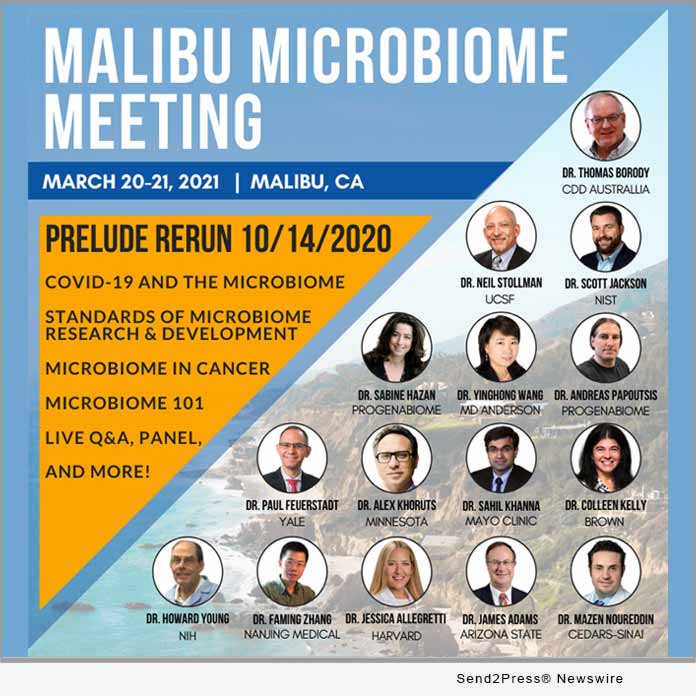
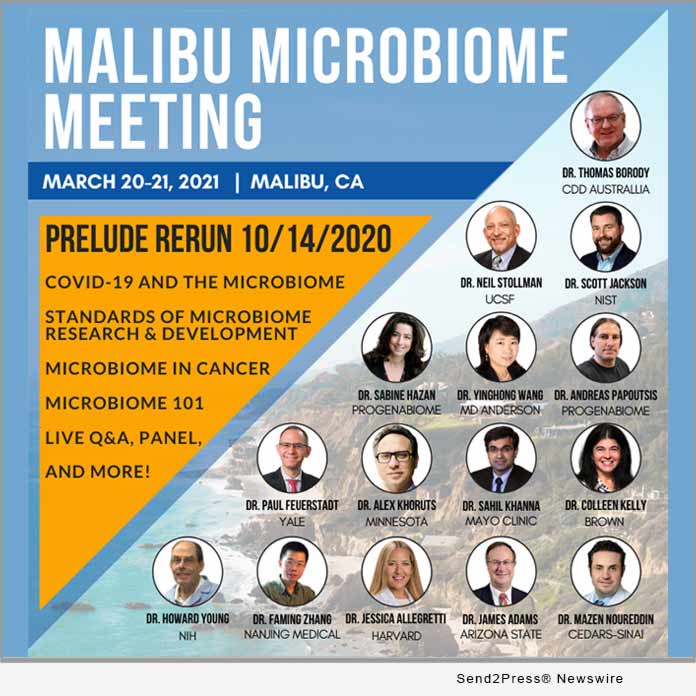
Dr Hazan also assembled the BIOME SQUAD, a group of her colleagues and fellow FMT doctors. The Biome Squad will be presenting data on the microbiome and fecal transplant at the Malibu Microbiome Meeting.

There will be a Virtual Prelude Rerun on October 14, 4 p.m. PT/PDT. For details and registration, visit: https://malibumicrobiomemeeting.com/

Read the full Alzheimer's report: https://journals.sagepub.com/doi/10.1177/0300060520925930

Interviews / Investors, Contact: Stephanie Davis, sdavis@progenabiome.com

Support ongoing research: https://microbiomeresearchfoundation.com/

About ProgenaBiome:

Strategically placed as a genetic sequencing lab, site, contract research organization (CRO), and now sponsor, ProgenaBiome has 42+ ongoing clinical trials related to immunity and disease with six COVID-19 studies validating testing, prophylaxis, and treatment protocols for the novel coronavirus.

For more, visit https://progenabiome.com

MULTIMEDIA:

Image link for media: https://www.Send2Press.com/300dpi/20-1006s2p-malibu-microbiome-300dpi.jpg

Caption: Malibu Microbiome Meeting poster.
News from ProgenaBiome

Dr. Sabine Hazan, founder of ProgenaBiome, a genetic sequencing lab in California, achieved rapid improvement in Alzheimer's disease (AD) symptoms in an 82-year-old male patient following fecal microbiota transplantation (FMT).

Related link: https://progenabiome.com/

This version of news story was published on ScoopCloud™ (ScoopCloud.com) - part of and © the Neotrope® News Network - all rights reserved.
The OLFACT Test Battery – a Screening Test App for Predicting Alzheimer’s

CINCINNATI, Ohio /ScoopCloud/ -- The OLFACT™ Test Battery, developed by Osmic Enterprises, was initially developed to detect olfactory impairments. Now, it's been adapted as an automated, self-administered screening test to predict Alzheimer's disease/dementia and is being tested by a number of prominent physicians and research laboratories around the United States and in China.

People sense smell through the olfactory nerve and the olfactory system is often one of the earliest sites where the signature neuropathology of Alzheimer's disease is found. The olfactory system is also intricately connected with the hippocampus, a brain structure that plays a major role in the formation of memories. These factors suggest that the sense of smell could be effective in assessing for development of the disease.

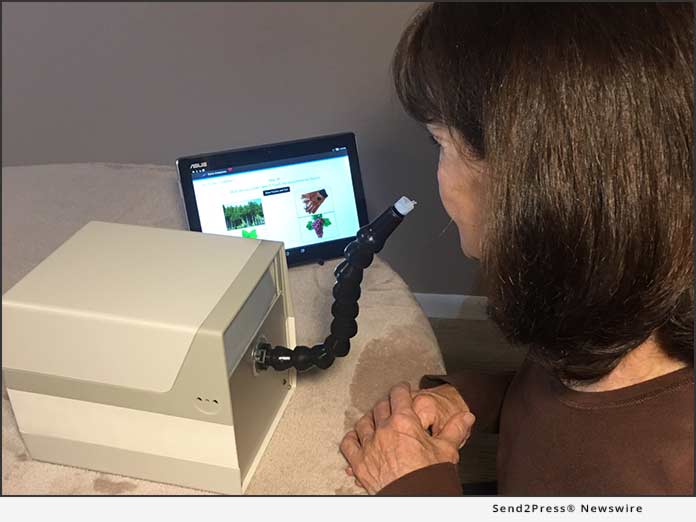
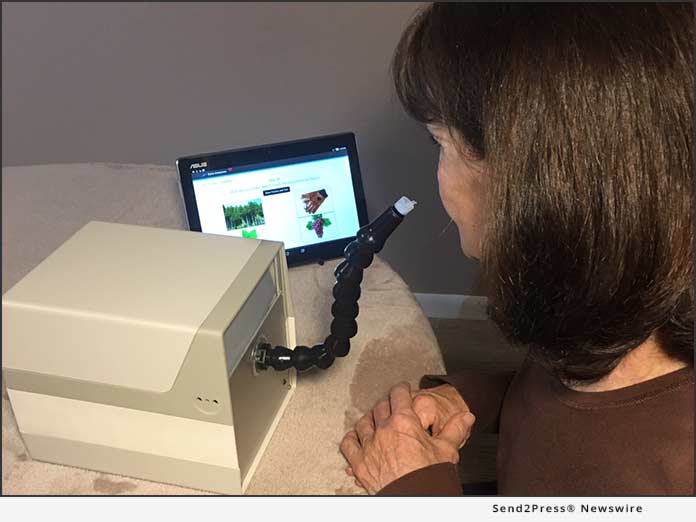
The OLFACT™ Test Battery consists of a miniaturized olfactometer (instrument to generate smells) and a tablet-based app which controls presentation of the smells by the olfactometer and administration of the test protocols on the tablet.

The test battery has four standard olfactory function tests: odor identification, memory, discrimination and threshold. The tests are presented in an unbiased manner with computer-accurate consistency concerning timing and smell concentration. The app scores and provides a report of the results and all data is stored in real-time in a central, cloud-based database.

Osmic Enterprises is currently in the process of applying for FDA approval for the test. Once it receives FDA clearance, it can be used with other biomarkers to screen for Alzheimer's/dementia.

In the immediate future, the test can help to select subjects for Alzheimer therapeutics clinical trials. Currently, 10 subjects must be screened to find one acceptable for inclusion into a clinical trial (average cost per enrolled subject, $49,000). The OLFACT™ could potentially increase these odds and help to lower recruitment costs while selecting better suited candidates.

The test has been validated in a number of National Institutes of Health-sponsored clinical trials including one at the Rush Medical Center in Chicago - the Memory and Aging Project. This was a community-based prospective study where normal cognitive adults, 65 and older, were enrolled and underwent annual exams until death. The OLFACT™ Test Battery was added into those annual exams and data was collected for approximately 600 patients for three consecutive years (2010-2012).

Data analysis showed that the results from the OLFACT™ Test Battery can be used to predict the probability of Alzheimer's developing in an individual over a four to 10-year timeframe.

In another study at Harvard, the test battery was shown to accurately identify subjects as being cognitively normal, mildly impaired or having Alzheimer's/dementia. Other clinical trials are underway at Indiana University School of Medicine and Hershey Medical Center/Penn State University.

The OLFACT™ Test Battery is not a diagnostic test, it only predicts the odds that a patient will develop Alzheimer's/dementia.

"The consensus in the field is that since Alzheimer's is a disease with multi-factorial etiologies, there probably will never be a single diagnostic test," Dr. Lloyd Hastings, president and director of research, Osmic Enterprises, says. "It will require a number of screening tests, each probing a different physiological substrate, to obtain a definitive answer and The OLFACT Test Battery is well positioned to be one such test."

By combining cutting-edge technology with sound psychophysical principles, Dr. Hastings says that its innovative tests will become industry standards for assessing the sense of smell in medical clinics, industrial workplaces and research laboratories.

The OLFACT™ Test battery was developed with the aid of SBIR grants funded by the National Institutes of Health/National Institute of Aging.

The product and its data on predicting Alzheimer's will be presented at the Clinical Trials on Alzheimer's disease (CTAD) conference from December 4 through 7 at the Hilton San Diego Bayfront. Dr. Hastings will be available for interviews.

Learn more about the company at: http://www.osmicenterprises.com/

*PHOTO link for media: https://www.Send2Press.com/300dpi/19-1122s2p-OLFACT-Test-Battery-300dpi.jpg
*Photo Caption: OLFACT Test Battery.

News from Osmic Enterprises Inc.

The OLFACT™ Test Battery, developed by Osmic Enterprises, was initially developed to detect olfactory impairments. Now, it's been adapted as an automated, self-administered screening test to predict Alzheimer's disease/dementia and is being tested by a number of prominent physicians and research laboratories around the United States and in China.

Related link:

This version of news story was published on ScoopCloud™ (ScoopCloud.com) - part of and © the Neotrope® News Network - all rights reserved.

ACSIA Partners Alerts Americans to Plan for Alzheimer’s Long-Term Care Before It’s Needed

LTC insurance

KIRKLAND, Wash., Feb. 24, 2016 (SEND2PRESS NEWSWIRE) -- Today ACSIA Partners, a national distributor of long-term care insurance and education, recommends preemptive action against the impact of Alzheimer's disease and other forms of dementia. "Cognitive decline is a big and growing reason Americans need long-term care," says Denise Gott, CEO, "and the best time to plan for it is before symptoms arise."

"Think of it this way," she explains. "If you're worried about your house burning down, you wouldn't wait for smoke and flames before getting fire insurance or removing fire hazards."

When it comes to Alzheimer's, most Americans fail to appreciate its danger and avail themselves of sensible precautions, according to Gott. She offers these three guidelines:

1. Recognize the size of the problem. The Alzheimer's Association reports that one in three seniors dies with Alzheimer's disease or another form of dementia. Five million Americans are living with Alzheimer's, and the number is expected to triple as millions of Baby Boomers enter their retirement years.

"Alzheimer's is a progressive and fatal disease," says Gott. "Over time, more and more longer-living Americans may lose the ability to care for themselves. Millions will need long-term care."

And they may need it for an extended period. "Many dementia victims require LTC for seven to ten years or more," she says, "while others typically need care for about three years."

2. Determine whether insurance is the right option. Medicare does not cover many services that are needed by people living with dementia.

Medicaid does provide substantial help, but only for those lacking the financial means to help themselves. If you fall into this category, public assistance may be your best bet.

Otherwise, providing care is up to you. If you're very wealthy, you may choose to self-insure. If you're not rich but doing OK, private insurance may be your best option. "An LTC policy lets productive family members keep on with their jobs and lives," says Gott. "Nobody has to become default caregiver, a role usually filled by a wife, daughter, or other female relative."

3. If LTC insurance makes sense for you, consult with a dementia-aware advisor. LTC agents are state-certified, but there's no legal requirement they know anything about dementia. So it's up to you to pick one who does.

Such an agent can answer questions such as, "How many years of care should my policy cover?" and "What mental or physical disabilities trigger benefits?"

A dementia-aware agent can also help you explore appropriate benefit options available in a wide range of policies from multiple competing carriers.

Gott and her colleagues also support efforts to promote brain health and research to find future treatments for dementia. In January they hosted "Wiggin' Out for Alzheimer's," a gala event in Austin that raised $19,000 for the Alzheimer's Association. Individual ACSIA agents contributed $3,700; CEO Gott matched that with another $3,700; ASCIA Partners as a company contributed $8,000; and the rest came from carriers that ACSIA represents.

"We invite people everywhere to join us in supporting the Alzheimer's Association," says Gott. They may do so here: http://www.alz.org .

"Every amount, large or small, makes a difference," says Gott. "Together we can beat Alzheimer's, just as we beat other diseases once thought incurable, such as smallpox, polio, and TB."

"And in the meantime, we can make our lives better through prudent care planning and healthy lifestyles."

About ACSIA Partners:

ACSIA Partners LLC -- http://www.acsiapartners.com -- is one of America's largest and most experienced long-term care insurance agencies serving all states. The company is also a co-founder and sponsor of the "3in4 Need More" campaign, which encourages Americans to form a long-term care plan.

*LOGO for media: Send2Press.com/mediaboom/14-1119-ACSIA-Partners-300dpi.jpg

Twitter: @AcsiaPartners @alzassociation

To view the original version on Send2Press Newswire, visit: https://www.send2press.com/newswire/acsia-partners-alerts-americans-to-plan-for-alzheimers-long-term-care-before-its-needed-2016-0224-02.shtml.

NEWS SOURCE ACSIA Partners LLC :: This press release was issued on behalf of the news source (who is solely responsible for its accuracy) by and Copr. © 2016 Send2Press® Newswire, a service of Neotrope®.