Tag Archives: Colorado Optometric Association

Eye Safety and the Upcoming Solar Eclipse

DENVER, Colo. /ScoopCloud/ -- Doctors of optometry across Colorado are addressing the eye safety concerns that come with an Annular Solar Eclipse by teaming up with Eyes of Colorado and the Colorado Optometric Association (COA) throughout September 2023.

On October 14, most of Colorado will be able to witness up to 80% of obstruction from the annular solar eclipse. This rare event is when the Moon does not completely cover the Sun and what looks like a dark disc with a bright reddish-orange ring around it will appear. Looking at the sun without proper eye protection can cause eye injury.

There are many safe ways to view a solar eclipse, but if there are any doubts or concerns be sure to consult an optometrist near you to help determine the best options for viewing.

WAYS TO SAFELY VIEW THE SOLAR ECLIPSE ARE:

* Solar eclipse glasses -- Use expert-approved solar "eclipse glasses" to view a solar eclipse safely and without damaging your eyes. Eye protection must be worn the entire time while watching a solar eclipse.

* Pinhole projection -- This is the safest and most inexpensive way to watch a solar eclipse.

* Welder's glass -- Use number 14 welder's glass which can be found at a local welder's supply or home improvement store. Welder's glass will reduce the harmful rays that are emitted during the eclipse.

* Mylar filters -- Aluminized mylar plastic sheets are available as eclipse vision glasses or can be cut and made into a viewing box. Do not use it if there are any scratches or damage to the sheet.

* Additional options -- Viewing the solar eclipse on TV or at a planetarium are always great options.

With any of these methods, make sure that the products are not damaged, scratched or broken to ensure maximum eye protection.

To avoid unnecessary vision damage during the solar eclipse, do not use the following devices to view the upcoming natural phenomenon.

Do NOT use:

* Smartphone

* Camera viewfinder

* Unsafe filters

Unless specifically designed for viewing a solar eclipse, no filter is safe to use with any optical device (telescopes, binoculars, etc.). These options can cause an individual to accidentally look at the sun, damaging their eyes and also damaging the tool being used.

Solar eclipses are an exciting and rare event for most people to witness but be sure that you are properly prepared and protected when the time comes. Viewing must be done with caution to protect one's eyes from eclipse blindness", says Dr. Scott Middlemist, Board President for the Colorado Optometric Association. Read full article ( https://eyesofcolorado.org/the-sobering-risks-of-skipping-that-annual-eye-exam/ ).

About the Colorado Optometric Association (COA):

The Colorado Optometric Association (COA) is the professional organization of optometrists in Colorado. Over 600 Colorado Doctors of Optometry are voluntary members of the Association. COA has also launched a public health campaign called Eyes of Colorado ( https://eyesofcolorado.org/ ).

Since 1892, the COA has assisted its members in providing the highest standard of professional care to their patients by sponsoring continuing education programs for doctors, advocating in local and state governments for programs and laws that represent patients' best interests, and providing information for the public. For more information, please visit www.visioncare.org or call 303-863-9778.

News from Colorado Optometric Association

Doctors of optometry across Colorado are addressing the eye safety concerns that come with an Annular Solar Eclipse by teaming up with Eyes of Colorado and the Colorado Optometric Association (COA) throughout September 2023.

Related link: https://colorado.aoa.org/

This version of news story was published on ScoopCloud™ (ScoopCloud.com) - part of and © the Neotrope® News Network - all rights reserved.

Ask An Optometrist to Improve Your Eye-Q

DENVER, Colo. /ScoopCloud/ -- The Colorado Optometric Association (COA) and 2020 Eyes Colorado are answering commonly asked patient questions to educate the public on eye health. 2020 Eyes Colorado is the COA's public awareness initiative to promote healthy eyes and vision across the state throughout the year.

People frequently have questions about vision or eyesight but neglect to ask during their annual eye exam. A group of Colorado optometrists have created a list with answers of eight commonly asked questions or misconceptions about eye health.

Some of the questions our optometrists answer include:

* Can an optometrist diagnose diabetes just through an eye exam?

* Does eating carrots improve eyesight?

* What are the qualifications to be a candidate for LASIK surgery?

* Do blue light glasses and filters actually work?

"Educating Coloradans about eye health is extremely important, as is identifying misconceptions many patients have. This list of commonly asked questions allows the COA and 2020 Eyes Colorado to serve that purpose," says Dr. Jean DeMoss, Board President for the Colorado Optometric Association.

The list of questions and answers can be read and downloaded, along with many other resources about vision and eye health.

See the full list of questions and answers here https://2020eyescolorado.org/optometrists-answer-common-questions-about-your-eye-health/

About the Colorado Optometric Association (COA):

The Colorado Optometric Association (COA) is the professional organization of optometrists in Colorado. Over 600 Colorado Doctors of Optometry are voluntary members of the Association.

Since 1892, the COA has assisted its members in providing the highest standard of professional care to their patients by sponsoring continuing education programs for doctors, advocating in local and state governments for programs and laws that represent patients' best interests, and providing information for the public. For more information, please visit http://www.visioncare.org/ or call 303-863-9778.
News from Colorado Optometric Association

The Colorado Optometric Association (COA) and 2020 Eyes Colorado are answering commonly asked patient questions to educate the public on eye health. 2020 Eyes Colorado is the COA's public awareness initiative to promote healthy eyes and vision across the state throughout the year.

Related link: https://colorado.aoa.org/

This version of news story was published on ScoopCloud™ (ScoopCloud.com) - part of and © the Neotrope® News Network - all rights reserved.
Steps to Improve Independence When Living with Visual Impairment

DENVER, Colo. /ScoopCloud/ -- The Colorado Optometric Association (COA) and 2020 Eyes Colorado are speaking out about how to improve independence and quality of life when experiencing permanent vision loss. 2020 Eyes Colorado is the COA's eye health public awareness initiative to promote healthy eyes and vision across the state throughout the year.

Visual impairment (low vision) may be defined as insufficient vision to do the things a person wants and needs to do. The loss of vision cannot be corrected by regular glasses, medical treatment, or surgery and can be congenital or the result of disease, and injury.

Common eye diseases that cause low vision may include macular degeneration, glaucoma, diabetic retinopathy and inherited retinal disease. These conditions can cause a permanent loss of central (detailed) vision, as well as a loss of peripheral (side) vision. People may have difficulty reading the newspaper, paying bills (even with reading glasses), recognizing faces, crossing streets, and seeing small print on their television.

Low vision care (also referred to as Vision Rehabilitation) helps people with low vision function as fully and independently as possible by providing devices, information, and technology.

Step 1: Get an Eye Exam by your Eye Care Professional

A thorough eye examination is imperative to diagnose the reason for your decrease in vision. The eye doctor will ensure that the patient is:

* evaluated for ocular and systemic disease

* receives proper medical treatment for any eye disease

* has the best eye glass prescription possible

Due to the underlying eye disease, new glasses cannot restore vision to a level that allows you see detail (small & fine print, faces, etc.) like you did before. The eye care professional may refer out to an optometrist specializing in low vision care. Also, requesting a referral for low vision rehabilitation is an option, if there is difficulty performing daily activities.

Step 2: The Low Vision Evaluation

A low vision exam with an optometrist specializing in low vision care, takes about one to two hours and is different than a typical eye exam. The low vision evaluation will focus on how the patient functions with the remaining vision and find strategies to maximize any remaining vision.

Patients can use the time during their low vision exam to discuss and understand their own specific vision goals and challenges. For example, improving facial recognition, writing, reading, color identification, and more. Bring any current glasses, magnifiers, or other low vision devices currently used, whether they are helpful or not.

Step 3: Discuss How to Make Reading Easier

A conversation about how to make reading with low vision easier can produce great results. A low vision specialist can make suggestions to address specific needs. For instance, a student might require a way to read notes on a whiteboard while in class and they can troubleshoot the challenges around this together.

Basic Modifications for Reading:

* Improve overhead & task lighting.

* Use of increased magnification such as stronger reading glasses, hand-held and stand magnifiers, hand-held and spectacle mounted telescopes, and electronic video magnifiers.

* Use of auditory and large print accessibility features on your smartphone, tablet, and desk-top computers.

* Use of audiobooks through the National Library of Congress Talking Book program.

Step 4: Discuss How to Improve Quality of Life at Home & Work

The eye doctor may refer a low vision patient to a:

* Certified Vision Rehabilitation Teacher

* Occupational Therapist who specializes in working with the visually impaired

* Certified Orientation and Mobility Specialist

These professionals work with the patient in their home, community, and workplace to ensure safety and independence.

Obtaining additional strategies and modifications are critical for maintaining independence. Adjustments and organizational practices can make a huge difference. The following techniques are commonly offered, but this is also the patient's chance to troubleshoot any current issues arising at home or work:

* Improve over-head and task lighting. Consistent lighting at home can reduce the risk of falls and disorganization.

* Use contrasting colors to help identity steps, railings, knobs, switches, and anything else that is difficult to detect visually.

* Remove hazards like rugs, cords, bulky furniture, or anything that could cause a fall or injury.

* Use large print labels and tactile dots to help identify objects, numbers on the oven or microwave, telephone, remote control, and computer keyboard.

* Create an organizational system to keep track of personal items.

* Label medications or use a color code system for identifying prescription and over the counter medications.

* Troubleshoot any challenges that prevent access to a healthy diet high in nutrient dense foods like leafy greens, berries, fish, nuts, and more.

For many people dealing with permanent vision loss, they feel they "CAN'T" do the things they want and need to do. With proper vision rehabilitation services, people will have many options to improve their quality of life and independence. Talk with an eye care professional today and ask for a referral to an optometrist specializing in low vision care.

Colorado's low vision specialists are listed below. Or find a Colorado optometrist here -- https://colorado.aoa.org/doctor-locator-search

COLORADO'S LOW VISION SPECIALISTS

Kara Hanson, OD, FAAO
UCH-Sue Anschutz Rodgers Eye Center 1675 Aurora Ct
Aurora, CO 80045
720-848-2020

David Lewerenz, OD, FAAO, Clinical Diplomate in Low Vision, American Academy of Optometry
UCH-Sue Anschutz Rodgers Eye Center 1675 Aurora Ct
Aurora, CO 80045
720-848-2020

Dr. David Simpson
UCH-Sue Anschutz Rodgers Eye Center 1675 Aurora Ct
Aurora, CO 80045
720-848-2020

Shannon Kessler, OD, FAAO
VA Eastern CO Healthcare System
14400 E Jewell Ave
Denver, CO 80012
303-283-5386

Brian Meier, OD
49 W. Mill Street
Bayfield, CO 81122
970-884-2020

George Hertneky, OD
212 Cameron St
Brush, CO 80723
970-842-5166

Eddy Najjar, OD
7500 South University
Blvd., Unit 104
Centennial, CO 80122
720-389-8023

Craig Eckroth, OD
450 Pershing St., Suite 100
Craig, CO 81625
970-824-3488

Dr. Gregg Pusateri
5614 N Union Blvd
Colorado Springs, CO 80918
719-471-3200

Margaret "Molly" Dixon, OD, FAAO
320 E. Fontanero, #201
Colorado Springs, CO 80907
719-599-2020

Deanna Alexander, OD, FAAO
702 W Drake Rd, Bldg B
Ft. Collins, CO 80526
970-221-4811

Jennifer Zwelling, OD, FAAO
Valley Vision
904 Pitkin Ave
Glenwood Springs, CO 81601
970-945-2020

Dale Lervick, OD, FAAO
7586 W Jewell Ave # 104
Lakewood, CO 80232
303-233-7575

Kirk Matoba, OD
200 N. Union Blvd
Lakewood, CO 80228
303-988-2777

Neuro-Sight Vision Care - Drs. Jarvis, Politzer, and Chonka
333 S Allison Pkwy # 120
Lakewood, CO 802226
303-989-2020

Dr. Alex Zemke
2290 Kipling St Unit 1
Lakewood, CO 80215
303-238-9900

Craig Eckroth, OD
365 Anglers Dr Suite A
Steamboat Springs, CO 80487
970-879-2020

MEDIA QUERIES:

For any media inquiries, please contact: Kelli Catlin kcatlin@visioncare.org

About the Colorado Optometric Association (COA):

The Colorado Optometric Association (COA) is the professional organization of optometrists in Colorado. Over 600 Colorado Doctors of Optometry are voluntary members of the Association.

Since 1892, the COA has assisted its members in providing the highest standard of professional care to their patients by sponsoring continuing education programs for doctors, advocating in local and state governments for programs and laws that represent patients' best interests, and providing information for the public. For more information, please visit http://www.visioncare.org/ or call 303-863-9778.

News from Colorado Optometric Association

The Colorado Optometric Association (COA) and 2020 Eyes Colorado are speaking out about how to improve independence and quality of life when experiencing permanent vision loss. 2020 Eyes Colorado is the COA's eye health public awareness initiative to promote healthy eyes and vision across the state throughout the year.

Related link: https://colorado.aoa.org/

This version of news story was published on ScoopCloud™ (ScoopCloud.com) - part of and © the Neotrope® News Network - all rights reserved.
Optometrists Speak Out About Colorado’s Dangerous Driving

DENVER, Colo. /ScoopCloud/ -- The Colorado Optometric Association's doctors of optometry are speaking out this month about dangerous driving in the state. Colorado optometrists are seeing a problem rising on the roads that impact more than just eye health. Fatal car accidents across Colorado have increased over the course of the pandemic even though less miles were driven.

In the first half of 2021, total Colorado traffic fatalities were up 15% with drivers under the age of 34 experiencing the largest increase in traffic fatalities*. With driving being 90 percent visual, unaddressed vision challenges increase the risk of car accidents at any age and being involved in a car accident can put your eyes at risk of injury. (*citation 1, below)

Car accidents cause an estimated 9,280 to 11,600 eye injuries annually*. Doctor of optometry urge drivers to modify risky behavior for increased safety on the roads. (*citation 2)

"Reducing car accidents and fatalities across Colorado is a combination of safer decision making and proper eye health. Risky driving puts your eye health, vision, and life at risk. We are asking two things of Coloradans to help make roads safer; get an annual eye exam and make safer decisions on the road," says Dr. Jean DeMoss, Board President at the Colorado Optometric Association.

Common eye symptoms and injuries from a car accident include; black eye, blurred vision, curtain-like shadow falling over visual field, detached retina, eyelid cuts, hyphema, increased floaters, scratched cornea, reduced peripheral vision, and more. Eye injuries from car accidents can be painful and can threaten vision. In addition, whiplash and concussions can cause visual system issues that impact one's quality of life and livelihood. Take precautions today to reduce the risk of a car accident.

Six Ways to Increase Safe Driving

1. Get a Comprehensive Eye Exam - Make sure eyesight and eye health are up to the task by getting an eye exam with a local optometrist. New legislation in Colorado requires that ages 21-79 attest to having an eye exam in the last year before renewing a driver's license. Coloradans who are 80 years or older must have an eye doctor provide a signed DR 2402 confirming that the individual has had an eye exam in the last six months and the results of that exam.

2. Reduce Distractions - With over 90 percent of Colorado drivers disclosing that they drive distracted, CDOT reports that on average 42 car accidents occur each day in the state due to distracted driving*. Anything that takes focus away from the road is a distraction including texting, eating, reading, navigating a smart phone or GPS system, talking to passengers, caring after passengers/pets, and watching videos. (*citation 3)

3. Use a Seatbelt for Every Trip - Seatbelt use reduces the risk of eye injuries in a car accident*. The CDC reports that seatbelt use reduces serious injury and fatalities in a car accident by 50%, but still 1 in 7 adults do not buckle up**. Make sure that everyone in the vehicle is using a seatbelt or a car seat/booster seat for younger passengers. Motorcyclists should wear a helmet to reduce the risk of brain injury and death in the case of an accident. (*citation 4; **citation 5)

4. Reduce Speeding - Of fatal accidents in Colorado, 35 percent in 2017 were speeding related*. Speeding puts you and other drivers at risk. The rise in fatal accidents can partially be linked to simply driving too fast. Remember to stay within the posted speed limits. It's better to be late than in an accident. (*citation 7)

5. Sober Driving - Driving under the influence increases your risk of a car accident or arrest. Roughly, 33% of U.S. car accident fatalities involve drunk drivers*. Don't forget that cannabis and some prescription medications count as impaired driving. (*citation 6)

6. Adhere to Traffic Signals - The AAA Foundation reports that 28% of car accident fatalities that occur at a traffic signal are due to running a red light*. It's simple to reduce the risk. Just stop. (*citation 8)

References:

1. https://quotewizard.com/news/posts/dangerous-roads-during-covid-19

2. https://www.ncbi.nlm.nih.gov/pmc/articles/PMC4162731/

3. https://www.codot.gov/safety/distracteddriving

4. https://pubmed.ncbi.nlm.nih.gov/15642817/

5. https://www.cdc.gov/vitalsigns/seatbeltuse/index.html

6. https://www.denvergov.org/content/denvergov/en/vision-zero/2019-report.html

7. https://www.forbes.com/advisor/car-insurance/drunk-driving-statistics/

8. https://www.colorado.aaa.com/news/red-light-running-deaths-hit-10-year-high

About the Colorado Optometric Association (COA):

The Colorado Optometric Association (COA) is the professional organization of optometrists in Colorado. Over 600 Colorado Doctors of Optometry are voluntary members of the Association. COA has also launched a public health campaign called 2020 Eyes Colorado ( https://2020eyescolorado.org/ ).

Since 1892, the COA has assisted its members in providing the highest standard of professional care to their patients by sponsoring continuing education programs for doctors, advocating in local and state governments for programs and laws that represent patients' best interests, and providing information for the public. For more information, please visit http://www.visioncare.org/ or call 303-863-9778.

News from Colorado Optometric Association

The Colorado Optometric Association's doctors of optometry are speaking out this month about dangerous driving in the state. Colorado optometrists are seeing a problem rising on the roads that impact more than just eye health. Fatal car accidents across Colorado have increased over the course of the pandemic even though less miles were driven.

Related link: https://colorado.aoa.org/

This version of news story was published on ScoopCloud™ (ScoopCloud.com) - part of and © the Neotrope® News Network - all rights reserved.
Winners Announced for Second Annual Colorado Youth Art Contest

DENVER, Colo. /ScoopCloud/ -- 2020 Eyes Colorado and the Colorado Optometric Association (COA) announce the winners of the Second Annual Youth Art Contest. Students grades 1-12 were invited to submit 2D artwork while reflecting on the value of their eyesight through the theme, "My Future Vision." The goal of the competition was to engage Colorado students in understanding the value of their eyesight and their own eye health. The COA sponsored public health campaign, 2020 Eyes Colorado, seeks to increase eye health awareness throughout Colorado communities.

87 Colorado students submitted paintings, drawings, digital art, and photography from all over the state. Many participants shared powerful insights on vision that will inspire other students to understand the value of their own eyesight.

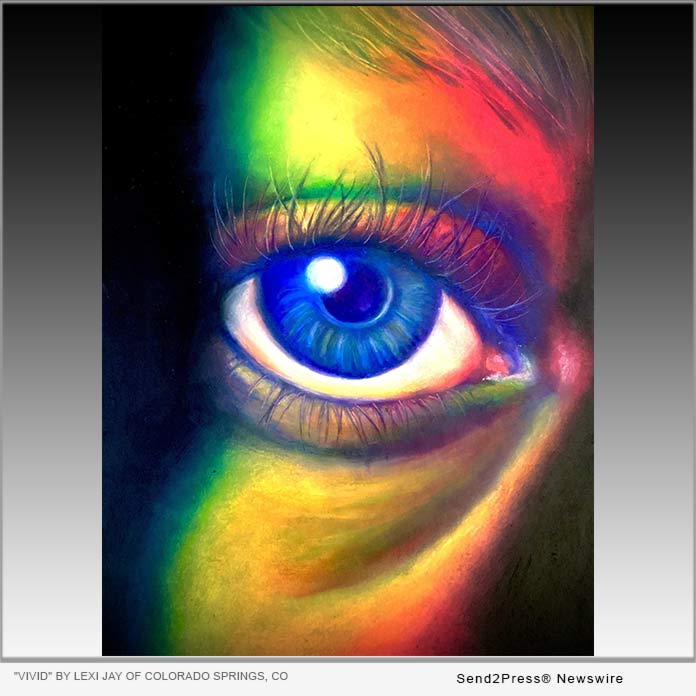
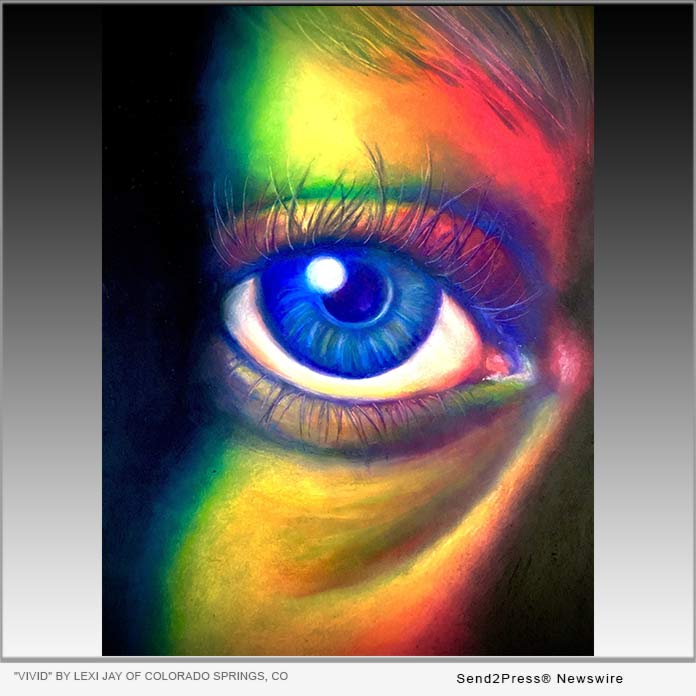
Lexi Jay, Pine Creek High School Senior and first-place winner of her age group says, "In this piece, I hope to express the vibrancy and beauty that color has brought into my life and how it illuminates a dark world with its everlasting elegance. In my art, I use color to express my innermost feelings, allowing the small shifts in hues to tell a story that pictures and words simply could not portray. The art I create seeks to explain this complex narrative and thus I could not do what I love most without the tools delegated to me by my eyes."

One winner from each age group was selected based on scoring from the judging panel. Prizes include a $200 donation to each winner's public school, the high school winner receives an iPad Pro, the middle school winner receives a SketchBox Premium Subscription, and the elementary winner receives a Green Kids Craft Subscription Box.

The Second Annual Youth Art Contest Winners:

Winner Grades 9-12:

Lexi Jay, Pine Creek High School

Winner Grades 6-8:

Avery Reynolds, Boltz Middle School

Winner Grades 1-5:

Bernice Tan, Willow Creek Elementary School & Artistic Fox Studio

*View artwork submissions and the complete list of winners and honorable mentions here - https://2020eyescolorado.org/art-contest/.

Entries were scored by local Colorado artists; Matthew Lit, photographer, designer and educator; Alexis Davina, fine arts and portraiture; and Dr. Matt Buchanan, a Colorado optometrist.

"The heart and imagination in the entries this year was inspiring. It's an honor to be a judge, and a privilege to witness the vision and hope these kids have for their futures," said Alexis Davina.

Matt Litt explains, "The second year of this contest saw many great entries including some particularly creative art from the younger grade students. It is a pleasure and an honor to have judged this year's contest."

Stay tuned for the Third Annual Youth Art Competition in 2022.

About the Colorado Optometric Association (COA):

The Colorado Optometric Association (COA) is the professional organization of optometrists in Colorado. Over 600 Colorado Doctors of Optometry are voluntary members of the Association. COA has also launched a public health campaign titled 2020 Eyes Colorado ( https://2020eyescolorado.org/ ).

Since 1892, the COA has assisted its members in providing the highest standard of professional care to their patients by sponsoring continuing education programs for doctors, advocating in local and state governments for programs and laws that represent patients' best interests, and providing information for the public. For more information, please visit http://www.visioncare.org/ or call 303-863-9778.

News from Colorado Optometric Association

2020 Eyes Colorado and the Colorado Optometric Association (COA) announce the winners of the Second Annual Youth Art Contest. Students grades 1-12 were invited to submit 2D artwork while reflecting on the value of their eyesight through the theme, "My Future Vision."

Related link: https://colorado.aoa.org/

This version of news story was published on ScoopCloud™ (ScoopCloud.com) - part of and © the Neotrope® News Network - all rights reserved.
Participating Colorado Optometrists Give Infants One-time No-cost Eye Exam Through National InfantSEE® Program

DENVER, Colo. /ScoopCloud/ -- Leaders in Colorado eye health advocacy, the Colorado Optometric Association (COA) and 2020 Eyes Colorado, announce that participating local optometrists are offering no-cost comprehensive eye exams to infants 6-12 months of age regardless of income or insurance. These no-cost infant eye exams are part of a national public health program called InfantSEE®. This program is designed to improve a child's quality of life by ensuring proper eye health development in infants and early detection of any eye health challenges before learning is impacted.

"An infant's first comprehensive eye exam with an optometrist is essential in understanding their individual eye health and development. Vision screenings with a pediatrician can miss about one-third of eye health challenges and that can impact learning even before the child gets to the classroom," says Dr. Tom Cruse, President of the Colorado Optometric Association.

The InfantSEE program helps children start a lifetime of learning with healthy eyes. Colorado's doctors of optometry recommend eye exams at 6-12 months, age 3, and age 5, then every year following. Three eye exams by age 5 is the best way to ensure your child's visual system is ready for classroom learning.

Getting a no-cost InfantSEE comprehensive eye exam is easy!

Step 1: Locate a participating InfantSEE optometrist HERE https://colorado.aoa.org/doctor-locator-search (don't forget to check the box labeled "Show only InfantSEE® Providers").

Step 2: Call and schedule the no-cost InfantSEE eye exam.

Step 3: Begin a lifetime of healthy eye and vision care.

Learn more about InfantSEE: https://2020eyescolorado.org/infantsee-free-eye-exams/

About the Colorado Optometric Association (COA):

The Colorado Optometric Association (COA) is the professional organization of optometrists in Colorado. Over 600 Colorado Doctors of Optometry are voluntary members of the Association. COA has also launched a public health campaign called 2020 Eyes Colorado - https://2020eyescolorado.org/.

Since 1892, the COA has assisted its members in providing the highest standard of professional care to their patients by sponsoring continuing education programs for doctors, advocating in local and state governments for programs and laws that represent patients' best interests, and providing information for the public. For more information, please visit http://www.visioncare.org/ or call 303-863-9778.

News from Colorado Optometric Association

Leaders in Colorado eye health advocacy, the Colorado Optometric Association (COA) and 2020 Eyes Colorado, announce that participating local optometrists are offering no-cost comprehensive eye exams to infants 6-12 months of age regardless of income or insurance.

Related link: https://colorado.aoa.org/

This version of news story was published on ScoopCloud™ (ScoopCloud.com) - part of and © the Neotrope® News Network - all rights reserved.
Colorado Doctors of Optometry Encourage Eating Nutrient Dense Foods This Holiday Season

DENVER, Colo. /ScoopCloud/ -- Doctors of optometry across Colorado, 2020 Eyes Colorado, and the Colorado Optometric Association (COA) are addressing nutrition and eye health in the December awareness theme Eating Your Way to Better Eye Health.

This holiday season Coloradan's can eat their way to better eye health by simply incorporating nutrient dense foods. Optometrists know that good eye health often starts with nutrition.

If an individual is nutritionally lacking in one area, it can create a snowball effect of health issues. "We can use nutrition to improve our eye health on a daily basis by choosing optimal foods to support our eyes. We can even incorporate these choices throughout the holiday season without skipping our holiday favorites. Remember moderation is key!" says Dr. Tom Cruse, Colorado Optometric Association Board President.

Colorado doctors of optometry agree that you should aim for eye health nutrition such as Omega-3 Fatty Acids, Lutein, Zeaxanthin, Zinc, Copper and Vitamins A, C, E & K.

View full story here and the key nutritional recommendations from optometrists: https://2020eyescolorado.org/holiday-edition-eating-your-way-to-good-eye-health/.

Learn about these four nutritional areas that can improve eye health:

* Reducing Inflammation with Cruciferous Vegetables

* Harnessing the Power of Lutein and Zeaxanthin

* Carotenoids and Vitamin A: Allies for Eye Health

* THE Omega-3 Fatty Acids!

About the Colorado Optometric Association (COA):

The Colorado Optometric Association (COA) is the professional organization of optometrists in Colorado. Over 600 Colorado Doctors of Optometry are voluntary members of the Association. COA has also launched a public health campaign called 2020 Eyes Colorado - http://2020eyescolorado.org/.

Since 1892, the COA has assisted its members in providing the highest standard of professional care to their patients by sponsoring continuing education programs for doctors, advocating in local and state governments for programs and laws that represent patients' best interests, and providing information for the public. For more information, please visit http://www.visioncare.org/ or call 303-863-9778.

News from Colorado Optometric Association

Doctors of optometry across Colorado, 2020 Eyes Colorado, and the Colorado Optometric Association (COA) are addressing nutrition and eye health in the December awareness theme Eating Your Way to Better Eye Health.

Related link: https://colorado.aoa.org/

This version of news story was published on ScoopCloud™ (ScoopCloud.com) - part of and © the Neotrope® News Network - all rights reserved.
#2020EyesColorado Youth Art Contest Winners Announced

DENVER, Colo. /ScoopCloud/ -- 2020 Eyes Colorado and the Colorado Optometric Association (COA) announce the winners of the #2020EyesColorado First Annual Youth Art Contest. Students grades 1-12 were invited to submit 2D artwork while reflecting on the value of their eyesight through the theme, A Beautiful Sight. The goal of the competition was to engage Colorado students in understanding the value of their eyes and their own eye health. The COA sponsored public health campaign, 2020 Eyes Colorado, seeks to increase eye health awareness throughout Colorado communities.

The contest launched in January of 2020 and due to the pandemic school shutdowns, the entry deadline was extended to October 15, 2020.

More than 170 Colorado students submitted paintings, drawings, digital art, and photography from all over the state. Many participants shared powerful insights on vision that will inspire other students to understand the value of their own vision.

Angelina Blanco, Grandview High School Senior and winner of her age group says, "To see is to experience the world in all its beauty. Without my vision, I wouldn't be able to witness sunsets, rainbows, or the smiles on others' faces-my biggest inspirations."

One winner from each age group was selected based on scoring from the judging panel. Prizes include a $200 donation to each winner's school, the high school winner receives an iPad Pro, the middle school winner receives a SketchBox Premium Subscription, and the elementary winner receives a Green Kids Craft Subscription Box.

The #2020EyesColorado Artist Award Recipients*

Winner Grades 9-12:
Angelina Blanco, Grandview High School

Winner Grades 6-8:
Sophia Orishev, Campus Middle School

Winner Grades 1-5:
Maxim Furmanov, Greenwood Elementary School

*View artwork submissions and the complete list of winners and honorable mentions here - https://2020eyescolorado.org/art-contest/

Entries were scored by local Colorado artists; Matthew Lit, photographer, designer and educator; Alexis Davina, fine arts and portraiture; Julie Babcock, artist of unusual mediums; and Dr. Matt Buchanan, a local optometrist and COA Board Member.

"The level of creativity and depth of thought that these young artists put forth in their entries, is so inspiring. What an immense privilege it was to be on the panel of judges," said Alexis Davina.

Matt Litt explains, "I was continually surprised by the uniqueness and creativity of so many of the entries - especially from the younger artists! Many entries spoke of an inherent artistic ability. What a great experience this has been."

"What an honor to look at so much beautiful creativity and art! It was exciting to see all the different ideas and themes relating to their individual seeing experiences. What a pleasure," noted Julie Babcock.

Stay tuned for the #2020EyesColorado Second Annual Youth Art Competition in 2021.

About the Colorado Optometric Association (COA):

The Colorado Optometric Association (COA) is the professional organization of optometrists in Colorado. Over 600 Colorado Doctors of Optometry are voluntary members of the Association. COA has also launched a public health campaign titled 2020 Eyes Colorado - https://2020eyescolorado.org/.

Since 1892, the COA has assisted its members in providing the highest standard of professional care to their patients by sponsoring continuing education programs for doctors, advocating in local and state governments for programs and laws that represent patients' best interests, and providing information for the public. For more information, please visit http://www.visioncare.org/ or call 303-863-9778.

News from Colorado Optometric Association

2020 Eyes Colorado and the Colorado Optometric Association (COA) announce the winners of the #2020EyesColorado First Annual Youth Art Contest. Students grades 1-12 were invited to submit 2D artwork while reflecting on the value of their eyesight through the theme, A Beautiful Sight. The goal of the competition was to engage Colorado students in understanding the value of their eyes and their own eye health.

Related link: https://colorado.aoa.org/

This version of news story was published on ScoopCloud™ (ScoopCloud.com) - part of and © the Neotrope® News Network - all rights reserved.
Colorado Doctors of Optometry Announce Public Health Initiative to Keep Eye Emergencies Out of Emergency Rooms This Winter

DENVER, Colo. /ScoopCloud/ -- Doctors of optometry across Colorado, 2020 Eyes Colorado, and the Colorado Optometric Association (COA) have launched an October awareness initiative to educate Coloradans on Eye Emergencies: Where to Go and What to Do. This health information is currently important for Colorado communities and populations vulnerable to COVID-19 as the state approaches a possible surge in COVID-19 cases during winter.

The HPI analysis of Healthcare Cost and Utilization Project (HCUP) data shows that eye emergencies make up 1% of emergency room cases and of those reported cases 98.9% could have been handled by a local optometrist in clinic or via telehealth (*note 1). Many practices offer after hours care to address eye care emergencies making it even easier for patients to avoid emergency rooms.

COA Board President, Dr. Tom Cruse says, "During the March/April shutdown our doctors of optometry were able to stop most eye emergency cases from going to urgent care and emergency facilities, which clearly assisted in slowing the virus spread and reducing individual exposure. As usual, optometrists still have the ability to treat emergency eye cases and we want every Coloradan to know how to use our emergency services for their own health and safety."

The CDC National Syndromic Surveillance Program (NSSP) reported that overall emergency room visits declined 42% early in the pandemic, but the viral infection cases quadrupled making emergency facilities a potential risk for many Coloradans including populations that are more vulnerable to a viral infection (*note 2). Optometry's vulnerable patient population is impacted by diabetes, hypertension and cardiovascular disease, which are known to complicate COVID-19 cases (*note 3).

The October public health initiative is taking place on Facebook, Instagram and Twitter using #2020EyesColorado and at 2020EyesColorado.org. Colorado optometry practices across the state have also geared up to join the initiative on social media to help spread the word in their own communities.

To learn more about what to do in an eye emergency, read the newly released 2020 Eyes Colorado article Eye Emergencies: Where to Go and What to Do! - https://2020eyescolorado.org/eye-emergencies-pr/

You will learn:

* Symptoms that need immediate attention from an optometrist

* Symptoms that need an eye exam soon

* Emergencies an eye doctor can treat and what to do at home

* How to find an optometrist

About the Colorado Optometric Association (COA):

The Colorado Optometric Association (COA) is the professional organization of optometrists in Colorado. Over 600 Colorado Doctors of Optometry are voluntary members of the Association. COA has also launched a public health campaign called 2020 Eyes Colorado.

Since 1892, the COA has assisted its members in providing the highest standard of professional care to their patients by sponsoring continuing education programs for doctors, advocating in local and state governments for programs and laws that represent patients' best interests, and providing information for the public. For more information, please visit http://www.visioncare.org/ or call 303-863-9778.

References
*Note 1: https://www.aoa.org/documents/HPI/HCUP%20HPI%20December_2019.pdf
*Note 2: https://www.cdc.gov/nssp/index.html
*Note 3: https://www.aoa.org/AOA/Documents/Advocacy/HPI/Emergency%20Department%20Diversion%20Brief.pdf

News from Colorado Optometric Association

Doctors of optometry across Colorado, 2020 Eyes Colorado, and the Colorado Optometric Association (COA) have launched an October awareness initiative to educate Coloradans on Eye Emergencies: Where to Go and What to Do.

Related link: https://colorado.aoa.org/

This version of news story was published on ScoopCloud™ (ScoopCloud.com) - part of and © the Neotrope® News Network - all rights reserved.
Pandemic Stress Can Change Eyesight and Impact Eye Health

DENVER, Colo. /ScoopCloud/ -- Doctors of optometry across Colorado, 2020 Eyes Colorado, and the Colorado Optometric Association (COA) have launched a September awareness initiative to help educate Coloradans on the impact of stress on eyesight and eye health.

"The long-term stress individuals and families are experiencing this year has the potential to impact eye health in a range of ways from mild eye discomfort to vision loss. This is a health issue that is preventable and most related symptoms can be managed at home. If symptoms linger or impact your quality of life, we do recommend an optometric eye exam," says Sheryl Benjamin, COA Executive Director.

Everyone has experienced that familiar moment in a challenging situation when stress takes over the body. This is called fight, flight or freeze and it's where the body moves into protection mode. Initially, the heart may pump faster as adrenaline moves through the body, breathing becomes shallow, and pupils dilate enhancing the ability to see danger. The body is preparing for a physical threat even if the stress is from a non-physical threat like a difficult project at work or a conflict with a friend.

The individual may experience a range of stress from mild stress to high stress. The eyes also experience a range of impact due to stress from mild discomfort to debilitating vision loss.

Symptoms of Stress Impacting Vision Health:
* Tunnel vision - Loss of visual acuity in the peripheral vision. The person feels like they can only see in front of themselves.
* Light sensitivity - An intolerance to light. The person feels like they have to close their eyes when experiencing light and they feel discomfort.
* Eye twitching - Random spasms around the lid of one or both eyes.
* Very dry or very wet eyes - Both of these can be cause by stress depending on the body's response.
* Blurry vision - This is usually mild when caused by stress.
* Eye strain - Fatigue of the eyes may be caused by stress, but can also be caused by too much screen time.
* Vision Loss - The stress hormone cortisol can damage the eye and the brain. Stress is also linked to causing diseases that can lead to vision loss including glaucoma.

It's more likely that the eye's response to stress will be minor, but if any of these symptoms are impacting your quality of life or the symptoms persist contact your optometrist immediately.

Ideas to Lower Stress & Relax Your Eyes
* Reduce your screen time for a few days to reduce eye strain and give eye muscles a break.
* During screen time use the 20-20-20 Rule. Every 20 minutes look at something 20 feet away for 20 seconds.
* Participate in a daily meditation.
* Exercise daily.
* Walk outside if possible.
* Eat a healthy diet.
* Get good sleep.
* Join an online social group.
* Consider weekly mental health therapy.
* Connect with your doctor about potential medication if stress and anxiety remain unmanageable.

Optometrists know that stress impacts every system of the body including the eyes. Colorado's doctors of optometry want you to know that the benefits of managing stress on a daily basis will not only improve eye health, but overall health. Even picking one stress reducing activity daily can help. Read more at: https://2020eyescolorado.org/pandemic-stress-can-change-your-eyesight-pr/

About the Colorado Optometric Association (COA):

The Colorado Optometric Association (COA) is the professional organization of optometrists in Colorado. Over 600 Colorado Doctors of Optometry are voluntary members of the Association. COA has also launched a public health campaign called 2020 Eyes Colorado.

Since 1892, the COA has assisted its members in providing the highest standard of professional care to their patients by sponsoring continuing education programs for doctors, advocating in local and state governments for programs and laws that represent patients' best interests, and providing information for the public. For more information, please visit http://www.visioncare.org/ or call 303-863-9778.

News from Colorado Optometric Association

Doctors of optometry across Colorado, 2020 Eyes Colorado, and the Colorado Optometric Association (COA) have launched a September awareness initiative to help educate Coloradans on the impact of stress on eyesight and eye health.

Related link: https://colorado.aoa.org/

This version of news story was published on ScoopCloud™ (ScoopCloud.com) - part of and © the Neotrope® News Network - all rights reserved.

Colorado’s Doctors of Optometry Offer 5 Ways to Prepare for School in a Pandemic

DENVER, Colo. /ScoopCloud/ -- The 2020-2021 school year is starting with a baseline of caution, anxiety and an ever-changing game plan during a global pandemic. Local doctors of optometry have teamed up with the Colorado Optometric Association and 2020 Eyes Colorado to compile a unique list of five areas to consider as families near the start of school.

Many families are struggling to feel comfortable with an in-person learning environment and others are opting for distance learning this year. Regardless of the learning environment, school in Colorado will be different for now and families are attempting to plan while facing many unknowns.

However, experts do know that about 80% of what a student learns is presented visually, which makes eye health very important for student learning. Optometrists are often part of a multi-disciplinary team of health-care practitioners that contribute to diagnosing learning difficulties when challenges present in school.

Colorado doctors of optometry agree that considering five specific areas of need, families can build a healthy foundation for learning while avoiding unnecessary difficulties.

1. Assess the Student's Vision & Eye Health

It's highly recommended that each student gets a comprehensive eye exam, every year. It's even more important this year as children are experiencing increased stress, anxiety, countless lifestyle changes and more screen time than ever. This can be a recipe for vision changes that can impact learning if they aren't addressed.

A comprehensive eye exam gives the patient and doctor a look at overall physical health in addition to eye health. Optometrists are often able to diagnose general health and eye health conditions before symptoms occur. This makes early intervention and treatment possible before vision and learning is heavily impacted.

"It's so important for each student to get their eyes checked as part of supporting their learning. It's especially important to rule out a visual issue if your child is struggling with reading, headaches, coordination, blurry vision, double vision, or dry eyes. With the recent screen time increases, we want to make sure that student eye health is not a problem for the school year," says Dr. Tom Cruse, President at Colorado Optometric Association.

Visual Skills Essential for K-12 Learning
During a comprehensive eye exam an optometrist is assessing the child's visual skills in the below areas. These areas are essential for learning and if the eyes are not functioning well in these capacities learning is often impacted negatively.
* Good visual acuity at all distances
* Satisfactory eye teaming skills
* Satisfactory eye movement skills
* Satisfactory focusing skills

If a child is already experiencing learning difficulties and has one or more of the below listed symptoms, they may have a learning-related vision problem. It's recommended that the child has a comprehensive evaluation by an optometrist who specializes in children's vision and learning-related vision problems.

Symptoms of Learning-related Vision Problems*:
* Headaches or eye strain
* Blurred vision or double vision
* Crossed eyes or eyes that appear to move independently of each other (Read more about strabismus.)
* Dislike or avoidance of reading and close work
* Short attention span during visual tasks
* Turning or tilting the head to use one eye only, or closing or covering one eye
* Placing the head very close to the book or desk when reading or writing
* Excessive blinking or rubbing the eyes
* Losing place while reading, or using a finger as a guide
* Slow reading speed or poor reading comprehension
* Difficulty remembering what was read
* Omitting or repeating words, or confusing similar words
* Persistent reversal of words or letters (after second grade)
* Difficulty remembering, identifying or reproducing shapes
* Poor eye-hand coordination
* Evidence of developmental immaturity

*Symptoms list created by Think About Your Eyes, April 2017

2. Create a Family Stress Management Plan
Eye twitching, blurry vision, headaches, watery eyes or dry eyes can all be caused by stress. In fact, stress can cause vision issues and vision issues can cause stress. Don't get caught in this cycle!

This year, there are a lot of new stressors for students beyond learning and homework. Having a stress management plan for each person in the home will help everyone stay happy, healthy, learning, and working.

It's a good idea to start talking to each child about what their school day will look like and prepare them for the things that are changing.

By managing stress daily, families can then build a daily schedule and house rules around each family member that helps them find success.

3. Assure the Student is Eating Well

Nutrition can impact how we feel emotionally and physically, but it also impacts eye health. A child's eating habits can change as they experience stress and as daily schedules change. When some people experience stress they eat less and others eat more. What is healthy and effective for each student?

Making sure the child is eating enough breakfast, lunch, and dinner is helpful. Or maybe they aren't into full meals right now so making sure they are grazing throughout the day will help keep blood sugar balanced, stress low, and it also can mean less tantrums or moodiness.

10 Nutrient Dense Foods to keep eyes healthy and brains learning:
* Fish is rich in omega-3 fatty acids
* Nuts and legumes are rich in omega-3 fatty acids and vitamin E
* Seeds are rich in omega-3 fatty acids and vitamin E
* Citrus fruits rich in vitamin C
* Leafy greens rich in lutein and zeaxanthin
* Carrots rich in vitamin A and beta carotene
* Sweet potatoes rich in beta carotene and vitamin E
* Beef is rich in zinc
* Eggs rich in lutein and zeaxanthin
* Water prevents dehydration and keeps your brain running

4. Determine How Much Exercise the Student Needs

Exercise increases blood flow to the optic nerve and retina, reduces stress, improves alertness, motivation, attention and it even helps individuals retain information.

When schedules change one of the first things to cease is healthy exercise. Whether attending school in-person or online, determine how the child get the exercise they need to thrive? How can exercise be used as a tool during the school year? Some families have students jump on a mini-trampoline or do jumping jacks before tackling homework or a school lesson. Others use it as a motivational reward. Tips for getting kids to exercise.

The Centers for Disease Control and Prevention (CDC) recommends the following activity levels for:
* Children ages 3-5 years should have active play throughout the day.
* Children ages 6-17 should have one hour of moderate to vigorous physical activity daily. Including;
o activities to strengthen bones 3 days per week (ex: running or jumping)
o activities to build muscles 3 days per week (ex: climbing or push- ups)

5. Address Sleep Difficulties

Dark circles around their eyes, moodiness, fatigue, difficulty learning, forgetfulness, and lack of motivation are all common signs of poor sleep. Poor sleep is not conducive to a successful learning environment and it can also strain family relationships. It's a good idea to address everyone's sleep issues in the household for optimal learning, working, playing and relating.

Sleep is clearly important for everyone and students are no exception. It's also very common for sleep to be impacted by stress and anxiety. Improving sleep could be as simple as better sleep hygiene, a new pillow, reducing stress or eliminating screen time before bed. However, sometimes there's an actual health issue at play. If sleep doesn't get better with common sense adjustments and is impacting daily life (like school) it's time to consult a doctor.

During a comprehensive eye exam an optometrist may spot signs of sleep issues including sleep apnea or other health conditions that are associated with sleep difficulties like pediatric myopia, diabetes, glaucoma, or an autoimmune disease.

The CDC recommends the following sleep quantity for:
* Ages 3-5 years: 10-13 hours per 24 hours (including naps)
* Ages 6-12 years: 9-12 hours per 24 hours
* Ages 13-18 years: 8-10 hours per 24 hours

Tips to Improve Sleep:
* Stick to a sleep schedule, go to bed at the same time and wake at the same time even on the weekends.
* Remove screens from the bedroom including phones, TVs, and tablets.
* Stop the use of any screen one hour before bedtime to reduce blue light exposure.
* Make sure the child's sleep environment is comfortable for them and includes their unique sleep preferences.
* Avoid caffeine in the afternoon and before bed.
* Make sure the child is getting enough exercise during the day.

About the Colorado Optometric Association (COA):

The Colorado Optometric Association (COA) is the professional organization of optometrists in Colorado. Over 600 Colorado Doctors of Optometry are voluntary members of the Association. COA has also launched a public health campaign called 2020 Eyes Colorado.

Since 1892, the COA has assisted its members in providing the highest standard of professional care to their patients by sponsoring continuing education programs for doctors, advocating in local and state governments for programs and laws that represent patients' best interests, and providing information for the public.

For more information, please visit http://www.visioncare.org/ or call 303-863-9778.

News from Colorado Optometric Association

The 2020-2021 school year is starting with a baseline of caution, anxiety and an ever-changing game plan during a global pandemic. Local doctors of optometry have teamed up with the Colorado Optometric Association and 2020 Eyes Colorado to compile a unique list of five areas to consider as families near the start of school.

Related link: https://colorado.aoa.org/

This version of news story was published on ScoopCloud™ (ScoopCloud.com) - part of and © the Neotrope® News Network - all rights reserved.

Colorado Optometrists Announce 8 Ways to Protect Your Eyes This Summer

DENVER, Colo. /ScoopCloud/ -- A lot has changed for the summer of 2020, but the Colorado Optometric Association and 2020 Eyes Colorado wants everyone to know that summer eye health is still important. Colorado's sunlight is roughly 20% brighter than at sea level and is even more intense at the top of a mountain as there is less atmosphere at higher elevations to filter out UV rays.

"Coloradans are getting outdoors much more this summer due to the pandemic closures. It's important that when we are enjoying the outdoors that we don't underestimate the intensity of the Colorado sun because it can negatively impact your vision," says Sheryl Benjamin, Executive Director at the Colorado Optometric Association.

Colorado's optometrists give eight ways to protect your eyes this summer:

1. Wear UVA/UVB Blocking Sunglasses
Your eyes can get sunburned. It's true and it's all too common in the bright Colorado sun. Grab a pair of 100% UVA/UVB blocking sunglasses and wear them when outside to protect your eyes from sunburn. Some Coloradans pair sunglasses with a hat for even more UV protection. Make sure the brim is at least 3 inches wide for good coverage. Start kids off right by protecting their eyes early on with a hat and sunglasses. Bonus, tiny sunglasses are cute!

2. Wear Swim Goggles
Chlorine is rough on the eyes so be sure to protect them with swim goggles. Typically, chlorine exposure in a pool will dry out your eyes and make them temporarily red. However, conjunctivitis/pink eye is a common infection for swimmers as it spreads easily in the water. Make sure those goggles are sealed well!

3. Wear a Hat
A hat is a great addition to sunglasses for increased eye protection. Wearing a hat will shade additional parts of the eyeball and skin around the eyes. It's also a great runner up if you forget sunglasses as you're headed out on the trail.

4. Clean Hands Make Healthy Eyes
Yes, washing hands and avoiding face touching is important for eye health and overall health. Hand washing is even more essential during the pandemic, but it was also significant before COVID-19 to prevent the transmission of disease and illness that can enter through touching your eyes and face. Plus, washing your hands reduces your risk of contracting conjunctivitis/pink eye any time of year!

5. Eye Protection for DIY Projects/Activities and Sports
Be sure to wear safety glasses for DIY projects and high-risk activities like sports or lighting fireworks. These high-risk moments can quickly go awry with an unexpected eye injury. Make sure each individual on the project has protective glasses.

6. Drink Plenty of Water
Dehydration is very common in the dry Colorado summers, but is easy to avoid. Dehydration can impact the body's ability to create tears and then can cause vision issues. Stay hydrated by drinking plenty of water consistently throughout the day. Be sure to bring plenty of water for those outdoor activities!

7. Get Sleep!
Humans do better with a good night's sleep and eyes are no different. When and individual doesn't get enough sleep it impacts visual acuity. When this happens, the individual may need to catch up on sleep or may need to rest their eyes for a while.

8. Get an Annual Comprehensive Eye Exam
Keep eyes healthy with a comprehensive eye exam performed by an optometrist. An annual eye exam gives a better look at overall physical health. It will also allow for early detection of eye related diseases and non-eye related health issues. The Center for Disease Control states that, "Of the estimated 61 million US adults at high risk for vision loss, only half visited an eye doctor in the past 12 months. Regular eye care can have a life-changing impact on preserving the vision of millions of people." Find a trusted Colorado optometrist today!

About the Colorado Optometric Association (COA):
The Colorado Optometric Association (COA) is the professional organization of optometrists in Colorado. Over 600 Colorado Doctors of Optometry are voluntary members of the Association. COA has also launched a public health campaign called 2020 Eyes Colorado - https://2020eyescolorado.org/.

Since 1892, the COA has assisted its members in providing the highest standard of professional care to their patients by sponsoring continuing education programs for doctors, advocating in local and state governments for programs and laws that represent patients' best interests, and providing information for the public. For more information, please visit http://www.visioncare.org/ or call 303-863-9778.

News from Colorado Optometric Association

A lot has changed for the summer of 2020, but the Colorado Optometric Association and 2020 Eyes Colorado wants everyone to know that summer eye health is still important. Colorado's sunlight is roughly 20% brighter than at sea level and is even more intense at the top of a mountain as there is less atmosphere at higher elevations to filter out UV rays.

Related link: https://colorado.aoa.org/

This version of news story was published on ScoopCloud™ (ScoopCloud.com) - part of and © the Neotrope® News Network - all rights reserved.

Colorado Optometrists Announce Tips to Help Avoid Eye Health Challenges from Increased Screen Time During COVID-19 Pandemic

DENVER, Colo. /ScoopCloud/ -- As social distancing becomes a normal way of life during the COVID-19 pandemic many individuals are participating in increased screen time. The Colorado Optometric Association (COA) and the public health campaign 2020 Eyes Colorado, have collected tips from its doctors of optometry on how to keep eyes healthy as technology has become the hub for employees, social circles, students, teachers, families, and entire communities to stay connected.

"This increased screen time for many is an important part of life and staying healthy mentally and emotionally, which makes reducing screen time not possible for many. There are still a number of preventative measures individuals can take to reduce the impact of screen time on eye health while staying connected," says Dr. Matt Buchanan, COA Board President.

It can be difficult for some individuals to understand why their vision is suddenly blurry or they're experiencing more headaches. But Colorado optometrists know the eye health challenges that come with increased screen time.

Potential Signs That Screen Time is Impacting Your Eyes
* Increased headaches or migraines
* Dry eyes
* Red eyes
* Itchy eyes
* Watery eyes
* Blurred vision
* Light sensitivity
* Eye strain

Tips for Keeping Eyes Healthy During Increased Screen Time

Observe the 20-20-20 Rule
Adults and children should take frequent screen breaks by practicing the 20-20-20 rule. When using any screen, every 20 minutes, take a 20-second break, and look at something 20 feet away. To get in the habit of this, set a timer every 20 minutes for a few days as a reminder to use the 20-20-20 exercise.

Take Blink Breaks
Looking at a screen naturally has users blinking less and that can cause dry eyes, which can also cause a number of issues including blurry vision. When you take your 20-20-20 break be sure to take a few long blinks. This will help hydrate your eyes and reduce any discomfort from reduced blinking.

Reduce Blue Light
Blue light is linked to computer fatigue and eye strain. Colorado optometrists recommend wearing glasses that filter out this light. If you're unsure about finding true blue light glasses, you can contact your optometry office for recommendations.

Buy an Alarm Clock
Blue light suppresses our bodies production of melatonin. This is one of the chemicals that tells our body it is time to go to sleep. Eliminating nighttime phone use in your bedroom tends to nurture better sleep and it eliminates blue light exposure from looking at your phone during the night. It's recommended that you use an alarm clock in your bedroom and keep your phone in another room or on customized "do not disturb settings" while being placed across the room.

Establish a Screen Schedule
During this time, we can't get away from using screens, but it's important to evaluate if there is any way to reduce screen time. Many families are finding that no screens after 8pm is a great rule to start winding down for bed and reducing stress. Begin looking at ways to reduce mindless social media scrolling and shift some of your entertainment choices to non-screen activities during certain times of the day or week.

Check Your Vision
If you're experiencing more headaches, blurry vision or eye discomfort it's probably a good idea to get a comprehensive eye exam in the near future with your local optometrist. This will ensure that your eyes are equipped with the correct prescription lenses/contacts and that any other vision issues are addressed. Stay away from online eye exams or vision screenings as they are not a reliable tool for the full picture of your eye health.

Colorado's doctors or optometry are fully open and offering all services including routine care! Find a local optometrist here - https://2020eyescolorado.org/

About the Colorado Optometric Association (COA):

The Colorado Optometric Association (COA) is the professional organization of optometrists in Colorado. Over 600 Colorado Doctors of Optometry are voluntary members of the Association.

Since 1892, the COA has assisted its members in providing the highest standard of professional care to their patients by sponsoring continuing education programs for doctors, advocating in local and state governments for programs and laws that represent patients' best interests, and providing information for the public. For more information, please visit http://www.visioncare.org/ or call 303-863-9778.

News from Colorado Optometric Association

As social distancing becomes a normal way of life during the COVID-19 pandemic many individuals are participating in increased screen time. The Colorado Optometric Association (COA) and the public health campaign 2020 Eyes Colorado, have collected tips from its doctors of optometry on how to keep eyes healthy.

Related link: https://colorado.aoa.org/

This version of news story was published on ScoopCloud™ (ScoopCloud.com) - part of and © the Neotrope® News Network - all rights reserved.

Colorado Optometric Association Warns Patients to Be Cautious of ‘At-Home Eye Exam’ or ‘Vision Test’ Product Claims

DENVER, Colo. /ScoopCloud/ -- Some companies are taking advantage of the COVID-19 pandemic and asserting that their devices make it easy to conduct an eye exam at home. The truth of the matter is, there are a number of components that are part of an in-person, comprehensive eye exam with a doctor of optometry and there is no U.S. Food and Drug Administration (FDA)-approved, at-home device or app that people can use to self-conduct all of the elements of a proper eye examination. The Colorado Optometric Association, together with the American Optometric Association (AOA), warns that it is more important than ever to be aware of products that give the mistaken impression that their devices can substitute for a comprehensive eye examination or that they can shortcut getting a contact lens or eyeglasses prescription.

"When patients rely on an app for an eyeglass or contact lens prescription, they can receive inaccurate or misleading information and potentially delay essential sight saving treatment. In addition, changes in refractive status can be an underlying symptom of a number of eye or systemic conditions, which can only be detected through an in-person, comprehensive eye exam," says COA President, Dr. Buchanan. "We want to ensure that patients have access to medically-recognized eye health care and to protect them from companies, platforms or services that may put their health at risk."

The Colorado Optometric Association is joining with the AOA, patient advocacy organizations, state attorneys general and the media in warning the public about the lack of effectiveness and potential dangers of these devices and their marketing promises. With the proliferation of these online apps, optometry and other health care providers have continued to raise concerns about their safety and efficacy-including the potential for inaccurate prescriptions, missed diagnoses of serious and general health conditions, and the creation of a prescription with little input from an eye doctor.

"Eye exams with doctors of optometry, America's primary eye health and vision care providers, are essential health care that provide more than just a prescription but are also a critical component of patient's preventive health regimen. During this time, patients should work with their doctors to make use of health technologies that enhance care, and not be misled by questionable marketing claims that undermine it," AOA President Barbara L. Horn, O.D., says. "Patients need to be wary of any company that claims its device can replace the care that a doctor provides."

States are beginning to reopen health care access and eye doctors across the country are starting to safely provide comprehensive eye health examinations once again. Patients looking to schedule their annual eye examinations or update their prescriptions should contact their eye doctors, who are employing in-person and telehealth protocols to provide necessary refills and other eye health and vision care with one goal in mind - to protect everyone's health and safety.

About the Colorado Optometric Association (COA):

The Colorado Optometric Association (COA) is the professional organization of optometrists in Colorado. Over 600 Colorado Doctors of Optometry are voluntary members of the Association.

Since 1892, the COA has assisted its members in providing the highest standard of professional care to their patients by sponsoring continuing education programs for doctors, advocating in local and state governments for programs and laws that represent patients' best interests, and providing information for the public. For more information, please visit http://www.visioncare.org/ or call 303-863-9778.

News from Colorado Optometric Association

Some companies are taking advantage of the COVID-19 pandemic and asserting that their devices make it easy to conduct an eye exam at home. The Colorado Optometric Association, together with the American Optometric Association (AOA), warns that it is more important than ever to be aware of products that give the mistaken impression that their devices can substitute for a comprehensive eye examination or that they can shortcut getting a contact lens or eyeglasses prescription.

Related link: https://colorado.aoa.org/

This version of news story was published on ScoopCloud™ (ScoopCloud.com) - part of and © the Neotrope® News Network - all rights reserved.